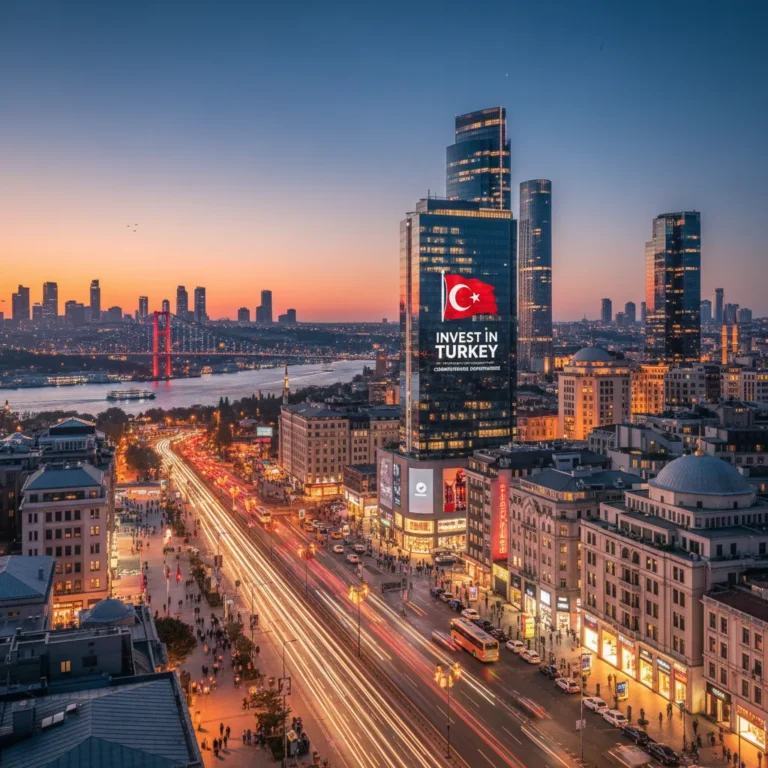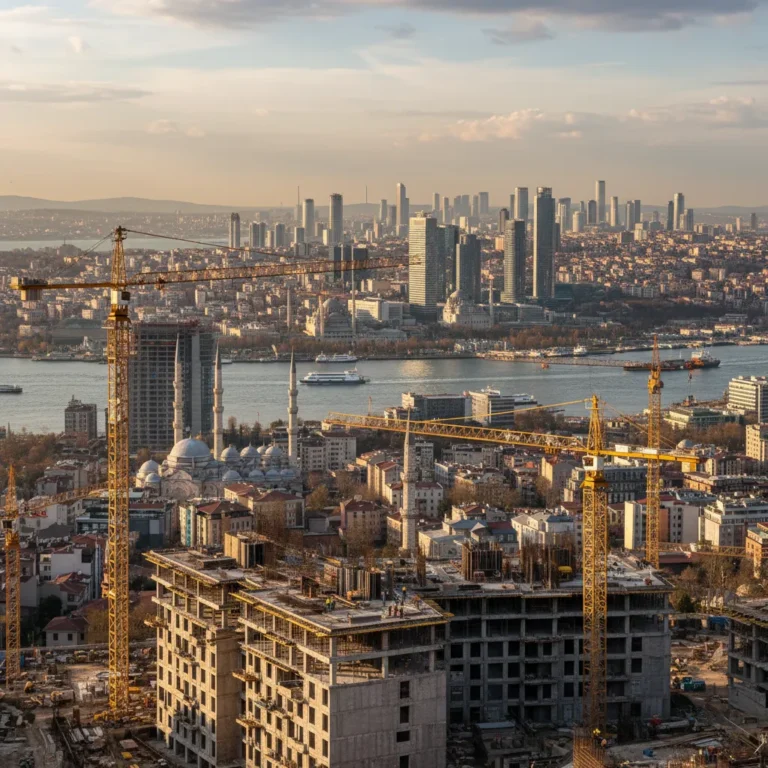
Few cities in the world command the geographic, cultural, and economic gravity of Istanbul. Straddling the Bosphorus Strait between Europe and Asia, Turkey’s commercial capital functions simultaneously as a global logistics crossroads, a regional financial hub, and a residential magnet for more than 16 million residents alongside millions of international visitors and expatriates. For international buyers, institutional funds, and relocating families, Istanbul real estate in 2026 represents far more than a scenic lifestyle acquisition; it is a dynamic asset class shaped by rapid urban transformation, multi-billion-dollar transit expansion, and evolving regulatory frameworks governing residency and citizenship.
Navigating this market effectively requires separating headlines from street-level fundamentals. Over the past several years, Turkey’s property sector has transitioned from an era of speculative price surges into a more disciplined, fundamentals-driven cycle. Tighter monetary policy, stricter short-term rental regulations, updated residency thresholds, and heightened construction safety standards have reshaped buyer behavior across both the European and Asian sides of the city. Investors who understand these structural shifts—and who align their acquisitions with verified infrastructure growth, legal compliance, and professional asset management—stand to capture durable long-term value. For a foundational overview of market trends and regional opportunities, explore our comprehensive Istanbul Real Estate & Investment Guide 2026.
Macroeconomic Drivers and Urban Transformation Shaping Istanbul in 2026
Understanding property performance in Istanbul begins with recognizing that the city operates as Turkey’s economic engine, generating roughly a third of the nation’s gross domestic product. Unlike single-industry resort towns along the Aegean or Mediterranean coasts, Istanbul’s housing demand is anchored by year-round employment, university enrollment, corporate headquarters, and international trade.
Demographic Demand and Housing Supply Dynamics
Despite periodic macroeconomic fluctuations, structural housing demand in Istanbul remains persistently strong. Young professionals migrating from Anatolian provinces, multinational executives stationed in financial districts, and growing international communities create continuous pressure on quality residential inventory. At the same time, rising construction material costs and stricter municipal permitting have slowed the pace of speculative mass development in central neighborhoods. This supply constraint has supported occupancy rates in well-located, newly built developments while widening the valuation gap between modern seismic-compliant buildings and aging housing stock constructed prior to the year 2000.
Transit-Oriented Development and Mega-Infrastructure
In a metropolis spanning over 5,400 square kilometers, commute times directly dictate property values and rental liquidity. Throughout 2026, Istanbul’s ongoing expansion of its rail and metro network continues to be one of the most reliable predictors of capital appreciation. High-speed metro corridors linking Istanbul Airport to central business districts, extensions connecting Asian-side suburbs to the Marmaray commuter rail, and upgraded ferry terminals along the Golden Horn and Bosphorus have systematically unlocked previously overlooked neighborhoods.
Properties situated within a ten-minute walk of operational or near-completion metro stations consistently command higher rental yields and faster resale timelines than car-dependent equivalents. Similarly, the maturation of the Istanbul Financial Center (IFC) in Ataşehir has anchored white-collar demand on the Asian side, drawing banking, fintech, and legal professionals toward nearby residential communities.
Earthquake-Resilient Urban Renewal (Kentsel Dönüşüm)
Following heightened national focus on seismic preparedness, urban renewal—known locally as Kentsel Dönüşüm—has moved to the center of Istanbul’s real estate policy. Municipal incentives, expedited licensing for structural reinforcement, and public-private redevelopment partnerships are actively replacing older concrete apartment blocks with modern residences built to updated Turkish seismic codes. For property investors, this trend carries two critical implications:
- Flight to Quality: Both local tenants and foreign buyers overwhelmingly prioritize post-2018 construction featuring raft foundations, soil-tested pilings, and certified structural engineering.
- Redevelopment Upside: Older properties with clean land-share deeds (arsa payı) in prime districts such as Kadıköy, Beşiktaş, and Şişli often attract developer joint-venture offers, though investors must carefully evaluate construction timelines and legal agreements before entering renewal-stage assets.
Get a free consultation now, and let us help you choose the right property.
Top Istanbul Districts for Property Investment in 2026
Istanbul is not a monolithic market; micro-location dictates everything from tenant profile and legal zoning to resale liquidity. Splitting the city between its historic European side and rapidly modernizing Asian side reveals distinct investment corridors tailored to different capital goals.
Prime Central and Waterfront Districts
For capital preservation and trophy-asset prestige, Istanbul’s established core remains unmatched. Districts such as Beşiktaş, Sarıyer, Şişli (including Nişantaşı), and Beyoğlu on the European side, alongside Kadıköy (particularly Moda, Bağdat Avenue, and Fenerbahçe) on the Asian side, boast deep historical liquidity. Inventory here is tightly constrained by geography and zoning restrictions.
While gross rental yields in ultra-prime neighborhoods tend to be more modest due to high entry prices per square meter, occupancy rates are exceptionally resilient. Tenants include C-suite expatriates, diplomats, business owners, and affluent local families. Properties along the Bosphorus shoreline or Bağdat Avenue frequently trade in hard-currency benchmarks, offering a natural hedge against local inflation.
High-Growth Business and Financial Corridors
Investors prioritizing balanced cash flow and medium-term appreciation increasingly target Istanbul’s modern commercial arteries. On the European side, the Maslak–Levent–Kağıthane axis blends Grade-A office towers with branded residential complexes. Kağıthane, in particular, has undergone dramatic gentrification over the past decade, evolving from a light-industrial valley into a vibrant residential hub favored by young professionals working in Levent and Maslak who want quick metro access at a lower price point.
Across the Bosphorus, Ataşehir stands out as the epicenter of Turkey’s financial services expansion. With international banks, regulatory bodies, and corporate campuses clustering around the Istanbul Financial Center, modern apartments and serviced residences in Ataşehir and neighboring Ümraniye enjoy steady corporate leasing demand.
Emerging Suburban and Family-Oriented Hubs
Buyers seeking larger floor plans, gated community amenities, and accessible entry prices often look toward Istanbul’s planned expansion zones. Districts such as Başakşehir, Bahçeşehir, and Beylikdüzü on the European side, as well as Kartal and Pendik along the Asian Marmara coastline, offer master-planned residential compounds complete with landscaped gardens, indoor pools, 24/7 security, and underground parking.
These districts appeal strongly to middle- and upper-middle-income families, medical professionals working near mega-hospitals like Başakşehir Çam and Sakura City Hospital, and investors building diversified portfolios. If your strategy focuses on maximizing square footage and rental yield per dollar invested, browse our dedicated overview of Affordable Investment Apartments in Istanbul.
| District | Side | Primary Asset Profile | Investment Strategy | Typical Tenant / Buyer |
|---|---|---|---|---|
| Beşiktaş & Sarıyer | European | Luxury villas, Bosphorus residences, boutique flats | Wealth preservation & prestige | Executives, diplomats, HNWI families |
| Şişli & Kağıthane | European | Modern high-rises, branded city apartments | Balanced rental yield & liquidity | Corporate staff, expats, urban professionals |
| Kadıköy (Bağdat Ave) | Asian | Renewed luxury apartments, upscale retail-residential | Long-term capital appreciation | Affluent locals, professionals, families |
| Ataşehir | Asian | Financial-hub towers, serviced residences | Corporate leasing & growth | Banking, fintech, and legal sector tenants |
| Başakşehir & Beylikdüzü | European | Master-planned family compounds | Accessible entry & family rentals | Relocating families, medical & airport staff |
| Kartal & Pendik | Asian | Coastal modern towers, marina-adjacent flats | Value appreciation & commuting hub | Tech park employees, commuters, Sabiha Gökçen staff |
Turkish Citizenship by Investment in 2026: Rules, Thresholds, and Strategy
Turkey’s Citizenship by Investment (CBI) program remains one of the most active real estate-linked citizenship pathways globally, attracting investors seeking geopolitical diversification, visa-free or visa-on-arrival access to dozens of destinations, and direct access to a G20 economy. In 2026, compliance and strict documentation are paramount, as authorities maintain rigorous oversight over property valuations and currency transfers.
Minimum Capital Threshold and Official Appraisal
To qualify for Turkish citizenship through real estate acquisition, foreign investors must purchase one or more properties with a combined officially appraised value of at least $400,000 USD (or its equivalent in Turkish Lira calculated via Central Bank rates on the transaction date). Crucially, the declared purchase price on the title deed (Tapu), the bank transfer receipts, and the independent valuation report issued by a Capital Markets Board (SPK)-licensed appraisal firm must all align at or above the $400,000 threshold.
Over recent regulatory updates, Turkey’s Land Registry and Cadastre General Directorate has tightened scrutiny on valuation reports to prevent artificial price inflation. Buyers should engage experienced legal counsel before signing a reservation agreement to confirm that the target property’s market value genuinely supports the required appraisal figure.
Eligible Property Structuring and Key Restrictions
Investors enjoy considerable flexibility in how they assemble their $400,000 portfolio, provided specific statutory rules are respected:
- Single or Multiple Assets: You may acquire one luxury residence or combine multiple residential apartments, commercial offices, or retail units to reach the $400,000 threshold.
- Completed vs. Off-Plan Purchases: Both ready title-deed properties and notarized preliminary sales contracts (Satış Vaadi Sözleşmesi) for off-plan projects qualify, provided the full $400,000 payment is transferred upfront and annotated on the registry.
- Previous Foreign Ownership Restriction: A property being used for a citizenship application cannot have been previously owned by another foreign national or acquired through a prior citizenship application within recent statutory lookback windows; ideally, purchase directly from a Turkish developer or Turkish citizen individual who has not held the asset via foreign transfer.
- No Double-Use Rule: Each qualifying property can only be used once to obtain Turkish citizenship.
The Three-Year Holding Commitment and Exit Planning
Upon acquiring the title deed, a mandatory annotation (şerh) is placed on the registry prohibiting the sale of the property for three years. During this three-year holding period, the owner retains full rights to live in the property, lease it out for rental income, and manage it freely. Once the 36-month period expires, the investor may sell the asset on the open market—even to another buyer—without affecting their acquired Turkish citizenship.
Smart investors treat the citizenship acquisition as an underlying real estate investment first. Selecting liquid neighborhoods with strong resale demand ensures that when the three-year lock-up concludes, exiting or refinancing the portfolio happens smoothly without steep discounting.
Step-by-Step Citizenship Application Timeline
- Tax ID & Bank Account Setup: Obtain a Turkish tax identification number and open a local bank account in your name.
- Due Diligence & SPK Valuation: Conduct legal title checks and obtain the official SPK valuation report confirming the $400,000+ market value.
- Currency Conversion (DAB): Transfer funds into Turkey and convert foreign currency into Turkish Lira through a Turkish bank to obtain the mandatory Foreign Exchange Purchase Certificate (Döviz Alım Belgesi).
- Title Deed Transfer & Annotation: Complete the purchase at the Land Registry Office and register the three-year no-sale commitment.
- Certificate of Conformity: Receive official eligibility confirmation (Uygunluk Belgesi) from the Ministry of Environment, Urbanization and Climate Change.
- Investor Residency Permit: Apply for a short-term investor residency permit (Article 31/1-j) for the main applicant.
- Citizenship File Submission: Submit biometric data, clean criminal background checks, and civil status documents (apostilled and translated) for the investor, spouse, and dependent children under 18. Passports are typically issued within four to eight months of final file completion.
Residency Permits Through Property Ownership in Turkey
Not every foreign buyer seeks citizenship; many retirees, digital nomads, and regional business owners simply want a reliable legal base in Istanbul. Turkey’s real estate-linked short-term residency permit (Taşınmaz Amaçlı İkamet İzni) provides renewable legal stay for the property owner, their spouse, and minor children, though rules introduced in recent years require careful planning.
Valuation Thresholds and Eligible Neighborhoods
To qualify for a property-based residency permit in Istanbul in 2026, the residential property must hold an official valuation of at least $200,000 USD (upgraded from earlier lower thresholds) and must be used strictly for residential purposes—meaning the title deed must reflect residential status (mesken), not commercial office or raw land.
Equally important is Istanbul’s list of closed neighborhoods (kapalı mahalleler). Under regulations enforced by the Presidency of Migration Management to manage district population density, certain neighborhoods where foreign residents exceed 20% of the local population are closed to new first-time residency registrations. Districts with partial restrictions have included pockets of Fatih, Esenyurt, Beyoğlu, Şişli, Avcılar, and Başakşehir. Before signing any purchase contract intended for residency, always verify the exact neighborhood’s current open/closed status with an immigration lawyer.
Residency Renewal and Pathway to Permanent Stay
Property-linked residency permits are generally granted in one- to two-year increments and remain renewable as long as you retain ownership of the qualifying asset and maintain valid health insurance. After eight years of uninterrupted legal residence in Turkey (calculated under statutory residency-day rules), foreign homeowners may apply for an indefinite long-term residency permit, eliminating the need for periodic renewals.
Get a free consultation now, and let us help you choose the right property.
Step-by-Step Guide to Buying Property in Istanbul
Whether you are acquiring a $180,000 investment flat or a $1.5 million Bosphorus penthouse, executing a seamless transaction in Istanbul depends on disciplined legal and financial sequencing. For an expanded breakdown of market mechanics and regional strategies, consult our Real Estate Investment in Istanbul | 2026 Guide.
Pre-Acquisition Legal Due Diligence
Never rely solely on glossy developer brochures or verbal assurances from sales agents. An independent real estate attorney should audit the property at the Land Registry Office (Tapu Müdürlüğü) and the local municipality prior to any deposit transfer. Essential checks include:
- Title Deed Classification: Confirm whether the property holds Kat Mülkiyeti (full condominium ownership with habitation approval), Kat İrtifakı (construction servitude for projects under development), or Arsa Tapusu (land deed only). Completed properties should ideally carry Kat Mülkiyeti.
- Iskan (Habitation Certificate): Verify that the municipality has issued the final technical completion permit (Yapı Kullanım İzin Belgesi). Lack of an Iskan can result in higher utility tariffs, difficulty securing mortgages, and potential municipal fines.
- Encumbrances and Liens: Ensure there are no active mortgages (ipotek), tax seizures (haciz), or court injunctions attached to the deed.
- Military Zone Clearance: While bulk clearances now cover most urban Istanbul parcels, confirming no restricted military-zone overlap remains standard legal protocol for foreign buyers.
Financial Logistics: Tax ID, Bank Account, and DAB
Foreign buyers must obtain a Turkish Tax Identification Number (Vergi Kimlik Numarası), which can be secured online or in person at a local tax office using a valid passport. Opening a Turkish bank account enables smooth payment of purchase funds, utilities, and monthly building dues.
Under Central Bank regulations applicable to foreign property buyers, the purchase price must be converted from foreign currency (such as USD, EUR, or GBP) into Turkish Lira via a licensed Turkish bank prior to title deed transfer. The bank issues a formal Döviz Alım Belgesi (DAB), which is submitted directly to the Land Registry Office. Cash-in-hand transactions or informal cryptocurrency settlements bypass this mandatory paper trail and will block both title registration and any future residency or citizenship application.
Reservation, Sales Contract, and Title Deed Transfer
Once due diligence clears, the buyer typically signs a reservation agreement with a small refundable or conditionally protected deposit to take the unit off the market. For off-plan properties, the formal sales contract should be executed before a Turkish notary public (Noter) and registered on the title deed to protect the buyer against double-selling or third-party claims.
For ready properties, the final transfer occurs at the Land Registry Office in the presence of a certified sworn translator if the buyer does not speak Turkish. Once all taxes are paid and signatures are verified, the physical Tapu is printed and handed over the same day—or via an appointed legal representative holding a notarized and apostilled Power of Attorney.
Closing Costs, Taxes, and Ongoing Ownership Fees
Budgeting accurately beyond the headline sticker price protects net returns. Below is an overview of standard acquisition and holding costs in Istanbul for 2026.
| Expense Category | Typical Rate / Amount | Frequency | Notes for Foreign Buyers |
|---|---|---|---|
| Title Deed Transfer Fee (Tapu Harcı) | 4% of declared value | One-time at purchase | Legally split 2% buyer / 2% seller, though market practice often assigns full 4% to buyer in resale deals |
| Value Added Tax (KDV) | 1% to 20% (or 0% exempt) | One-time (new builds) | Non-resident foreigners buying new builds with foreign currency brought from abroad may qualify for VAT exemption (requires 1-year or 3-year hold depending on statute) |
| SPK Valuation Report | ~$400 – $650 USD equivalent | One
16
JUL
2026
27
JUN
2026
04
AUG
2026
|