Introduction to Commercial Real Estate Investment in Turkey
Turkey’s commercial real estate market has emerged as one of the most attractive investment destinations in Europe and the Middle East, offering exceptional opportunities for both domestic and international investors. With its strategic location bridging Europe and Asia, robust economic growth, and government-backed incentives, Turkey presents a compelling case for commercial property investment in 2026.
The Turkish commercial real estate sector has demonstrated remarkable resilience and growth potential, driven by urbanization, tourism expansion, and increasing foreign direct investment. From bustling shopping centers in Istanbul to industrial complexes in Ankara, the market offers diverse investment opportunities across multiple asset classes and geographic regions.
This comprehensive guide explores every aspect of commercial real estate investment in Turkey, providing investors with the essential knowledge needed to make informed decisions and maximize returns in this dynamic market.
Understanding Turkey’s Commercial Real Estate Market Landscape
Market Overview and Current Trends
Turkey’s commercial real estate market has experienced significant transformation over the past decade, with total investment volumes reaching unprecedented levels. The market encompasses various sectors including office buildings, retail spaces, industrial properties, hospitality assets, and mixed-use developments.
Key market indicators show sustained growth in commercial property values, with major cities like Istanbul, Ankara, and Izmir leading the charge. The market has attracted substantial international investment, with foreign investors accounting for approximately 30% of total commercial real estate transactions in recent years.
Economic Drivers and Growth Factors
Several fundamental factors contribute to Turkey’s commercial real estate market strength:
- Strategic Geographic Position: Turkey’s location provides unparalleled access to European, Asian, and Middle Eastern markets
- Young and Growing Population: With over 84 million inhabitants and a median age of 32, Turkey offers a dynamic workforce and consumer base
- Infrastructure Development: Massive government investments in transportation, telecommunications, and urban infrastructure
- Tourism Growth: Turkey consistently ranks among the world’s top tourist destinations, driving demand for hospitality and retail properties
- Manufacturing Hub: Growing industrial sector creates demand for logistics and manufacturing facilities
Regional Market Variations
Turkey’s commercial real estate market exhibits distinct regional characteristics:
Istanbul Metropolitan Area
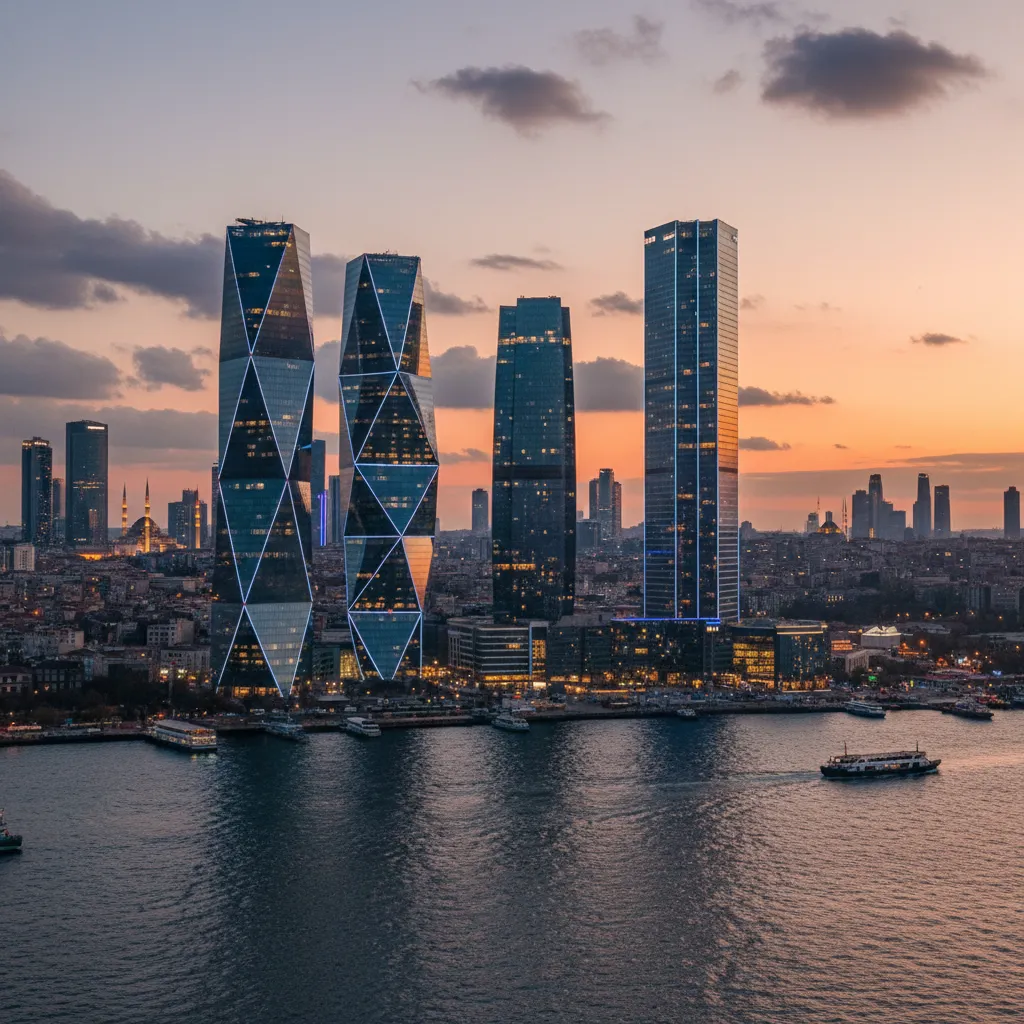
As Turkey’s economic powerhouse, Istanbul commands the highest commercial property values and rental rates. The city’s financial district, shopping centers, and office complexes attract premium investments. Areas like Levent, Maslak, and Atasehir represent prime commercial real estate locations.
Ankara Capital Region
Turkey’s capital offers stable government-related commercial opportunities, with consistent demand for office spaces and mixed-use developments. The presence of embassies, government institutions, and universities creates a steady commercial property market.
Izmir and Aegean Coast
Known for industrial and logistics properties, Izmir serves as a major port city with growing commercial real estate demand. The region’s proximity to Europe makes it attractive for manufacturing and distribution centers.
Antalya and Mediterranean Coast
Tourism-driven commercial real estate dominates this region, with hotels, resorts, and retail properties offering seasonal but lucrative investment opportunities.
Types of Commercial Real Estate Investment Opportunities
Office Buildings and Business Centers
Turkey’s office market has evolved significantly, with modern business centers and Grade A office buildings commanding premium rents. The sector benefits from:
- Growing service sector employment
- International companies establishing regional headquarters
- Flexible workspace demand from startups and SMEs
- Government digitization initiatives
Investment Characteristics
Office properties typically offer stable rental income with lease terms ranging from 3-10 years. Prime locations in Istanbul can yield annual returns of 6-8%, while secondary cities offer 8-12% returns with higher risk profiles.
Retail and Shopping Centers
Turkey’s retail real estate sector has adapted to changing consumer behaviors, with modern shopping malls, outlet centers, and mixed-use retail developments leading growth. The sector benefits from:
- Rising consumer spending power
- Tourism-driven retail demand
- E-commerce integration in physical stores
- Entertainment and dining integration
Performance Metrics
Successful shopping centers in Turkey typically achieve occupancy rates above 90%, with anchor tenants providing stability and smaller retailers driving rental growth. Average yields range from 7-10% depending on location and tenant quality.
Industrial and Logistics Properties
Turkey’s strategic position as a manufacturing and logistics hub creates substantial demand for industrial real estate. Key drivers include:
- Export-oriented manufacturing growth
- E-commerce logistics expansion
- Automotive industry development
- Textile and apparel production
Investment Advantages
Industrial properties offer long-term lease stability, lower maintenance costs, and potential for capital appreciation through land value increases. Yields typically range from 8-12% with lower vacancy risks compared to other property types.
Hospitality and Tourism Properties
Turkey’s position as a major tourist destination creates opportunities in hotel, resort, and vacation rental investments. The sector offers:
- Strong seasonal demand
- International brand partnerships
- Government tourism incentives
- Cultural and historical tourism growth
Risk and Return Profile
Hospitality investments can provide higher returns (10-15%) but carry increased operational complexity and market volatility. Success depends heavily on location, management quality, and tourism market conditions.
Legal Framework and Investment Procedures
Foreign Investment Regulations
Turkey maintains an open and welcoming approach to foreign commercial real estate investment. Key legal provisions include:
Ownership Rights
Foreign individuals and companies can own commercial real estate in Turkey with minimal restrictions. The reciprocity principle applies, meaning investors from countries that allow Turkish citizens to own property enjoy the same rights.
Investment Limits
Foreign ownership is limited to 30% of a given municipality’s area, though this rarely affects commercial investors. Individual foreign investors can own up to 30 hectares of land.
Property Acquisition Process
Due Diligence Requirements
Comprehensive due diligence involves:
- Title deed verification and encumbrance checks
- Zoning and building permit compliance
- Environmental impact assessments
- Structural and technical inspections
- Tax liability verification
Transaction Documentation
Required documents include:
- Sales contract (Satış Sözleşmesi)
- Title deed (Tapu)
- Tax clearance certificates
- Municipal compliance certificates
- Insurance documentation
Tax Implications and Incentives
Property Transfer Tax
Commercial property transfers incur a 4% tax, split equally between buyer and seller. Additional municipal fees may apply depending on location.
Annual Property Tax
Commercial properties face annual property tax rates ranging from 0.2% to 0.6% of assessed value, depending on property type and location.
Investment Incentives
Turkey offers various investment incentives including:
- Reduced corporate tax rates for qualifying investments
- Customs duty exemptions for imported equipment
- Social security premium support
- Land allocation at reduced prices in organized industrial zones
Financial Considerations and Funding Options
Financing Commercial Real Estate Investments
Local Bank Financing
Turkish banks offer commercial mortgage products with competitive terms:
- Loan-to-value ratios up to 70% for commercial properties
- Interest rates varying based on currency and risk profile
- Repayment terms extending up to 15-20 years
- Both Turkish Lira and foreign currency options
International Financing
Foreign investors can leverage international banking relationships for Turkey commercial real estate financing, often securing more favorable terms through established global banks with Turkish operations.
Currency Considerations
Exchange Rate Impact
Currency fluctuations significantly affect commercial real estate returns for foreign investors. Strategies to manage currency risk include:
- Natural hedging through Turkish Lira rental income
- Currency forward contracts
- Diversified currency exposure
- Local financing to match currency exposure
Inflation Protection
Turkish commercial leases often include inflation adjustment clauses, providing natural protection against currency devaluation and maintaining real returns.
Return on Investment Analysis
Rental Yield Calculations
Commercial property yields in Turkey vary significantly by asset class and location:
| Property Type | Prime Locations | Secondary Locations |
|---|---|---|
| Office Buildings | 5-7% | 8-12% |
| Retail Centers | 6-9% | 9-13% |
| Industrial Properties | 7-10% | 10-15% |
| Hospitality Assets | 8-12% | 12-18% |
Capital Appreciation Potential
Historical data shows Turkish commercial real estate has delivered strong capital appreciation, particularly in major urban centers. Factors driving appreciation include infrastructure development, urban regeneration projects, and economic growth.
Market Analysis by Major Cities
Istanbul Commercial Real Estate Market
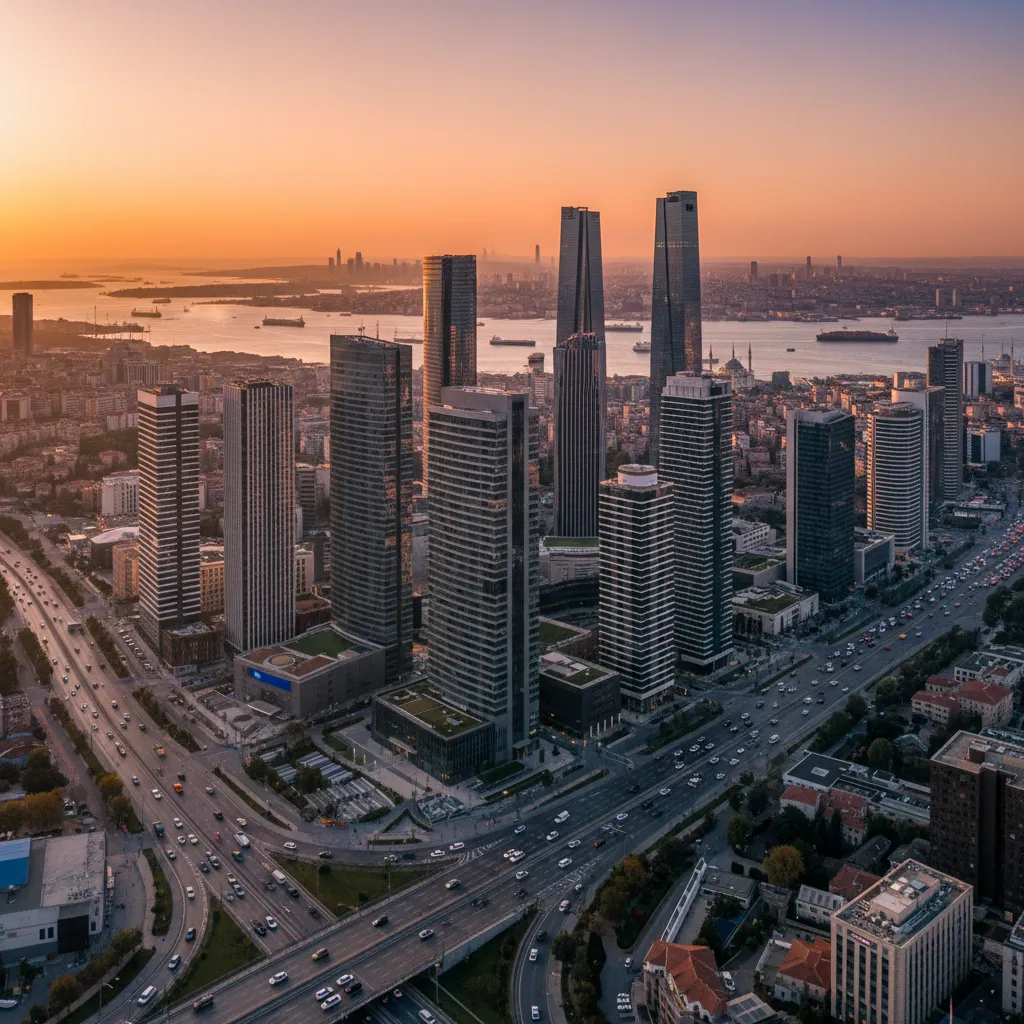
Istanbul dominates Turkey’s commercial real estate landscape, accounting for approximately 40% of total commercial property investment volume. The city’s market characteristics include:
Prime Business Districts
Levent-Maslak Corridor: Turkey’s financial center hosting major banks, multinational corporations, and premium office towers. Properties here command the highest rents but offer stable, long-term returns.
Atasehir Financial Center: Modern business district with state-of-the-art office complexes and mixed-use developments. Growing rapidly as companies relocate from traditional centers.
Sisli-Mecidiyekoy: Established commercial area with excellent transportation links and diverse property types from office buildings to retail spaces.
Emerging Commercial Areas
Several Istanbul districts show strong commercial real estate potential:
- Basaksehir: Rapidly developing area with government support and infrastructure investment
- Beylikduzu: Growing business hub with modern developments and competitive pricing
- Kartal: Benefiting from urban transformation projects and improved transportation
For comprehensive insights into Istanbul’s residential market, which often correlates with commercial trends, explore our detailed Real Estate for Sale in Istanbul: Complete Investment Guide 2026.
Ankara Commercial Property Landscape
As Turkey’s capital, Ankara offers unique commercial real estate opportunities driven by government presence and stable institutional demand:
Key Commercial Districts
- Cankaya: Government and diplomatic quarter with premium office demand
- Kizilay: Central business district with mixed commercial and retail properties
- Sogutozu: Modern business area with corporate headquarters and office complexes
Investment Advantages
Ankara’s commercial market offers several benefits:
- Stable government tenant base
- Lower property prices compared to Istanbul
- Strong university presence driving demand
- Planned infrastructure improvements
Izmir and Regional Markets
Turkey’s third-largest city, Izmir, presents compelling commercial real estate opportunities:
Industrial and Logistics Focus
Izmir’s strategic port location makes it ideal for:
- Manufacturing facilities
- Distribution centers
- Export-oriented businesses
- Free trade zone developments
Commercial Development Areas
- Alsancak: Historic commercial center with modern office developments
- Bayrakli: New business district with planned commercial projects
- Gaziemir: Industrial zone with logistics and manufacturing facilities
Investment Strategies and Best Practices
Portfolio Diversification Approaches
Geographic Diversification
Successful commercial real estate investors in Turkey often employ geographic diversification strategies:
- Primary Markets: Istanbul and Ankara for stability and liquidity
- Secondary Markets: Izmir, Bursa, and Antalya for higher yields
- Emerging Markets: Developing cities for growth potential
Asset Class Diversification
Balanced portfolios typically include:
- 30-40% office properties for stability
- 25-35% retail assets for growth
- 20-30% industrial properties for yield
- 10-15% hospitality or specialty assets for diversification
Due Diligence Best Practices
Market Research Requirements
Comprehensive market analysis should include:
- Local supply and demand dynamics
- Competitive property analysis
- Tenant market assessment
- Infrastructure development plans
- Economic indicators and forecasts
Property-Specific Analysis
Individual property evaluation involves:
- Physical condition assessments
- Environmental compliance verification
- Lease agreement reviews
- Operating expense analysis
- Capital expenditure projections
Risk Management Strategies
Market Risk Mitigation
Effective risk management includes:
- Long-term lease agreements with quality tenants
- Inflation-adjusted rental clauses
- Diversified tenant mix
- Regular property maintenance and upgrades
- Professional property management
Currency and Political Risk
International investors should consider:
- Natural hedging through local income generation
- Political risk insurance
- Diversified investment timelines
- Local partnership structures
Emerging Trends and Future Outlook
Technology Integration in Commercial Real Estate
Smart Building Technologies
Turkish commercial real estate increasingly incorporates advanced technologies:
- IoT-enabled building management systems
- Energy-efficient HVAC and lighting
- Advanced security and access control
- Flexible workspace technologies
PropTech Adoption
Property technology solutions gaining traction include:
- Digital property management platforms
- Virtual reality property tours
- Automated lease management systems
- Predictive maintenance technologies
Sustainability and Green Building Initiatives
Environmental Regulations
Turkey’s increasing focus on environmental sustainability affects commercial real estate through:
- Green building certification requirements
- Energy efficiency mandates
- Waste management regulations
- Carbon footprint reduction targets
Investment Implications
Sustainable commercial properties offer advantages:
- Lower operating costs through energy efficiency
- Higher tenant attraction and retention
- Premium rental rates for certified buildings
- Future-proofing against regulatory changes
Post-Pandemic Market Evolution
Workplace Transformation
COVID-19 has permanently altered commercial real estate demand:
- Flexible workspace solutions growth
- Health and safety feature requirements
- Reduced density office layouts
- Mixed-use development preferences
E-commerce Impact on Retail
Retail commercial real estate adapts to changing consumer behaviors:
- Experience-focused retail concepts
- Last-mile delivery integration
- Omnichannel retail strategies
- Entertainment and dining emphasis
Professional Services and Support
Legal and Advisory Services
Essential Professional Team
Successful commercial real estate investment requires:
- Legal Counsel: Specialized in Turkish property law and foreign investment
- Tax Advisors: Experts in Turkish tax implications and optimization
- Property Consultants: Local market knowledge and deal sourcing
- Architects and Engineers: Due diligence and development support
- Property Managers: Ongoing asset management and tenant relations
Due Diligence Support
Professional services for property acquisition include:
- Legal title and encumbrance verification
- Technical building inspections
- Environmental compliance assessments
- Market valuation and analysis
- Financial structuring advice
Property Management Considerations
Management Service Selection
Choosing the right property management company involves evaluating:
- Local market experience and track record
- Tenant relationship management capabilities
- Financial reporting and transparency
- Maintenance and capital project expertise
- Technology platform sophistication
Performance Monitoring
Effective property management includes regular monitoring of:
- Occupancy rates and tenant satisfaction
- Rental collection and arrears management
- Operating expense control
- Capital expenditure planning
- Market positioning and competitive analysis
Citizenship and Residency Through Real Estate Investment
Turkish Citizenship by Investment Program
Investment Thresholds
Turkey’s citizenship by investment program offers a pathway through real estate:
- Minimum investment of $400,000 in real estate
- Property must be held for minimum three years
- Commercial properties qualify for the program
- Multiple properties can combine to meet threshold
Program Benefits
Turkish citizenship provides:
- Visa-free travel to over 110 countries
- EU candidate country status benefits
- Business establishment rights
- Access to Turkish healthcare and education
- No residency requirements for citizenship maintenance
Residency Permit Options
Short-term Residency
Property ownership facilitates residency permit applications with benefits including:
- Streamlined application process
- Renewable permits up to long-term status
- Family inclusion in applications
- Work permit eligibility
Long-term Residency Pathway
Continuous residency can lead to:
- Long-term resident status after eight years
- Enhanced rights and protections
- Pathway to citizenship through naturalization
- Reduced bureaucratic requirements
Comparative Analysis with Regional Markets
Turkey vs. European Commercial Real Estate
Yield Comparison
Turkish commercial real estate offers attractive yields compared to European markets:
| Country | Office Yields | Retail Yields | Industrial Yields |
|---|---|---|---|
| Turkey | 6-12% | 7-13% | 8-15% |
| Germany | 3-5% | 4-6% | 5-7% |
| France | 3-6% | 4-7% | 5-8% |
| UK | 4-7% | 5-8% | 6-9% |
Growth Potential
Turkey’s commercial real estate market offers superior growth prospects due to:
- Emerging market dynamics
- Demographic advantages
- Infrastructure development
- Economic diversification
Middle Eastern Market Comparison
Regional Advantages
Turkey’s commercial real estate market benefits from:
- Political stability compared to regional alternatives
- Established legal framework for foreign investment
- Diversified economy beyond oil dependence
- European integration aspirations
Investment Climate
Turkey offers a more accessible investment environment through:
- Transparent property registration systems
- Established banking and financial services
- Professional service provider network
- English-language business capabilities
Success Stories and Case Studies
International Investor Experiences
Multinational Corporate Expansions
Several international companies have successfully established Turkish operations through commercial real estate investments:
- Technology companies establishing regional headquarters
- Manufacturing firms building production facilities
- Retail chains expanding into Turkish markets
- Logistics companies developing distribution networks
Investment Fund Performance
International real estate investment funds have demonstrated strong performance in Turkey:
- Diversified portfolio strategies delivering consistent returns
- Value-add investment approaches creating significant appreciation
- Development projects generating substantial profits
- Exit strategies providing liquidity and capital gains
Lessons Learned and Best Practices
Success Factors
Common elements in successful Turkish commercial real estate investments include:
- Thorough local market research and analysis
- Strong local partnerships and professional networks
- Long-term investment horizons and patience
- Active asset management and value creation
- Currency risk management strategies
Common Pitfalls to Avoid
Investors should be aware of potential challenges:
- Underestimating bureaucratic processes and timelines
- Inadequate due diligence on legal and regulatory compliance
- Overreliance on currency appreciation for returns
- Insufficient local market knowledge and cultural understanding
- Poor property management and tenant relationship oversight
Understanding residential market dynamics can provide valuable insights for commercial investors. For detailed information about specific areas, consider reviewing our guides on Cheap Apartments in Basaksehir: Complete 2026 Investment Guide and Houses for Sale in Istanbul to understand broader market trends.
Conclusion
Commercial real estate investment in Turkey presents compelling opportunities for investors seeking attractive returns, portfolio diversification, and exposure to a dynamic emerging market. The country’s strategic location, growing economy, young population, and government support for foreign investment create a favorable environment for commercial property investment.
Success in Turkish commercial real estate requires careful market analysis, thorough due diligence, appropriate risk management, and strong local partnerships. Investors who take a long-term approach, understand local market dynamics, and employ professional management services are well-positioned to achieve superior returns.
The market’s evolution toward sustainability, technology integration, and changing workplace requirements presents both challenges and opportunities. Forward-thinking investors who adapt to these trends while maintaining focus on fundamental investment principles will likely achieve the best outcomes.
As Turkey continues its economic development and integration with global markets, commercial real estate investment opportunities will likely expand and mature. The combination of attractive yields, capital appreciation potential, and citizenship benefits makes Turkey an increasingly attractive destination for international commercial real estate investment in 2026 and beyond.
Potential investors should engage qualified professionals, conduct thorough market research, and develop comprehensive investment strategies tailored to their specific objectives and risk tolerance. With proper preparation and execution, commercial real estate investment in Turkey can provide substantial returns and strategic benefits for international investors.