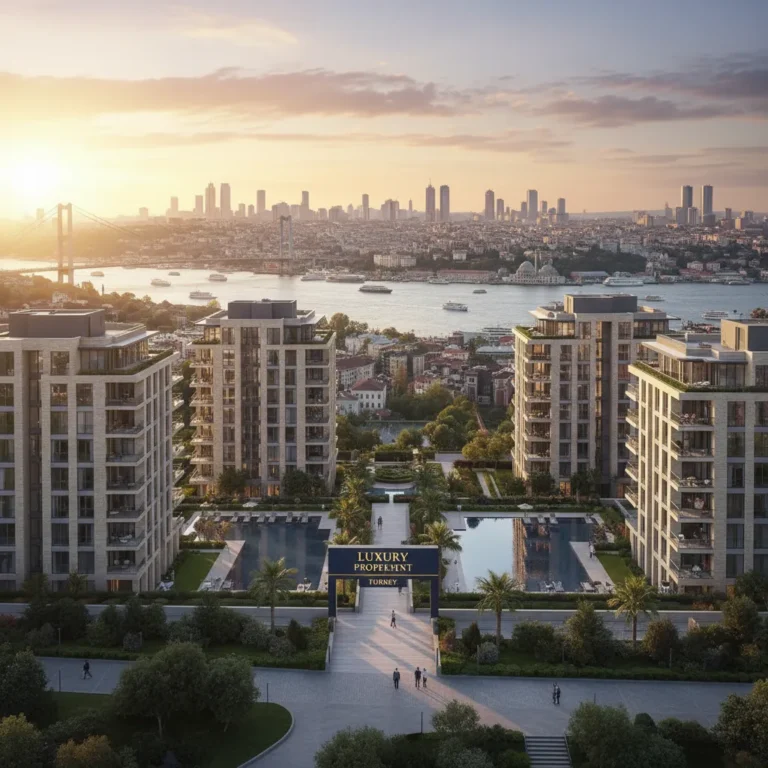
The Dynamics of Real Estate Investment in Istanbul
Istanbul stands as one of the world’s most captivating urban landscapes, straddling two continents across the Bosphorus Strait and anchoring the economic, financial, and cultural heartbeat of Turkey. As a megacity of over 16 million residents, Istanbul presents a multifaceted property market defined by dynamic demographic expansion, continuous infrastructural modernisation, and substantial cross-border capital inflows. For international purchasers and institutional funds alike, acquiring property in this historic metropolis is far more than an aesthetic choice; it represents a strategic hedge against currency volatility, a vehicle for sustainable capital appreciation, and a gateway to global mobility.
In recent years, the municipal landscape of Istanbul has undergone unprecedented transformation. Mega-infrastructure projects—such as the operational Istanbul Airport, the Marmaray trans-continental rail network, the Eurasia Tunnel, and sprawling automated metro lines (like the M11 airport link and M7 cross-city line)—have fundamentally reshaped urban accessibility. As older districts undergo rigorous urban regeneration (kentsel dönüþüm) and master-planned satellite suburbs flourish with state-of-the-art residential complexes, investors have access to diverse asset classes ranging from boutique historical apartments to hotel-concept high-rises.
Understanding how to navigate this multifaceted market requires evaluating macroeconomic drivers, neighborhood-level pricing disparities, regulatory updates, and long-term asset management protocols. Whether your objective is to generate stable rental income, realize capital growth upon exit, or establish eligibility for residency and nationality, this exhaustive guide delivers the data-driven clarity needed to master real estate investment in Istanbul.
Get a free consultation now, and let us help you choose the right property.
Why Invest in Istanbul Real Estate? Core Macro & Micro Drivers
To evaluate the long-term viability of apartments for sale in Istanbul, investors must examine the core economic and demographic fundamentals supporting the city’s housing ecosystem. Unlike speculative micro-markets that rely strictly on international tourism, Istanbul possesses a vast, resilient domestic consumer base that constantly fuels primary sales and secondary rental absorption.
1. Unmatched Geopolitical and Commercial Centrality
Positioned within a four-hour flight radius of over 1.5 billion people across Europe, the Middle East, Central Asia, and North Africa, Istanbul serves as a regional corporate headquarters for hundreds of Fortune 500 enterprises. The establishment and consolidation of the Istanbul Financial Center (IIFC) in Ümraniye/Ataþehir has further cemented the city’s ambition to rival financial capitals such as London, Dubai, and Singapore, attracting thousands of affluent professionals seeking upscale urban accommodation.
2. Demographic Expansion and Domestic Demand
Istanbul’s population grows organically by hundreds of thousands of residents each year, driven by internal migration, university matriculation (the city hosts over 50 public and private universities), and multinational labor expansion. Furthermore, family dynamics in Turkey are evolving rapidly; household sizes are shrinking, resulting in a dramatic surge in demand for smaller, functional apartment layouts such as 1+1 and 2+1 configurations. This ongoing structural shift ensures consistently low vacancy rates across well-connected districts.
3. Favorable Entry Prices and Global Purchasing Power
Despite sustained price inflation in local currency terms, foreign currency investors holding US Dollars, Euros, or British Pounds find Istanbul exceptionally competitive on a price-per-square-meter basis when compared to major European capitals like Paris, Berlin, Madrid, or Vienna. Prime luxury apartments overlooking the Bosphorus trade at a fraction of comparable waterfront prime real estate in Western Europe or North America, offering an attractive risk-to-reward ratio.
4. Legislative Catalysts and Investor Incentives
The Turkish government maintains forward-looking policies geared toward attracting foreign direct investment (FDI). Significant incentives include exemptions from Value Added Tax (KDV) for first-time foreign buyers transferring foreign exchange into the country, streamlined Title Deed (Tapu) offices, and dedicated foreign investor service desks. Coupled with the broader national ecosystem detailed in our comprehensive guide on Real Estate Investment in Turkey | Apartments and Villas for Sale, Istanbul remains the undisputed epicenter of Turkish real estate transactions.
Prime Istanbul Districts: A Comparative Geographic Breakdown
The geography of Istanbul is fundamentally split between the European Side (home to historic business quarters, diplomatic missions, and major industrial-commercial arteries) and the Asian Side (distinguished by quiet coastal avenues, elite residential neighborhoods, and emerging fintech corridors). Selecting the optimal district demands matching your investment horizon with localized rental dynamics.
European Side: High Liquidity, Commerce, and Regeneration
Beþiktaþ, Þiþli, and Niþantaþý (Central Luxury & Heritage)
These established central districts represent the pinnacle of luxury, cosmopolitan prestige, and ultra-high liquidity. Niþantaþý serves as the city’s fashion and haute couture capital, while Beþiktaþ hugs the shoreline of the Bosphorus with landmark palaces and world-class hotels. Þiþli (encompassing Bomonti and Mecidiyeköy) acts as an international corporate node featuring high-rise branded residences with five-star concierge services. While entry prices per square meter here are among the highest in the Republic, capital preservation is unmatched, and properties command high rental demand from diplomats, executives, and affluent expats.
Sarýyer and Maslak (The Northern Green & Corporate Belt)
Maslak is Istanbul’s primary central business district, characterized by gleaming skyscrapers, high-end shopping centers, and leading private universities. Immediately north lies Sarýyer, where exclusive neighborhoods like Tarabya, Yeniköy, and Zekeriyaköy blend tranquil forested landscapes with waterfront mansions (yalý). Investing in modern compounds in Maslak or luxury low-rise villas and apartments in Sarýyer offers access to ultra-high-net-worth tenants seeking proximity to major international schools and corporate offices.
Basýn Ekspres and Küçükçekmece (The Infrastructure Highway)
The Basýn Ekspres corridor, linking the E-5 highway with the TEM (E-80) motorway and continuing north toward Istanbul Airport, has been systematically designated as a strategic commercial and hotel zone. Investors find mixed-use residential developments featuring serviced hotel concepts, home-office licenses, and rapid metro connectivity. Entry prices here are moderate, making this corridor one of the most prolific destinations for mid-market investors pursuing strong capital appreciation as new transit infrastructure becomes operational.
Kaðýthane and Eyüpsultan (The Urban Regeneration Corridors)
Bordering Þiþli and Maslak, Kaðýthane has transitioned from an older light-industrial valley into one of the city’s most successful urban renewal success stories. With the introduction of the M7 and M11 metro lines, residents can commute to Þiþli in under 10 minutes and Istanbul Airport in under 25 minutes. Consequently, young corporate professionals have flooded the area, creating a buoyant rental market for well-designed 1-bedroom and 2-bedroom residential units.
Asian Side: Sophistication, Stability, and Emerging Finance
Kadýköy and Baðdat Avenue (The Coastal Prestige Hub)
Kadýköy is the cultural and commercial crown jewel of the Asian Side. Along the legendary Baðdat Avenue (Baðdat Caddesi), high-end retail, Michelin-recognized dining, and upscale seaside promenades create an unparalleled quality of life. The real estate market here consists primarily of boutique urban regeneration developments built to the highest earthquake resistance specifications. While rental yields hover around stable European averages (4% to 5.5%), capital retention and long-term domestic resale liquidity are extraordinarily high.
Ataþehir and Ümraniye (The Istanbul Financial Center Orbit)
With the physical consolidation of the Central Bank of the Republic of Turkey, state banks, and multinational asset managers into the Istanbul International Financial Center (IIFC), the surrounding areas of Ataþehir and Ümraniye have experienced massive real estate capitalization. Demand for luxury apartment towers, master-planned residential compounds with lifestyle amenities, and corporate housing has surged, transforming this zone into one of the most bankable rental growth corridors in the metropolis.
Kartal and Maltepe (Seaside Panorama and Transit Connectivity)
Stretching along the Marmara coastal highway with direct views of the Princes’ Islands, Maltepe and Kartal offer cost-effective alternatives to central districts while providing exceptional transport links via the Marmaray rail and the D-100 highway. These neighborhoods attract upper-middle-class families looking for self-contained communities with extensive green spaces, private security, children’s facilities, and panoramic sea vistas.
Istanbul District Investment Comparison Matrix
| District | Side | Average Price Tier | Gross Rental Yield | Primary Tenant Profile | Growth Catalyst |
|---|---|---|---|---|---|
| Beþiktaþ / Þiþli | European | Ultra-Prime / Luxury | 4.5% – 6.0% | Expats, Executives, Diplomats | Scarcity of land, high prestige |
| Maslak / Sarýyer | European | High-End to Luxury | 5.0% – 6.5% | Corporate Leadership, Families | CBD concentration, green spaces |
| Kaðýthane | European | Mid to Upper-Mid | 6.5% – 8.0% | Young Tech/Finance Workers | Direct airport & CBD metro lines |
| Basýn Ekspres | European | Moderate / Accessible | 6.0% – 7.5% | Commercial Staff, Tourists | Hotel concepts, logistics nodes |
| Kadýköy (Baðdat Ave) | Asian | Prime Residential | 4.0% – 5.5% | High-Income Locals, Retirees | Lifestyle appeal, coastal prestige |
| Ataþehir / Ümraniye | Asian | Upper-Mid to High | 6.0% – 7.8% | Financial Sector Employees | Istanbul Financial Center launch |
Asset Classes: Exploring Diverse Apartments for Sale
Investing in Istanbul requires matching your portfolio needs with the specific characteristics of available property types. Each residential asset class comes with distinct capital expenditure demands, management overheads, and target tenant demographics.
1. Master-Planned Family Compounds (Site Yaþamý)
The hallmark of modern Turkish residential architecture is the gated residential compound, universally referred to as a site. These developments feature multi-building clusters enclosing vast private courtyards, subterranean parking garages, indoor and outdoor swimming pools, fitness centers, Turkish baths, and 24/7 security personnel. For families with children, these self-contained ecosystems offer safety and community. Investors benefit from exceptionally low tenant turnover, as domestic families typically sign multi-year leases and take long-term custody of the home.
2. Branded Luxury Residences and Hotel Concepts
In high-density commercial centers such as Þiþli, Bomonti, and Basýn Ekspres, developers collaborate with international hospitality brands (e.g., Marriott, Accor, Kempinski) to create branded serviced residences. These apartments feature reception lobbies, valet services, room service, and rental pool arrangements. They are tailored for institutional investors or international buyers seeking passive income without the hands-on burden of day-to-day property management.
3. Off-Plan Development Projects vs. Ready-to-Move Stock
Purchasing an apartment off-plan allows investors to secure below-market entry pricing, typically accompanied by structured milestone payment schedules spanning 24 to 36 months without interest. As construction progresses toward completion, capital appreciation can yield margins of 20% to 35% above the initial purchase cost. Conversely, ready-to-move stock provides immediate rental yields and instant title deed delivery, which is mandatory for buyers pursuing residency or citizenship by investment.
4. Historic Renovations and Urban Regeneration Apartments
In historical neighborhoods like Beyoðlu (Cihangir, Galata) and Balat, boutique investors acquire apartments inside 19th-century Art Nouveau buildings, undertaking architectural refurbishments to cater to the cultural short-let and expat market. Meanwhile, across Kadýköy and Beþiktaþ, modern single-block developments built under strict earthquake safety codes offer modern finishes inside historic, tree-lined residential streets.
Get a free consultation now, and let us help you choose the right property.
The Acquisition Process: Step-by-Step Legal Protocol for Foreign Buyers
Acquiring real estate in Istanbul as a non-resident foreign national is straightforward when managed alongside regulated legal and advisory professionals. The Republic of Turkey operates a secure, centralized property registry system through the General Directorate of Land Registry and Cadastre (Tapu ve Kadastro Genel Müdürlüðü).
Stage 1: Preliminary Property Selection and Due Diligence
Before transferring earnest money or signing reservation contracts, robust legal due diligence must be completed. This involves verifying that the property possesses a clean Title Deed (Tapu) devoid of outstanding mortgages (ipotek), judicial liens (haciz), or zoning disputes. The building must hold an official occupancy permit (Ýskan), which certifies that construction conforms strictly to municipal planning blueprints and seismic safety guidelines.
Stage 2: Securing a Turkish Tax Identification Number and Bank Account
The buyer acquires a Potential Tax Number (Vergi Kimlik Numarasý) through the tax authority. Next, a non-resident bank account is opened at a premier Turkish institution (such as Garanti BBVA, Ýþbank, or Kuveyt Türk). This account is crucial for executing transparent fund transfers and securing central bank compliance documents.
Stage 3: Mandatory Real Estate Valuation Report (Ekspertiz Raporu)
Turkish law mandates that every foreign property purchase be appraised by an independent, Capital Markets Board (SPK)-licensed valuation firm. The appraiser evaluates structural integrity, spatial square footage, location variables, and legal status to determine the fair market value of the property. The transaction value declared on the official title deed cannot contradict the valuation parameters established in this document.
Stage 4: Currency Exchange Certificate (Döviz Alým Belgesi – DAB)
To curb illicit capital flows and maintain transparent central bank reserves, all foreign buyers purchasing property must exchange their foreign currency (USD, EUR, GBP) into Turkish Lira via an authorized intermediary commercial bank, which submits the funds directly to the Central Bank of the Republic of Turkey (TCMB). The bank issues an official Foreign Exchange Purchase Certificate (DAB), validating that the foreign currency entered the country legally.
Stage 5: Official Execution of the Title Deed (Tapu Devri)
The final transfer occurs exclusively in person (or via a notarized Power of Attorney) before an official registrar at the local Land Registry Office. Once the buyer, seller, sworn translator, and bank representatives sign the official documentation, the physical Title Deed (Tapu Senedi) is granted to the investor, conferring unconditional freehold ownership.
Associated Purchasing and Transaction Costs
Investors should budget approximately 7% to 9% above the purchase price to account for transaction-related overheads, broken down as follows:
- Title Deed Transfer Tax (Tapu Harcý): Statutorily set at 4% of the declared transaction value (customarily split equally as 2% buyer and 2% seller, though commercial agreements may vary).
- SPK Property Valuation Fee: Standardized administrative appraisal cost, typically equivalent to $250 – $500.
- Sworn Translator and Notary Fees: Approximately $300 – $600 for passport translations, representation filings, and official closings.
- Value Added Tax (KDV): Ranges from 1% to 20% depending on property grade, square footage, and municipality. Notably, qualifying foreign buyers purchasing new developments can obtain full KDV exemption if the funds originate outside Turkey.
- Compulsory Earthquake Insurance (DASK): Baseline national seismic insurance policy, renewable annually, costing roughly $50 – $150 depending on apartment size.
Residency and Citizenship Opportunities via Real Estate
Real estate acquisitions in Istanbul provide concrete avenues for acquiring legal residency or citizenship, serving as a pillar of global mobility planning for families worldwide.
The Turkish Citizenship by Investment (CBI) Program
Under current regulations, international investors purchasing real estate with an aggregate value of at least $400,000 USD (or equivalent in converted foreign currency) qualify to apply for full Turkish citizenship for themselves, their legal spouse, and all children under the age of 18. Key stipulations include:
- The valuation report, DAB certificate, and Land Registry transaction receipt must all confirm that the investment meets or exceeds the $400,000 threshold.
- A formal covenant (Þerh) is annotated on the Title Deed, stating that the asset cannot be sold or liquidated for a minimum period of three consecutive years.
- Investors retain absolute freedom to lease the property throughout the 3-year holding period, generating rental income while enjoying the benefits of a Turkish passport.
For an exhaustive analysis of legal stipulations, application pipelines, and required documentation, consult our detailed Turkish Citizenship for Investors: Property Guide.
Real Estate-Linked Residence Permits (Ýkamet)
For buyers who do not seek full citizenship or whose capital allocation falls below the $400,000 threshold, Turkish immigration law grants renewable short-term real estate residence permits. Under prevailing criteria, foreign nationals acquiring residential property valued at $200,000 USD or more (based on the registered valuation on the title deed) are eligible to obtain and renew property-owner residence permits, allowing legal, year-round living privileges across the Republic.
Maximizing Rental Yields & Active Property Management
An apartment acquisition in Istanbul must be actively managed to achieve peak operational returns. Yields vary widely depending on lease models, tenant profiles, and operational structures.
Long-Term Residential Leasing
The standard residential model involves renting to local families or corporate workers on a 1-year contract, typically renewable. Under Turkish law, lease agreements are subject to statutory rental