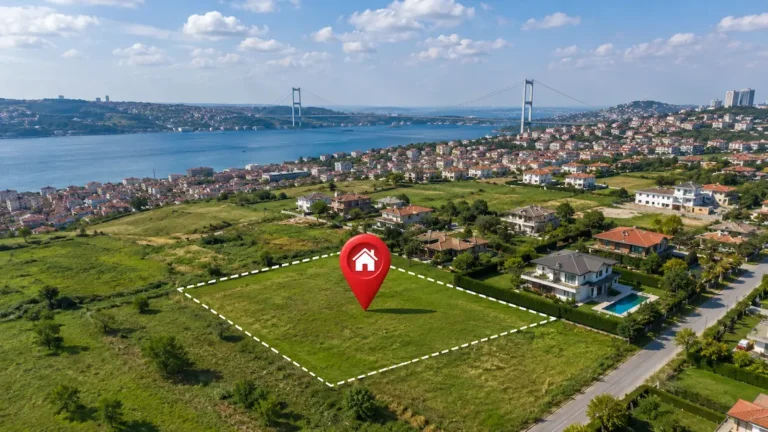
Introduction: The Global Appeal of Turkish Citizenship
In the contemporary geopolitical landscape, acquiring a second passport is no longer merely an extravagance for the ultra-wealthy; it has evolved into an essential risk-mitigation strategy, a financial hedge, and an instrument of international mobility. Among global citizenship programmes, Turkish citizenship stands out as one of the most accessible, strategically advantageous, and commercially viable avenues available to international investors, entrepreneurs, and families.
Situated uniquely at the crossroads of Europe, Asia, and the Middle East, the Republic of Turkey offers an unparalleled combination of lifestyle quality, economic dynamism, and strategic connectivity. Over the past decade, the Turkish government has systematically modernized its legal frameworks to accommodate foreign direct investment, establishing streamlined pathways that allow qualified applicants to transition from property buyers or capital depositors into fully recognized citizens with comprehensive legal rights.
As regulatory requirements and minimum thresholds adapt to evolving economic conditions in 2026, understanding the precise mechanisms, statutory provisions, and documentation standards of acquiring Turkish citizenship is critical. This comprehensive guide delivers an exhaustive, legally grounded analysis of every pathway to citizenship, with specialized focus on the citizenship by investment (CBI) programme, property acquisition protocols, tax implications, and post-acquisition compliance.
Legal Pathways to Obtaining Turkish Citizenship
Turkish nationality law is codified primarily under Turkish Citizenship Law No. 5901, supplemented by Executive Decree No. 106 and subsequent legislative amendments. Under these statutes, nationality can be acquired through several distinct channels, categorized into original citizenship (by birth or descent) and acquired citizenship (through legal petition, marriage, or economic contribution).
1. Citizenship by Investment (Exceptional Route)
Under Article 12 of Law No. 5901 and Article 20 of the Regulation on the Implementation of the Turkish Citizenship Law, foreign nationals who make specific capital commitments or purchase qualifying assets can be granted Turkish citizenship through an accelerated administrative procedure. Bypassing standard language proficiency tests and prolonged physical residency obligations, this pathway remains the primary mechanism for international investors.
2. Citizenship by General Naturalization (Five-Year Residency)
Foreign nationals who legally reside in Turkey for a continuous period of at least five years under an eligible residency status (such as a work permit or property-based residence permit) can apply for naturalization under Article 11 of Law No. 5901. Key requirements include:
- Uninterrupted lawful residence without spending more than 360 cumulative days outside Turkey during the five-year period.
- Demonstrable proficiency in the Turkish language sufficient for everyday social integration.
- A verifiable regular income or independent financial means to support oneself and any dependents.
- Absence of infectious diseases posing a public health risk, confirmed through official medical clearance.
- Clean criminal record and clear background vetting demonstrating that the applicant poses no threat to national security or public order.
3. Citizenship by Marriage (Spousal Naturalization)
Under Article 16 of Law No. 5901, marriage to a Turkish national does not grant automatic citizenship. Instead, foreign spouses become eligible to apply after completing three continuous years of legal marriage. The marriage must be active, genuine, and marked by family unity. Applications are subjected to rigorous scrutiny by local police and administrative commissions to verify that the union is not a sham marriage intended solely for immigration benefits.
4. Citizenship by Descent and Lineage
Turkey adheres strictly to the principle of jus sanguinis (right of blood). A child born anywhere in the world to at least one parent holding Turkish citizenship is automatically a Turkish citizen from birth. Furthermore, individuals who can prove uninterrupted lineage to Ottoman or Turkish citizens through certified archival records (such as population registries maintained by the General Directorate of Civil Registration and Nationality) may claim citizenship through historical descent.
5. Exceptional Citizenship via the Turquoise Card
Modeled after the US Green Card and European Blue Card, Turkey’s Turquoise Card (Turkuaz Kart) provides specialized residency rights with a direct transition to citizenship for globally recognized scientists, cultural icons, elite athletes, and innovative technology founders whose presence offers strategic intellectual or economic value to the nation.
Turkish Citizenship by Investment: Economic Thresholds
The Turkish Citizenship by Investment Programme is universally recognized for its administrative efficiency and relatively fast processing timeline. Investors have several economic paths to choose from, each governed by specific statutory minimums.
Get a free consultation now, and let us help you choose the right property.

Get a free consultation now, and let us help you choose the right property.
1. Real Estate Investment Route ($400,000 Minimum)
By far the most popular pathway, accounting for over 80% of all investment-based applications, is the purchase of real estate. Under updated statutory thresholds, an investor must acquire real estate with a minimum total value of $400,000 USD (or equivalent in foreign currency). Key legal stipulations include:
- Currency Conversion Mandate: Funds used to purchase the property must originate outside Turkey and be converted through the Central Bank of the Republic of Turkey (TCMB) via an authorized commercial bank, producing a formal Foreign Exchange Certificate (Döviz Alım Belgesi or DAB).
- Three-Year Holding Covenant: A formal restriction (şerh) is registered on the title deed (tapu), legally prohibiting the resale or transfer of the property for a mandatory period of three calendar years from the date of acquisition.
- Appraisal and Valuation Report: The property must be evaluated by a licensed Capital Markets Board (SPK) appraisal firm to substantiate that its physical value matches or exceeds the declared transaction figure.
Prospective buyers seeking comprehensive breakdowns of property verification and legal stages should consult our Turkish Citizenship by Property: Step Guide for tactical details on structuring successful acquisitions.
2. Fixed Capital Contribution ($500,000 Minimum)
Investors can commit at least $500,000 USD into a newly formed or existing Turkish enterprise as equity or fixed capital. This investment must be formally confirmed and certified by the Ministry of Industry and Technology.
3. Bank Deposit Pathway ($500,000 Minimum)
An applicant can deposit a minimum of $500,000 USD (or equivalent foreign currency) into a licensed bank operating within Turkey. The funds must be placed under an escrow lock-up commitment guaranteeing that the deposit will not be withdrawn for at least three consecutive years. Interest or yield generated by the funds throughout this period can, however, be accessed by the depositor. This pathway is verified and monitored by the Banking Regulation and Supervision Agency (BDDK).
4. Government Debt Instruments and Sovereign Bonds ($500,000 Minimum)
Purchasing government debt instruments, sovereign bonds, or treasury bills amounting to a minimum of $500,000 USD with a three-year holding agreement serves as another viable financial route. This process is monitored and validated by the Ministry of Treasury and Finance.
5. Real Estate Investment Fund (REIF) or Venture Capital Fund Shares ($500,000 Minimum)
For investors seeking hands-off assets without the administrative obligations of direct property management, acquiring at least $500,000 USD in registered Real Estate Investment Fund (GSYF / REIF) units provides an attractive institutional route. The Capital Markets Board oversees verification for this category.
6. Employment Creation Route (50 Turkish Citizens)
Entrepreneurs who establish a legally compliant domestic business that generates verifiable, continuous employment for at least 50 Turkish citizens (registered with the Social Security Institution / SGK) are eligible for citizenship. Certification is issued by the Ministry of Labor and Social Security.
Comparative Evaluation of Investment Routes
The following table outlines the operational differences between each investment pathway available to applicants pursuing Turkish citizenship:
| Investment Pathway | Statutory Minimum | Regulating Ministry / Authority | Holding Period | Yield Potential |
|---|---|---|---|---|
| Real Estate Acquisition | $400,000 USD | Ministry of Environment, Urbanization and Climate Change | 3 Years | Rental returns + Capital Appreciation |
| Bank Deposit | $500,000 USD | Banking Regulation and Supervision Agency (BDDK) | 3 Years | Fixed deposit interest / currency yields |
| Sovereign Bonds | $500,000 USD | Ministry of Treasury and Finance | 3 Years | Coupon payments / bond yields |
| REIF / Fund Shares | $500,000 USD | Capital Markets Board of Turkey (SPK) | 3 Years | Fund dividends + Asset revaluation |
| Fixed Capital Investment | $500,000 USD | Ministry of Industry and Technology | 3 Years | Corporate equity returns / profit sharing |
| Employment Creation | 50 Full-time Employees | Ministry of Labor and Social Security | 3 Years Ongoing | Operating enterprise profits |
Step-by-Step Acquisition Process: The Real Estate Route
Navigating the real estate pathway requires precise coordination between legal representatives, municipal authorities, financial institutions, and land registries. Below is the exact procedural sequence required for an investor to successfully obtain Turkish citizenship through property acquisition.
Stage 1: Comprehensive Property Due Diligence and Selection
Before executing any contract or transferring capital, thorough legal due diligence must be completed on the property. This includes ensuring that the title deed (Kat Mülkiyeti or Kat İrtifakı) is free from encumbrances, existing mortgages, zoning infractions, or adverse claims. Moreover, statutory rules prohibit property from being purchased from a seller who previously acquired it through or transferred it into the citizenship programme.
To better understand risk prevention and asset selection, review our specialized resource on Turkish Citizenship for Investors: Property Guide.
Stage 2: Official Appraisal and SPK Valuation
The Land Registry Directorate mandates that an authorized independent valuation expert, registered with the Turkish Capital Markets Board (SPK), inspects the property. The resulting appraisal report must confirm that the market valuation meets or exceeds the required threshold. The valuation is submitted electronically via the Land Registry and Cadastre Information System (TAKBİS).
Stage 3: Currency Exchange and Issuance of the DAB Certificate
To adhere to the Central Bank’s circular on capital transfers, foreign currency must be wired to an authorized Turkish intermediary bank. The bank converts the foreign exchange into Turkish Lira and issues the Foreign Exchange Certificate (DAB), which formally states:
- The investor’s full legal name and passport number.
- The exact amount converted into Turkish Lira.
- The specific statutory reference indicating that the conversion is executed for acquiring Turkish citizenship under Article 20 of the Citizenship Law.
Stage 4: Title Deed Conveyance and Three-Year Encumbrance
Once the funds are remitted to the seller, the buyer and seller execute the formal deed conveyance at the local Land Registry Office (Tapu Müdürlüğü). During conveyance, an official annotation is inscribed onto the title record stating: “Pursuant to Article 20 of the Regulation on the Implementation of the Turkish Citizenship Law, this property cannot be sold or transferred for a period of three years.”
Stage 5: Certificate of Conformity (Uygunluk Belgesi)
Following title registration, all transaction documentation—including appraisal reports, DAB records, bank transfer slips, and title deeds—is submitted to the General Directorate of Land Registry and Cadastre. Upon verification, the department issues the Certificate of Conformity (Uygunluk Belgesi), the foundational legal instrument establishing eligibility for the citizenship application.
Stage 6: Special Investor Residence Permit (Article 31/J)
Applicants must obtain a specialized short-term residence permit granted specifically to citizenship-track investors under Law No. 6458 on Foreigners and International Protection (Article 31/J). This permit is processed through priority desks at the Presidency of Migration Management (Göç İdaresi Başkanlığı) and does not require minimum physical residency inside Turkey.
Stage 7: Final Citizenship Filing, Security Vetting, and Passport Issuance
With the residence permit in hand, the complete citizenship dossier is lodged with the Special Joint Citizenship Bureau. The application undergoes multi-agency security vetting involving:
- The Ministry of Interior (İçişleri Bakanlığı).
- The National Intelligence Organization (MİT).
- Interpol and international police databases.
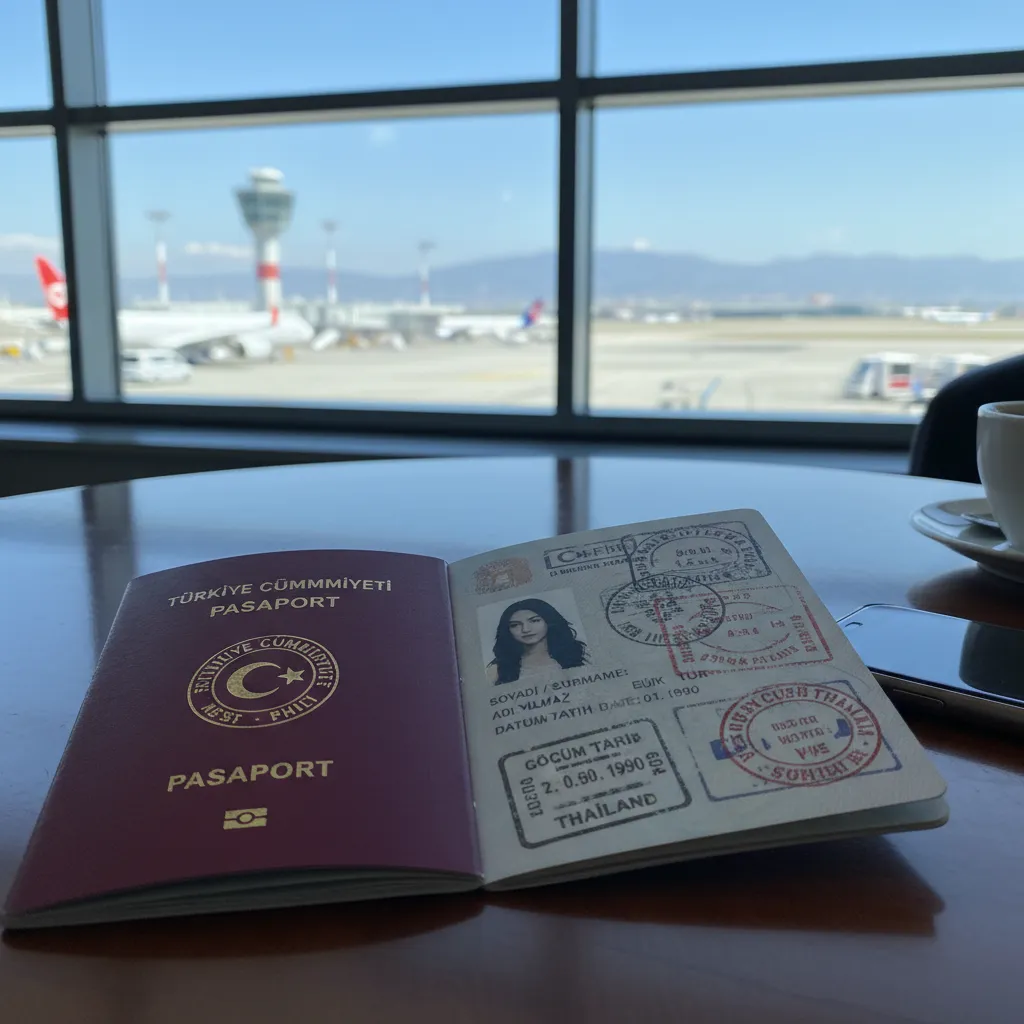
Upon final sign-off and approval from the President of the Republic of Turkey, citizenship is granted. The primary applicant and eligible family members visit a local civil registry office (Nüfus Müdürlüğü) or an accredited Turkish embassy abroad to complete biometric data registration and receive their Turkish national identity cards and biometric passports.
For an updated roadmap incorporating all modern administrative adjustments, refer to our comprehensive Turkish Citizenship by Property 2026: Full Guide.
Documentary Checklist and Authentication Standards
Incomplete or incorrectly authenticated documentation is the leading cause of processing delays. All documents originating outside of Turkey must be apostilled in accordance with the Hague Convention of 1961 or authenticated by the Ministry of Foreign Affairs in the issuing jurisdiction and the relevant Turkish consular mission.
Get a free consultation now, and let us help you choose the right property.
Get a free consultation now, and let us help you choose the right property.
Primary Applicant Dossier:
- Original Passports: High-resolution color copies of all valid passports, authenticated and translated into Turkish by a certified sworn translator and notarized within Turkey.
- Birth Certificate: Full extract listing parental names, duly apostilled/consularized, translated, and notarized.
- Certificate of Civil Status: Marriage certificate, divorce decree, or death certificate (if applicable), apostilled and officially translated.
- Criminal Record Clearance: Issued by the competent law enforcement authority of the country of nationality or permanent residence within the preceding six months.
- Proof of Address: Recent utility bill or governmental residency certificate establishing home domicile.
- Biometric Photographs: Compliant with ICAO standards, taken within the last six months.
- Power of Attorney (PoA): Executed before a Turkish notary or Turkish consulate, explicitly authorizing legal counsel to file citizenship applications, obtain residence permits, and register real estate on the applicant’s behalf.
Family Inclusions and Dependency Guidelines
The primary applicant’s citizenship grant extends automatically to:
- Legal Spouse: Legally recognized under civil law (polygamous marriages are strictly unrecognized; only one spouse may be included).
- Biological or Legally Adopted Children Under Age 18: Minor children are integrated into the primary file without supplementary capital investments. Children who reach age 18 prior to the formal granting of citizenship must submit an independent economic application.
- Dependent Adult Children with Disabilities: Adult children facing documented, certified physical or intellectual disabilities that prevent independent living can be included subject to official medical board approval.
Strategic Benefits of Holding a Turkish Passport
Acquiring Turkish citizenship unlocks substantial lifestyle, economic, and geopolitical privileges. The strategic utility of a Turkish passport extends far beyond simple residency rights.
1. Global Mobility and Visa Privileges
A Turkish passport provides visa-free, visa-on-arrival, or electronic travel authorization (e-Visa) access to over 110 countries worldwide. Notable destinations include key commercial and travel hubs throughout Latin America, East and Southeast Asia (such as Japan, South Korea, and Singapore), the Western Balkans, and southern Africa.
2. Recognition of Dual Citizenship
Turkey fully permits dual and multiple citizenships under Article 44 of Law No. 5901. Turkish authorities do not require investors to renounce their original citizenship upon receiving Turkish nationality, nor do they notify foreign governments of the acquisition, preserving confidentiality for international applicants.
3. Access to Universal Healthcare and Education
New citizens enjoy complete access to the General Health Insurance (Genel Sağlık Sigortası) framework, granting free or heavily subsidized treatment across modern public healthcare institutions, university research hospitals, and subsidized private clinics. Furthermore, children are entitled to tuition-free education in state-run primary and secondary institutions, alongside preferred domestic tuition rates across Turkey’s higher education system.
4. Business Operations and Free Trade Gateways
Turkey boasts an active Customs Union agreement with the European Union, facilitating frictionless cross-border trade in manufactured and industrial goods. Combined with Turkey’s expansive network of over 20 Bilateral Free Trade Agreements, business owners operate from a prime commercial springboard into Central Asia, the Caucasus, and the Middle East.
5. Access to the US E-2 Treaty Investor Visa
Turkey is an active signatory to the E-2 Treaty with the United States. While nationals of non-treaty countries (such as India, China, or Russia) cannot directly access E-2 visas, Turkish citizens are fully eligible. By establishing or acquiring a substantial business inside the US, Turkish passport holders can secure long-term, renewable residency in America without the capital minimums or processing backlogs associated with EB-5 immigrant investor visas.
Fiscal Policies, Taxation, and Residency Rules
A common concern among international investors relates to the fiscal obligations accompanying citizenship. It is critical to differentiate between citizenship status and tax residency under the Turkish Revenue Administration (Gelir İdaresi Başkanlığı).
1. The 183-Day Rule and Tax Residency
Under Article 4 of the Turkish Income Tax Law (Law No. 193), an individual is deemed a tax resident of Turkey only if they:
- Maintain their primary, permanent center of vital life interests (domicile) in Turkey; or
- Reside continuously within Turkey for more than six months (183 days) within a single calendar year.
Merely holding Turkish citizenship does not trigger worldwide income taxation. Non-resident Turkish citizens residing abroad are classified as limited tax subjects (dar mükellef), meaning they are taxed solely on income generated within the territorial boundaries of Turkey (such as domestic rental income or localized corporate dividends).
2. Property Ownership and Transfer Taxes
When executing real estate purchases for citizenship purposes, investors encounter several standardized statutory levies:
- Title Deed Transfer Fee (Tapu Harcı): A 4% transaction fee calculated on the declared value, typically split equally (2% each) between buyer and seller, though subject to private contractual agreement.
- Value Added Tax (VAT / KDV): Ranges from 1% to 20% on new properties. However, non-resident foreign investors making purchases in foreign currency can obtain full statutory exemption from VAT under Article 13/i of the VAT Law, provided the property is retained for at least one year.
- Annual Property Tax (Emlak Vergisi): Standard municipal taxation ranges from 0.1% to 0.6% annually, depending on whether the asset is classified as residential, commercial, or agricultural, and whether it sits inside a metropolitan municipality.
3. Capital Gains and Inheritance Regulations
If an investor retains real estate for more than five calendar years, profits realized upon resale are 100% exempt from personal capital gains tax under Turkish tax regulations. Inheritance and gift tax rates (Veraset ve İntikal Vergisi) range conservatively between 1% and 30%, depending on the degree of consanguinity and the total value of the transferred estate.
Pitfalls and Due Diligence Warnings
While the Turkish Citizenship by Investment Programme is an established administrative process, common procedural missteps can cause significant delays or application rejections. Mitigating these risks requires active oversight.
Discrepancy Between SPK Valuation and Municipal Values
If an appraisal report indicates an asset value even a fraction below the $400,000 threshold, the application will be denied. Working with developers who insist on declaring lower sales values on the title deed to reduce their corporate tax exposure is a critical hazard; the figure appearing on the title deed, the bank receipt, and the SPK valuation must all reconcile cleanly above the statutory limit.
Unauthorized or Ineligible Currency Intermediaries
Direct cash handovers or funds remitted through informal Hawala networks are explicitly barred. Every dollar transferred must enter through the official banking system with direct swift messaging records and matching identification trails to secure the required DAB certificate.
Purchasing from Unqualified Prior Owners
Turkish regulations prohibit an investor from acquiring real estate from a foreign national or from an entity where foreign nationals hold significant equity. Crucially, purchasing property that was previously used by another foreign national to gain Turkish citizenship will result in immediate disqualification.
Frequently Asked Questions (FAQ)
1. Does acquiring Turkish citizenship require military service?
No. Under the Law on Military Service, individuals who acquire citizenship via exceptional investment pathways over the age of 22 are formally exempt from compulsory military obligations. Furthermore, individuals who have already fulfilled or been exempted from military duty in their country of origin receive reciprocal recognition under Turkish law.
2. Is there a mandatory Turkish language proficiency test for investors?
No. The exceptional citizenship route under Article 12 explicitly waives language requirements. Applicants do not need to study, read, or demonstrate proficiency in Turkish to receive approval under the investment programme.
3. Can I sell the investment property after the three-year restriction ends?
Yes. Once the three-year holding covenant (şerh) expires, the investor is legally entitled to liquidate, lease, or transfer the real estate without jeopardizing their or their family’s Turkish citizenship. Citizenship status is granted for life and is not conditional on indefinite property retention.
4. How long does the entire citizenship process take from start to finish?
On average, the processing time spans approximately three to six months from the date the initial investment is finalized, the title deed registered, and the formal application filed with the Joint Bureau, provided all supporting international documentation is authenticated correctly.
5. Must applicants maintain continuous physical residence in Turkey?
No. The citizenship by investment programme imposes zero physical residency or minimum stay obligations. You can apply, complete processing through a designated Power of Attorney, and manage your assets without relocating to or permanently residing in Turkey.
6. Are all property types eligible for the citizenship programme?
Qualifying real estate can include residential apartments, detached villas, commercial office units, retail spaces, or building-zoned land parcels, provided they possess clean registered titles (Kat İrtifakı or Kat Mülkiyeti) and fulfill the valuation criteria.
Conclusion: Navigating Your Journey to Turkish Citizenship
Securing Turkish citizenship is an empowering legal and economic milestone, opening doors to global mobility, family security, and lucrative international markets. Whether driven by the desire for visa-free travel, access to high-yield real estate developments across dynamic metropolises like Istanbul and Antalya, or establishing a strategic bridgehead for transnational enterprise, Turkey’s citizenship framework offers clear advantages.
Because the application lifecycle intertwines financial transfers, title conveyancing, and multi-agency background verifications, partnering with seasoned legal and real estate advisors is essential. By taking an informed, meticulous approach to due diligence, international investors can successfully execute their journey to holding a Turkish passport with total confidence and long-term peace of mind.