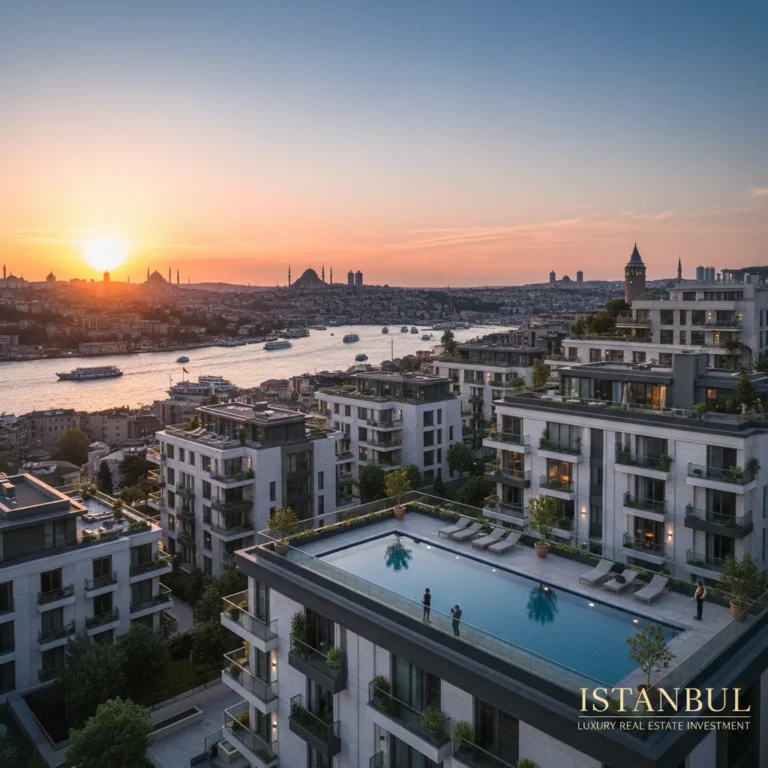
The intersection of wealth preservation, global mobility, and high-yield asset acquisition has placed Turkey at the forefront of the global investment migration landscape. As geopolitical dynamics shift and high-net-worth individuals seek resilient contingency plans, acquiring citizenship through property acquisition has emerged as one of the most practical routes available. The Turkish Citizenship by Investment (CBI) program stands apart from conventional residency-by-investment models by offering a direct, relatively swift conduit to full citizenship without requiring physical relocation, language testing, or decades of naturalization waiting periods.
However, securing a passport through real estate is far more than a simple property transaction. It involves navigating intricate regulatory frameworks, central bank foreign exchange protocols, cadastre titling conditions, and rigorous valuation methodologies. Whether you are seeking a primary residence, a seasonal coastal haven, or a diversified portfolio of income-generating commercial and residential units, understanding the statutory mechanisms of real estate investment for Turkish citizenship is essential for protecting your capital and ensuring an unhindered naturalization journey.
The Statutory Framework: Understanding the $400,000 Threshold
Turkey first introduced its citizenship-by-investment legal framework in 2017 with an initial real estate threshold of $1,000,000. In late 2018, this requirement was dramatically lowered to $250,000, triggering an unprecedented wave of direct foreign capital into Istanbul, the Mediterranean coastline, and the Aegean Riviera. In June 2022, following sustained demand and revised economic policies, the minimum qualifying valuation was established at $400,000 USD (or the equivalent in convertible foreign currency).
Prospective investors must adhere to specific statutory boundaries outlined in the Turkish Citizenship Law (Law No. 5901) and its Implementing Regulations:
- Monetary Benchmark: The acquired real estate must possess a registered value of at least $400,000 USD on the official valuation report and the title deed transaction documents.
- Three-Year Non-Disposition Condition: A formal covenant (şerh) must be registered within the General Directorate of Land Registry and Cadastre (Tapu ve Kadastro Genel Müdürlüğü), stating that the asset will not be sold, transferred, or assigned for a minimum period of three continuous years.
- Eligible Property Types: The investment can comprise residential apartments, private villas, commercial offices, retail premises, or developable land with established architectural master plans (arsa).
- Aggregation of Assets: Investors are not restricted to purchasing a single parcel. Multiple units may be combined to achieve or exceed the $400,000 baseline, provided the title deeds or notarized preliminary sales contracts are filed concurrently or structured according to prevailing land registry guidelines.
- Vendor Eligibility: The seller must be a Turkish citizen or a 100% Turkish-owned corporate entity. Properties acquired from foreign individuals, or assets that have previously served as the basis for a Turkish citizenship application, are legally disqualified from future citizenship qualification to prevent secondary artificial churning.
For individuals researching opportunities across diverse asset classes, our comprehensive overview on Real Estate Investment in Turkey | Apartments and Villas for Sale provides a structural breakdown of the prime developments currently meeting regulatory prerequisites.

Get a free consultation now, and let us help you choose the right property.
Essential Financial Mechanisms: The DAB Certificate and Currency Conversion
One of the most consequential procedural shifts in the Turkish investment regime involves the foreign exchange protocol governed by the Central Bank of the Republic of Turkey (TCMB). Foreign investors can no longer transfer foreign currency directly to a property developer or property owner to fulfill the investment criteria.
The Foreign Exchange Purchase Certificate (Döviz Alım Belgesi – DAB)
Under regulations enacted to bolster foreign reserves, the entire qualifying investment sum must be converted through a licensed Turkish commercial bank into Turkish Lira (TRY) via the Central Bank. The chronological mechanism functions as follows:
-
- Capital Transfer: The foreign buyer transfers foreign currency (USD, EUR, GBP, etc.) from an international bank account or an onshore Turkish foreign currency account to a commercial bank in Turkey.
- Conversion via Central Bank: The commercial bank sells the foreign currency directly to the Central Bank of the Republic of Turkey at the prevailing institutional exchange rate on the transaction date.
- Issuance of the DAB: The bank issues an official Foreign Exchange Purchase Certificate (Döviz Alım Belgesi). This instrument records the investor’s full legal name, passport number, the foreign currency amount sold, the corresponding Turkish Lira received, and a formal notation that the exchange is executed pursuant to Article 20 of the Citizenship Law.
- Disbursement to Seller: The resulting Turkish Lira balance is transferred directly via wire from the investor’s Turkish account to the vendor’s bank account, with the transfer receipt referencing the corresponding title deed or sales contract number.
Executing this sequence improperly or failing to obtain the DAB before transferring funds to the property owner can invalidate the transaction for citizenship purposes, necessitating complicated corrective measures or contract renegotiations.
Real Estate Valuation Reports (Ekspertiz Raporu)
The registered purchase price on the deed is not accepted at face value by citizenship authorities. To prevent inflation of transaction values, the Turkish government mandates that an independent property appraisal must be prepared by an appraisal firm accredited by the Capital Markets Board of Turkey (Sermaye Piyasası Kurulu – SPK) and the Banking Regulation and Supervision Agency (BDDK).
The appraisal firm inspects the real estate, evaluates comparable market transactions, reviews municipal building permits, and computes a standardized market value. For citizenship approval, both the value documented in the appraisal report and the purchase price stated on the official title deed (Tapu) must comfortably exceed the $400,000 threshold. In practice, conservative wealth managers advise buyers to invest slightly above the benchmark—such as $415,000 to $430,000—to safeguard against potential micro-fluctuations in cross-currency exchange rates between the valuation date and the title deed registration date.
Strategic Investment Destinations: Balancing Yield and Capital Growth
Achieving Turkish citizenship through real estate should never be treated as a sunk cost or purely bureaucratic transaction. When approached strategically, the investment serves as a cornerstone for capital preservation, attractive foreign currency rental returns, and medium-term equity growth. Turkey’s diverse real estate sectors offer distinctly differentiated profiles depending on the regional market selected.
Istanbul: The Economic and Cultural Engine
Istanbul remains the premier destination for institutional investors, family offices, and foreign nationals seeking liquid assets. Spanning Europe and Asia across the Bosphorus Strait, the megacity combines deep domestic housing demand with an international tenant base. Investors primarily target two distinct segments:
- Central Urban Regeneration and Prime Districts: Historic and central quarters such as Şişli, Beşiktaş, Beyoğlu, and Kadıköy feature established infrastructure, cultural amenities, and limited land supply. While entry prices per square meter are higher, these districts offer unmatched liquidity, stable capital growth, and elite tenant retention.
- Modern Commercial Corridors and Master-Planned Communities: Zones along the Basin Ekspres corridor, Kağıthane, and the West Istanbul perimeter (Başakşehir, Beylikdüzü) feature modern mixed-use developments equipped with extensive lifestyle amenities, commercial retail centers, and direct metro connections. These complexes frequently attract global executives and families seeking suburban security alongside metropolitan convenience.
For an in-depth breakdown of regional yields, neighborhood appreciation dynamics, and infrastructure pipelines within the metropolis, consult our analysis of the Best Areas for Real Estate Investment in Istanbul.
Antalya: Tourism Leadership and Lifestyle Integration
On the Mediterranean coast, Antalya represents an exceptionally dynamic property sector characterized by robust international tourism, year-round sunshine, and high-yielding short-term and seasonal residential rental models. Unlike purely domestic hubs, Antalya commands sustained demand from European, Middle Eastern, and Central Asian tenants and purchasers.
Key districts like Konyaaltı (proximate to blue-flag beaches and the marina), Lara (known for luxury developments and commercial vitality), and Kepez (an emerging zone for contemporary urban renewal) present varying risk-reward dynamics. Those wishing to balance portfolio yields with personal vacation usage frequently leverage the region’s strong holiday rental market. Detailed transaction nuances, localized pricing indices, and licensing requirements are thoroughly evaluated in our dedicated Antalya Apartment Buying Guide for Investment.
Emerging Regional Contenders: Ankara, Izmir, and Bodrum
While Istanbul and Antalya dominate international purchase volume, sophisticated investors frequently evaluate alternative markets:
- Ankara: As the political capital, Ankara offers stability driven by public sector employment, foreign embassies, universities, and diplomatic personnel. Price volatility is traditionally lower, yielding steady, predictable long-term rental income.
- Izmir: The third-largest city in Turkey, situated on the Aegean Sea, Izmir blends modern European lifestyle appeal with industrial and technological expansion. Areas such as Bornova, Bayraklı, and Urla have exhibited high domestic migration from professionals departing Istanbul.
- Bodrum: The premier luxury enclave of Turkey’s southwest riviera attracts high-net-worth investors seeking standalone architectural villas, private moorings, and ultra-luxury hospitality-branded branded residences. While entry points frequently exceed seven figures, Bodrum serves primarily as a wealth preservation and trophy asset haven.

Get a free consultation now, and let us help you choose the right property.
Step-by-Step Procedure: From Selection to Passport Issuance
The timeline for completing the property purchase and obtaining Turkish passports typically spans between 90 to 180 days, contingent on document readiness and administrative processing schedules. Structuring the sequence meticulously prevents costly bureaucratic delays.
Phase 1: Due Diligence and Legal Representation
Foreign nationals are strongly advised to engage an independent, specialized Turkish real estate and immigration attorney. Through a targeted Power of Attorney (Vekaletname)—which can be executed at any Turkish notary public or authenticated at a Turkish consulate overseas—your legal counsel can handle due diligence, bank account setup, tax registration, and registration filings without requiring your continuous physical presence.
Legal due diligence must rigorously confirm:
- The legal title status (Kat İrtifakı vs. Kat Mülkiyeti) and verification of the habitation permit (İskan).
- The total absence of existing mortgages, fiscal attachments, legal liens, or bankruptcy encumbrances on the property.
- The vendor’s historical title chain to verify absolute compliance with CBI seller eligibility guidelines.
Phase 2: Property Acquisition and Title Deed Conveyance
Once legal checks are concluded and the independent SPK valuation report is issued affirming a qualifying valuation:
-
- The investor’s capital is transferred, and the commercial bank generates the compulsory DAB certificate through the Central Bank.
- The buyer and seller schedule a conveyance appointment at the Land Registry Office (Tapu Dairesi).
- During the official deed execution, the title is transferred to the investor’s name, and the critical restrictive covenant is inscribed: “Pursuant to Article 20 of the Regulation on the Implementation of the Turkish Citizenship Law, there is a commitment not to sell this property for three years from the date of acquisition.”
Phase 3: Certificate of Eligibility (Uygunluk Belgesi)
Following registration of the deed, the Land Registry transmits the transaction documentation, valuation dossier, and banking receipts to the Department of Foreigners within the General Directorate of Land Registry and Cadastre. Upon verifying that all statutory requirements are satisfied, the ministry issues the formal Certificate of Eligibility (Uygunluk Belgesi). This critical certificate acts as the substantive prerequisite for the immigration phase of the application.
Phase 4: Investor Residence Permit Application
Under Turkish immigration law, foreign investors cannot leap directly from ordinary tourist status to citizenship; they must first hold a specialized short-term residence permit granted under Article 31(j) of Law No. 6458 (Foreigners and International Protection Act). This permit is reserved strictly for citizenship-track investors and can be processed promptly through expedited investor service desks in Istanbul or Ankara.
Importantly, this residence permit carries no requirement for continuous physical physical residency. The primary applicant and their dependent family members are not obligated to reside in Turkey either before, during, or after the processing cycle.
Phase 5: Citizenship Filing, Biometrics, and Final Adjudication
With the Certificate of Eligibility and the Article 31(j) Residence Permit in hand, the citizenship petition is formally submitted to the Directorate General of Migration Management (Göç İdaresi Başkanlığı) and the General Directorate of Civil Registration and Nationality (Nüfus ve Vatandaşlık İşleri Genel Müdürlüğü).
The application is routed through several stages of institutional security clearances, spanning the Ministry of Interior, the National Intelligence Organization (MİT), and Interpol checks to confirm the absence of national security or public order risks. Once approved by the Presidency of the Republic, the investor and eligible family members are invited to provide biometric fingerprints at a local provincial civil registry office in Turkey or at an accredited Turkish Embassy or Consulate abroad. Following biometrics, standard biometric Turkish ID cards and ten-year biometric passports are mailed directly to the applicants.
Who Can Be Included in the Application?
The Turkish CBI framework provides generous parameters for nuclear family unification under a single qualifying $400,000 property investment:
- Principal Applicant: The registered real estate title holder.
- Spouse: One legally married spouse (monogamous marriages recognized by civil law; civil partnerships or polygamous unions are not recognized under the Turkish Civil Code).
- Minor Children: All biological or legally adopted children who are strictly under the age of 18 at the time of official application submission.
- Dependent Children Over 18: Adult children can only be incorporated if they have documented severe mental or physical disabilities rendering them completely dependent on parental guardianship. Otherwise, children aged 18 and older must execute separate qualifying investments in their own legal names.
- Parents and Siblings: Parents and siblings cannot be annexed to the citizenship petition, regardless of dependency; however, they may apply for standard renewable family or property-based residency permits once the main applicant becomes a citizen.
Comparative Financial Analysis: Acquisition Costs and Taxes
A transparent understanding of the associated acquisition expenses ensures investors structure their liquid deployment accurately. Unlike jurisdictions charging substantial non-refundable government processing levies, Turkey’s transactional costs mirror standard commercial real estate acquisitions.
| Expense Category | Approximate Cost / Rate | Party Responsible | Notes |
|---|---|---|---|
| Property Value | $400,000 USD minimum | Buyer | Must be supported by SPK appraisal and DAB. |
| Title Deed Conveyance Tax (Tapu Harcı) | 4% of registered deed value | Split or Buyer | By custom often paid by buyer; legally 2% buyer / 2% seller. |
| Appraisal Fee (Ekspertiz) | $300 – $600 USD | Buyer | Paid to licensed SPK valuation enterprise. |
| Foreign Exchange & Banking Fees | 0.2% – 0.5% | Buyer | Conversion spreads and interbank wire commissions. |
| Legal Representation & Conveyancing | $3,000 – $8,000 USD | Buyer | Dependent on portfolio complexity and family size. |
| Translations, Notarizations, Apostilles | $1,000 – $2,500 USD | Buyer | Birth certificates, marriage certificates, PoAs. |
| Citizenship Administration & Card Fees | $200 – $500 USD per person | Buyer | Residence permit card, biometric passport fees. |
| Value Added Tax (KDV) | 1%, 10%, or 20% | Buyer | Exemptions available for non-resident first-time buyers. |
Value Added Tax (KDV) Exemption Advantage
Foreign investors who do not hold established residency in Turkey and purchase newly constructed commercial or residential real estate directly from the primary development firm can apply for a formal KDV Exemption (VAT Exemption) under Law No. 3065. Depending on the specification of the asset, VAT rates range from 1% to 20%. Securing this statutory exemption through competent legal structuring yields substantial capital savings, effectively mitigating the majority of ancillary closing expenditures.
Global Mobility and Geopolitical Benefits of Turkish Citizenship
Acquiring a Turkish passport delivers a balanced array of mobility, business operational, and lifestyle advantages that appeal to international executives and global families.
Visa-Free and Visa-on-Arrival Access
A Turkish passport provides visa-free, visa-on-arrival, or electronic travel authorization (e-Visa) access to over 110 countries worldwide. Notable destinations include key commercial hubs throughout East and Southeast Asia (Singapore, Japan, South Korea, Hong Kong), Latin America (Brazil, Argentina, Chile, Colombia), and Southern Africa. While Schengen Zone access currently requires a standard visa application, Turkish nationals generally receive multi-year visas with high approval rates compared to citizens of politically unstable territories.
The US E-2 Investor Visa Gateway
A distinct strategic benefit of Turkish citizenship is eligibility for the United States E-2 Non-Immigrant Treaty Investor Visa. Turkey maintains an active bilateral Commerce and Navigation Treaty with the United States. While citizens of countries such as China, India, Russia, and various Middle Eastern nations are excluded from applying for the E-2 visa directly, Turkish citizens can launch or acquire a business in the United States and reside there with their dependents indefinitely, provided the enterprise remains operational.
Note on US E-2 Rule Revisions: Recent statutory updates under the US AMIGOS Act stipulate that individuals who acquire citizenship via an investment program must establish continuous domicile in their new country of nationality for at least three consecutive years prior to petitioning for an E-2 treaty visa. This requirement makes early citizenship acquisition an essential forward-planning priority.
Dual Citizenship Protections
Turkish nationality legislation unequivocally recognizes dual and multiple citizenships. The Republic of Turkey does not demand that incoming citizens renounce their original birth nationalities, nor does it share citizenship acquisition intelligence with foreign tax jurisdictions as part of the investor onboarding process. However, applicants must verify that their country of origin permits dual nationality to prevent unintended conflicts under domestic foreign law.
Strategic Exit Mechanisms: Managing and Liquidating After 3 Years
A paramount feature that separates the Turkish CBI program from competing Caribbean or European models is that the underlying asset is neither an outright government donation nor a restricted sovereign bond. You own tangible real estate registered directly in your name at the land cadastre.
Preservation of Nationality Post-Sale
Once the three-year statutory holding period concludes, the investor is legally authorized to remove the restrictive annotation at the Land Registry and sell the real estate on the open market. The sale of the property does not revoke or compromise your Turkish citizenship. Once granted, Turkish nationality is permanent, irrevocable under normal civic circumstances, and fully inheritable by future generations of children born to the investor.
Rental Yield Management During the Holding Period
Throughout the mandatory three-year lock-up period, owners maintain absolute ownership rights. The property may be occupied by the owner, leased under traditional long-term residential lease agreements, or managed as corporate housing. Investors pursuing vacation-rental yields through platforms such as Airbnb must ensure full compliance with Law No. 7464 (The Short-Term Tourism Rental Law), which mandates obtaining a formal Ministry of Culture and Tourism permit, universal consent from building co-owners, and adherence to municipal fire and security standards.
Resale Market Dynamics
When engineering an exit strategy, investors must note a critical regulatory detail: a property that has been used to obtain Turkish citizenship cannot be resold to another foreign investor wishing to apply for citizenship under the same title. Consequently, secondary exits are routinely executed toward:
-
- Domestic Turkish buyers seeking owner-occupancy or long-term rental income.
- International buyers seeking capital preservation, lifestyle residency, or standard Golden-residence rights rather than the CBI naturalization mechanism.
- Institutional portfolio buyers and domestic real estate funds.
Comparative Overview: Turkey CBI vs. Major International Programs
To contextualize the commercial value of real estate investment for Turkish citizenship, it is instructive to compare the program against contemporary global alternatives:
| Metric / Feature | Turkey (CBI) | Greece (Golden Visa) | Portugal (Golden Visa) | Caribbean CBI (e.g., St. Kitts) |
|---|---|---|---|---|
| Minimum Outlay | $400,000 USD (Real Estate) | €250k – €800k (Real Estate) | €500,000 (Funds Only) | $200k – $250k (Donation/Property) |
| Immediate Citizenship? | Yes (3–6 months) | No (Residency only) | No (Residency only) | Yes (3–8 months) |
| Asset Type | Direct Property Ownership | Direct Property Ownership | Investment Funds Only | Donation or Shares |
| Physical Stay Mandate | None | None for visa renewal | 7 days per year | None |
| Naturalization Path | Immediate | Requires 7 years & language | Requires 5 years & language | Immediate |
| Exit Availability | Can sell after 3 years | Must hold indefinitely to keep visa | Tied to fund duration | Hold 5–7 years (if property) |
Unlike European residency models that grant access to the Schengen Zone but demand five to eight years of continuous residency, tax exposure, and rigorous language tests before naturalization, Turkey provides an immediate, definitive passport along with verifiable property equity.
Frequently Asked Questions (FAQ)
Can I purchase multiple properties to reach the $400,000 threshold?
Yes. You can acquire two or more residential apartments, villas, or commercial units, provided the cumulative valuation across the independent appraisal reports and the foreign exchange conversion documents (DAB) equals or exceeds $400,000 USD. All deeds must either be filed simultaneously or coordinated closely through the land registry office under a single citizenship application dossier.
Are off-plan (under construction) properties eligible for citizenship?
Yes, off-plan properties are fully eligible provided the transaction is executed via a Notarized Preliminary Sales Contract (Noter Satış Vaadi Sözleşmesi) and the development possesses an established floor easement (Kat İrtifakı). The full payment of $400,000 or more must be disbursed upfront via bank transfer accompanied by the required DAB certificate at the time of notarization, with the 3-year non-sale undertaking recorded in the contract.
Can I rent out the property during the mandatory 3-year holding period?
Absolutely. Investors enjoy unhindered rights to generate rental yields immediately upon taking possession of the property. Leases may be structured on standard residential annual tenancies or, if local building bylaws and licensing conditions permit, short-term tourist arrangements managed by an accredited property management firm.
Is there any mandatory language test or military service requirement?
No. The Turkish Citizenship by Investment pathway explicitly waives the Turkish language proficiency examination. Furthermore, foreign investors naturalized via investment, as well as their eligible dependent children who were over the age of 22 upon acquiring citizenship, are statutorily exempt from mandatory Turkish military service.
What occurs if property market values drop after I purchase?
The $400,000 valuation benchmark is enforced at the precise date of title deed transfer and DAB conversion. Future macroeconomic fluctuations, currency movements, or localized property price changes during the subsequent 3-year holding period have no bearing on your citizenship status. Once your citizenship is granted, temporary market movements cannot compromise your legal nationality.
Can I pay for the property using cryptocurrency?
While some real estate agencies and brokers facilitate the conversion of digital assets through off-market liquidation protocols, Turkish Central Bank regulations require that the formal conveyance transaction be executed strictly in fiat Turkish Lira generated via an official Foreign Exchange Purchase Certificate (DAB). Any cryptocurrency holdings must therefore be fully liquidated into legal tender foreign currency prior to entering the official banking and DAB conversion pipeline.
Conclusion: Capitalizing on the Turkish Advantage
Acquiring Turkish citizenship through real estate investment represents a strategic convergence of portfolio diversification, global asset ownership, and international mobility. In an unpredictable macroeconomic climate, holding a tangible hard asset in a dynamic, strategically located nation offers both defensive security and long-term capital upside. By securing an irrevocable passport within months, investors gain peace of mind, seamless cross-border mobility, access to international markets, and an enduring legacy for their families.
The path to a successful application relies entirely on meticulous legal due diligence, selecting prime properties aligned with realistic market valuations, executing bank conversion protocols without error, and collaborating with seasoned real estate advisors. When executed correctly, real estate investment in Turkey does not merely deliver a passport—it establishes a resilient international footprint at the crossroads of East and West.