
Introduction to Antalya’s Real Estate Investment Market
Antalya has emerged as one of Turkey’s most lucrative real estate investment destinations, attracting international investors with its stunning Mediterranean coastline, year-round tourism appeal, and competitive property prices. This comprehensive guide explores every aspect of purchasing an investment apartment in Antalya, from market analysis and location selection to legal procedures and maximizing rental returns. Whether you’re seeking passive income through vacation rentals or long-term capital appreciation, understanding Antalya’s unique property market dynamics is essential for investment success.
The city’s strategic position as Turkey’s tourism capital, combined with government incentives for foreign investors and a growing expat community, creates exceptional opportunities for property investors. With over 16 million tourists visiting annually and a rapidly developing infrastructure, Antalya offers diverse investment options ranging from beachfront luxury apartments to affordable city-center properties with high rental yields.
Understanding Antalya’s Real Estate Market Dynamics
Current Market Trends and Statistics
The Antalya property market has shown remarkable resilience and growth throughout 2025 and into 2026. Property prices have increased by an average of 35% year-over-year, driven by increased foreign demand, particularly from Russian, German, and Middle Eastern buyers. The average price per square meter in prime coastal areas ranges from $1,500 to $4,000, while inland districts offer opportunities starting from $800 per square meter.
Tourism recovery has significantly boosted short-term rental markets, with occupancy rates in popular areas reaching 75-85% during peak season. The Turkish government’s continued support for foreign investment, including citizenship programs and residency permits, maintains strong international interest. Currency fluctuations have created advantageous buying conditions for foreign investors, particularly those with strong currencies against the Turkish Lira.
Investment Potential and ROI Analysis
Antalya apartments typically generate rental yields between 6-12% annually, significantly higher than many European markets. Beachfront properties in premium locations like Lara and Konyaalti can achieve even higher returns during peak tourist seasons. Long-term capital appreciation averages 15-20% annually in prime locations, driven by infrastructure development and increasing international demand.
The diverse rental market includes short-term vacation rentals, long-term residential leases, and seasonal contracts for expats and digital nomads. Properties near major attractions, beaches, and transportation hubs consistently outperform market averages. Investment recovery periods typically range from 8-12 years, depending on location and property type.
Get a free consultation now, and let us help you choose the right property.
Prime Investment Locations in Antalya
Lara District: The Premium Beach Investment Zone
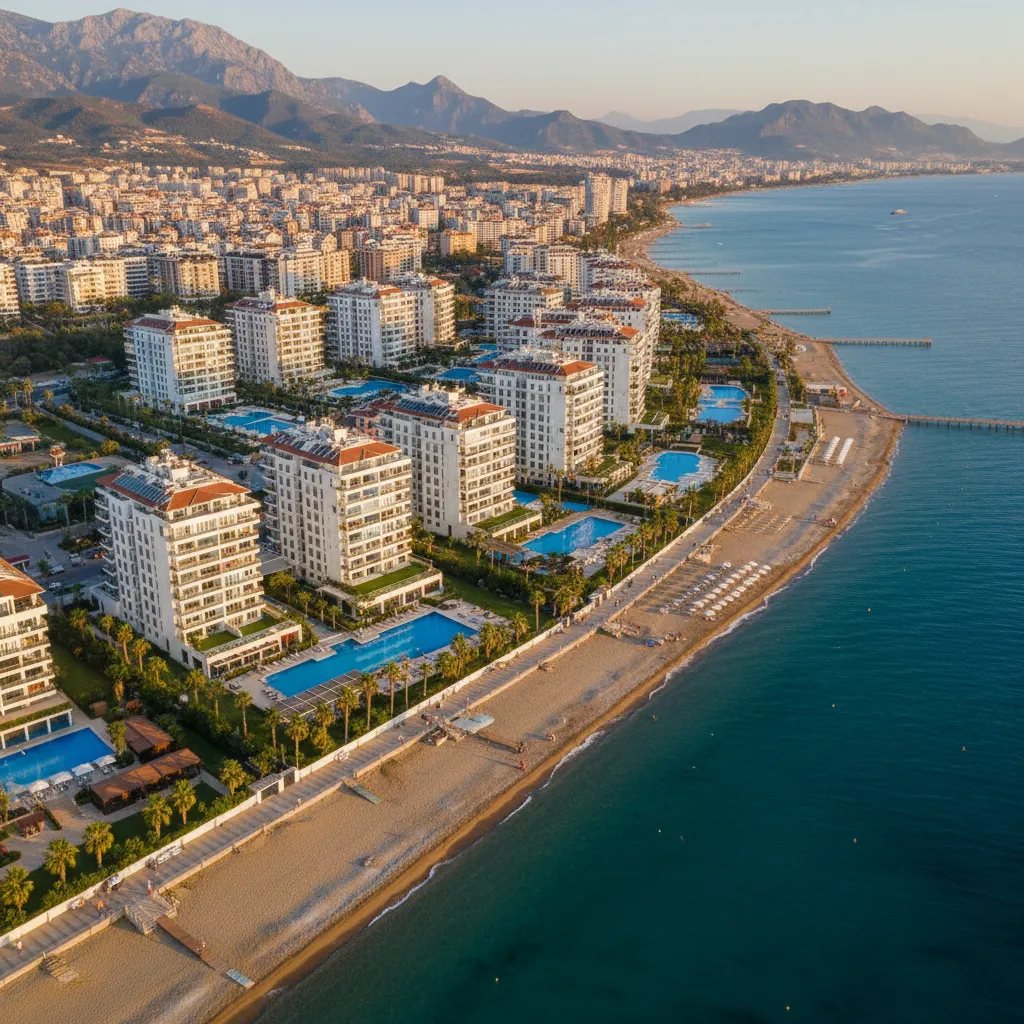
Lara represents Antalya’s most prestigious investment area, featuring luxury residential complexes along its famous beach. Properties here command premium prices but offer exceptional rental returns due to high tourist demand. Modern apartment complexes include extensive amenities like swimming pools, fitness centers, and private beach access. The area’s proximity to Antalya Airport (15 minutes) enhances its appeal for vacation rentals.
Investment apartments in Lara typically range from $150,000 to $500,000, with luxury penthouses exceeding $1 million. Annual rental yields average 8-10%, with peak season weekly rates between $800-2,000. The district’s continuous development includes new shopping centers, restaurants, and entertainment venues, ensuring long-term value appreciation.
Konyaalti: Balanced Investment Opportunities
Konyaalti offers excellent investment potential with its 7-kilometer Blue Flag beach and vibrant urban atmosphere. The district combines residential appeal with tourist attractions, creating year-round rental demand. Modern apartment complexes feature contemporary designs and comprehensive facilities, attracting both tourists and long-term residents.
Property prices in Konyaalti range from $100,000 to $350,000 for standard apartments, offering more accessible entry points than Lara. The area’s developed infrastructure includes the Beach Park, Antalya Aquarium, and numerous restaurants and cafes. Rental yields average 7-9% annually, with strong demand from European tourists and expats.
Altintas and Dosemealti: Emerging Investment Areas
These developing districts present opportunities for early investors seeking capital appreciation. Altintas benefits from proximity to Antalya’s new stadium and expanding residential projects. Dosemealti offers mountain views and cooler climate, appealing to residents seeking alternatives to coastal living.
Properties in these areas start from $60,000, making them attractive for budget-conscious investors. While current rental yields are lower (5-7%), planned infrastructure improvements and urban development projects promise significant appreciation potential. These districts particularly appeal to Turkish domestic buyers and long-term residents.
Kaleici Old Town: Boutique Investment Niche
Kaleici’s historic charm creates unique investment opportunities in renovated Ottoman-era buildings. The area’s UNESCO World Heritage status ensures preservation while allowing careful restoration projects. Boutique apartments here command premium short-term rental rates due to authentic atmosphere and central location.
Investment properties range from $120,000 for small renovated apartments to $800,000 for luxury restored mansions. Occupancy rates exceed 80% year-round, with daily rates between $100-300. The limited supply and historical significance ensure long-term value retention.
Legal Framework for Foreign Property Investment
Foreign Ownership Rights and Restrictions
Turkey’s reciprocal property ownership laws allow citizens from most countries to purchase real estate. Current regulations permit foreign nationals to own up to 30 hectares of land nationwide, with properties in designated residential or commercial zones. Military zones and security areas remain restricted, requiring special permissions for nearby properties.
The principle of reciprocity means citizens from countries allowing Turkish property ownership enjoy similar rights in Turkey. Recent amendments have expanded eligible nationalities, now including over 180 countries. Foreign buyers must obtain military clearance for their chosen property, typically completed within 45 days.
Title Deed (TAPU) Requirements
The TAPU represents legal property ownership in Turkey, requiring careful verification before purchase. Essential checks include confirming the seller’s ownership, verifying no outstanding debts or mortgages, and ensuring building permits and occupancy certificates are valid. Professional title deed examination prevents future legal complications.
Foreign buyers need specific documents: valid passport, tax number from Turkish tax office, property valuation report from authorized companies, earthquake insurance policy (DASK), and translated/notarized identification documents. The title deed transfer occurs at the Land Registry Office with both parties present or through power of attorney.
Citizenship by Investment Program Details
Turkey’s Citizenship by Investment program requires minimum property investment of $400,000 (as of 2026) with a three-year holding commitment. Multiple properties can combine to meet the threshold, provided all are residential and purchased after the program’s implementation date.
The application process involves property purchase and title deed registration, obtaining conformity certificate from Ministry of Environment, submitting citizenship application through Provincial Migration Management, and completing background checks and document verification. Processing typically takes 3-6 months, with citizenship extending to spouse and dependent children under 18.
Financial Considerations and Cost Analysis
Complete Purchase Cost Breakdown
Understanding total investment costs beyond property price is crucial for accurate budgeting. Title deed fees amount to 4% of declared property value, split between buyer and seller unless otherwise negotiated. Real estate agent commissions typically range 2-3% of purchase price, though some developers offer direct sales without intermediaries.
Legal fees for property lawyers range from $1,500 to $5,000 depending on transaction complexity. Translation and notarization costs average $500-1,000 for required documents. Property valuation reports cost approximately $300-500, mandatory for foreign purchases. Utility connection transfers and administrative fees add another $500-1,000.
Ongoing Ownership Expenses
Annual property tax (Emlak Vergisi) equals 0.2% of property value for residential units. Monthly complex maintenance fees (Aidat) range from $50-300 depending on facilities and services. Earthquake insurance (DASK) costs $100-300 annually based on property size and location. Utilities average $100-200 monthly for standard two-bedroom apartments.
Property management services charge 15-25% of rental income for comprehensive services. Annual maintenance and repairs typically require budgeting 1-2% of property value. Income tax on rental earnings follows progressive rates from 15-35% after allowable deductions.
Financing Options for Foreign Buyers
Turkish banks offer mortgages to qualifying foreign nationals, typically financing 50-70% of property value. Interest rates for foreign currency loans range from 5-8% annually. Required documentation includes proof of income, bank statements, employment verification, and credit history from home country.
Alternative financing includes developer payment plans offering 24-60 month installments. Some projects provide 0% interest during construction phases. International mortgage brokers facilitate cross-border financing solutions. Cash purchases often negotiate 5-10% discounts from listed prices.

Get a free consultation now, and let us help you choose the right property.
Property Selection Criteria for Maximum Returns
Evaluating Location Factors
Proximity to beaches significantly impacts rental potential, with properties within 500 meters commanding 30-40% higher rents. Distance to Antalya Airport affects vacation rental appeal, with 30-minute radius being optimal for tourist convenience. Access to public transportation, particularly tram lines, enhances long-term rental prospects.
Neighborhood amenities including shopping centers, restaurants, and healthcare facilities influence both rental demand and appreciation rates. Views significantly impact property values, with sea views adding 20-30% premium compared to similar units. Future development plans and urban renewal projects indicate appreciation potential.
Property Features That Maximize Investment Value
Modern apartments with contemporary finishes attract premium rents and maintain value better. Essential features include air conditioning systems, fully equipped kitchens, quality bathroom fixtures, and balconies or terraces. Smart home technology increasingly influences rental rates and buyer preferences.
Complex facilities significantly impact investment returns: properties with pools achieve 15-20% higher rents. Security services including 24/7 guards and CCTV systems appeal to international tenants. Parking spaces become increasingly valuable as car ownership grows. On-site maintenance staff reduces management headaches for remote investors.
Unit Size and Configuration Analysis
One-bedroom apartments (50-65 sqm) offer highest rental yields but limited appreciation potential. Two-bedroom units (80-100 sqm) balance rental income with family appeal and resale value. Three-bedroom apartments (120-150 sqm) attract long-term tenants but require higher initial investment.
Studio apartments suit budget tourist accommodation but face seasonal demand fluctuations. Duplex and penthouse units command premium prices but appeal to narrower market segments. Garden apartments offer unique selling points but require additional maintenance considerations.
Rental Management Strategies
Short-Term Vacation Rental Optimization
Successful vacation rental management requires professional photography showcasing property highlights and amenities. Listing optimization across multiple platforms including Airbnb, Booking.com, and local Turkish platforms maximizes exposure. Seasonal pricing strategies can increase revenue by 30-40% through dynamic rate management.
Guest services including airport transfers, cleaning, and concierge enhance reviews and repeat bookings. Maintaining 4.8+ star ratings ensures consistent bookings and premium pricing power. Local property management companies charge 20-25% but handle all operational aspects. Self-management through digital tools reduces costs but requires active involvement.
Long-Term Rental Considerations
Annual lease agreements provide stable income with minimal management requirements. Target markets include expat professionals, retirees, and Turkish families seeking quality housing. Rental contracts should clearly specify payment terms, maintenance responsibilities, and deposit conditions.
Tenant screening through references and income verification reduces default risks. Professional property management for long-term rentals typically charge 8-10% of monthly rent. Regular property inspections every 3-6 months protect investment value.
Hybrid Rental Models
Combining seasonal short-term rentals with winter long-term leases maximizes annual returns. This model works particularly well in tourist areas with distinct high and low seasons. Flexible furnishing allows adaptation between vacation and residential rental markets.
Corporate rentals to businesses housing employees offer premium rates with stable occupancy. Medical tourism accommodations near hospitals provide year-round demand at competitive rates. Student housing near universities offers consistent occupancy but requires active management.
Risk Management and Due Diligence
Legal Due Diligence Checklist
Comprehensive title deed verification ensures clear ownership without encumbrances or disputes. Building permit compliance confirmation prevents future legal complications or demolition orders. Checking developer reputation and financial stability protects against project abandonment.
Reviewing homeowners association regulations reveals restrictions affecting rental operations. Confirming utility connections and debt clearances prevents inherited obligations. Verifying property boundaries and common area definitions prevents future disputes.
Financial Risk Mitigation
Currency hedging strategies protect against exchange rate fluctuations affecting investment returns. Diversifying across multiple properties or locations reduces concentration risk. Maintaining adequate insurance coverage including property, liability, and rental income protection.
Setting aside 6-12 months operating expenses covers unexpected vacancies or market downturns. Regular property valuations track investment performance against market benchmarks. Exit strategy planning includes understanding selling costs and market liquidity.
Market Risk Factors
Political stability and government policies affecting foreign ownership require ongoing monitoring. Tourism industry fluctuations directly impact vacation rental demand and rates. Economic factors including inflation and interest rates influence property values and rental markets.
Competition from new developments may affect rental rates and occupancy levels. Climate change considerations include coastal flooding risks and extreme weather events. Regulatory changes regarding short-term rentals could impact business models.
Tax Implications and Optimization
Turkish Tax Obligations
Rental income tax follows progressive rates from 15-35% based on annual earnings brackets. Non-resident investors face 15% flat rate on gross rental income without deduction options. Corporate ownership structures may offer tax advantages for multiple property portfolios.
Capital gains tax applies to properties sold within five years of purchase at 15-35% rates. Holding properties beyond five years eliminates capital gains tax obligations. Tax treaties between Turkey and investor’s home country may reduce double taxation.
International Tax Planning
Understanding home country tax obligations on foreign rental income prevents compliance issues. Tax treaty benefits require proper documentation and residency certificates. Professional tax advisory ensures optimal structure for individual circumstances.
Reporting requirements include FATCA compliance for American investors. European investors must consider EU tax transparency regulations. Proper record keeping facilitates accurate tax filing in multiple jurisdictions.
Future Market Outlook
Infrastructure Development Impact
Antalya’s expanding airport capacity will accommodate 75 million passengers annually by 2027. New highway connections reduce travel times to major Turkish cities. Planned metro extensions will enhance property values along routes.
Smart city initiatives including digital infrastructure improvements support remote work trends. Marina expansions attract high-net-worth individuals and yacht tourism. Cultural and sports facility investments diversify tourism beyond beach attractions.
Market Growth Projections
Property prices forecast to appreciate 12-15% annually through 2028 based on current trends. Rental demand expected to strengthen with tourism recovery and digital nomad growth. Government incentives likely to continue supporting foreign investment.
Sustainability features increasingly influence property values and rental preferences. Smart home integration becoming standard in new developments. Mixed-use projects combining residential, retail, and office spaces gaining popularity.
Conclusion
Investing in Antalya apartments offers compelling opportunities for international investors seeking profitable real estate ventures in Turkey’s premier tourism destination. The combination of competitive prices, strong rental yields, and significant appreciation potential creates an attractive investment landscape. Success requires thorough market understanding, careful property selection, and strategic management approaches tailored to investment objectives.
The city’s continuous development, government support for foreign investment, and established tourism industry provide solid foundations for long-term investment success. While risks exist in any international property investment, proper due diligence, professional guidance, and strategic planning can minimize challenges while maximizing returns.
As Antalya continues evolving into a world-class destination, early investors position themselves to benefit from ongoing growth and transformation. Whether pursuing citizenship through investment, generating passive income, or building long-term wealth through property appreciation, Antalya’s apartment market offers diverse pathways to achieve investment goals. The key lies in understanding market dynamics, selecting properties aligned with investment objectives, and implementing effective management strategies that capitalize on Antalya’s unique position as Turkey’s Mediterranean jewel.