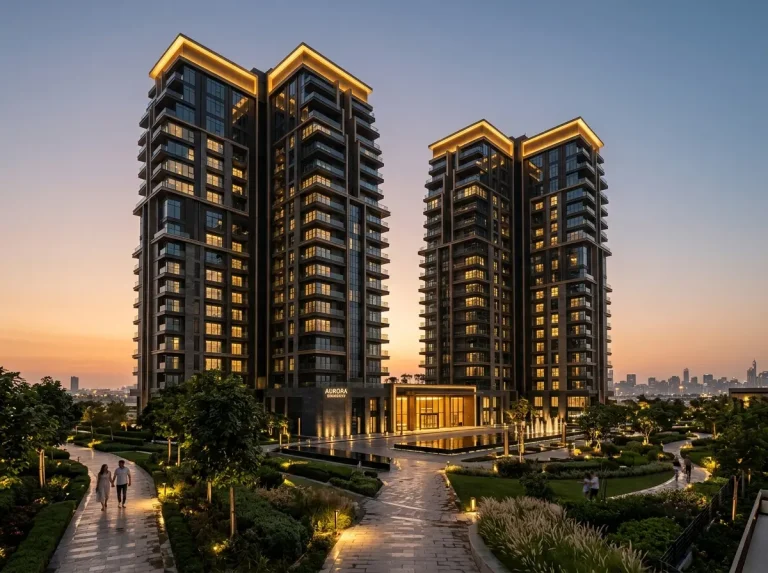
Across the Aegean and Mediterranean coastlines, demand for sea view villas for lifestyle buyers and international investors has evolved significantly by 2026. Turkey’s southern and western shores no longer attract buyers solely on the basis of affordability; instead, they compete directly with established European Riviera markets on architectural sophistication, marina infrastructure, and year-round livability. Whether buyers are evaluating coastal estates for capital preservation, high-yield holiday rentals, or strategic residency and citizenship planning, understanding the nuances of the Turkish coastal property market is essential before committing capital.
Unlike dense urban apartments, coastal villas carry distinct legal, topographical, and operational considerations. From strict coastal setback regulations and independent valuation mandates to seasonal property management and short-term rental licensing, a successful acquisition requires structured due diligence. This comprehensive 2026 guide examines the premier regions, investment metrics, legal procedures, residency pathways, and asset management strategies shaping the market for sea view villas across Turkey.
Why International Buyers Target Sea View Villas in Turkey
The enduring appeal of Turkish coastal real estate rests on a rare intersection of geographic diversity, modern transport connectivity, and favorable residency frameworks. With international airports in Bodrum (BJV), Dalaman (DLM), Antalya (AYT), Gazipaşa (GZP), and Izmir (ADB) offering direct routes across Europe, the Middle East, and Central Asia, coastal villas serve seamlessly as both primary residences and lock-and-leave vacation retreats.
From an economic standpoint, scarce waterfront and elevated hillside land naturally caps future supply. Environmental zoning laws restrict high-density construction along protected coves and pine-forested headlands, creating an inherent moat around existing sea-facing estates. As remote work and cross-border wealth mobility remain entrenched in 2026, buyers increasingly prioritize low-density privacy, expansive outdoor living spaces, and panoramic horizons—attributes that underpin both long-term value retention and robust peak-season occupancy.
Top Coastal Destinations for Sea View Villas for Sale in 2026
Turkey’s coastline spans thousands of kilometers, yet luxury and upper-mid-tier villa demand concentrates in five distinct sub-markets. Each destination offers a different risk-return profile, climate pattern, and buyer demographic.
1. Bodrum Peninsula: Ultra-Luxury and Yachting Prestige
Bodrum remains Turkey’s flagship coastal address, drawing comparisons to Saint-Tropez and Ibiza for its blend of cosmopolitan dining, designer marinas, and discreet hillside compounds. Areas such as Yalıkavak, Türkbükü, Gümüşlük, and Bitez command the highest prices per square meter in the country.
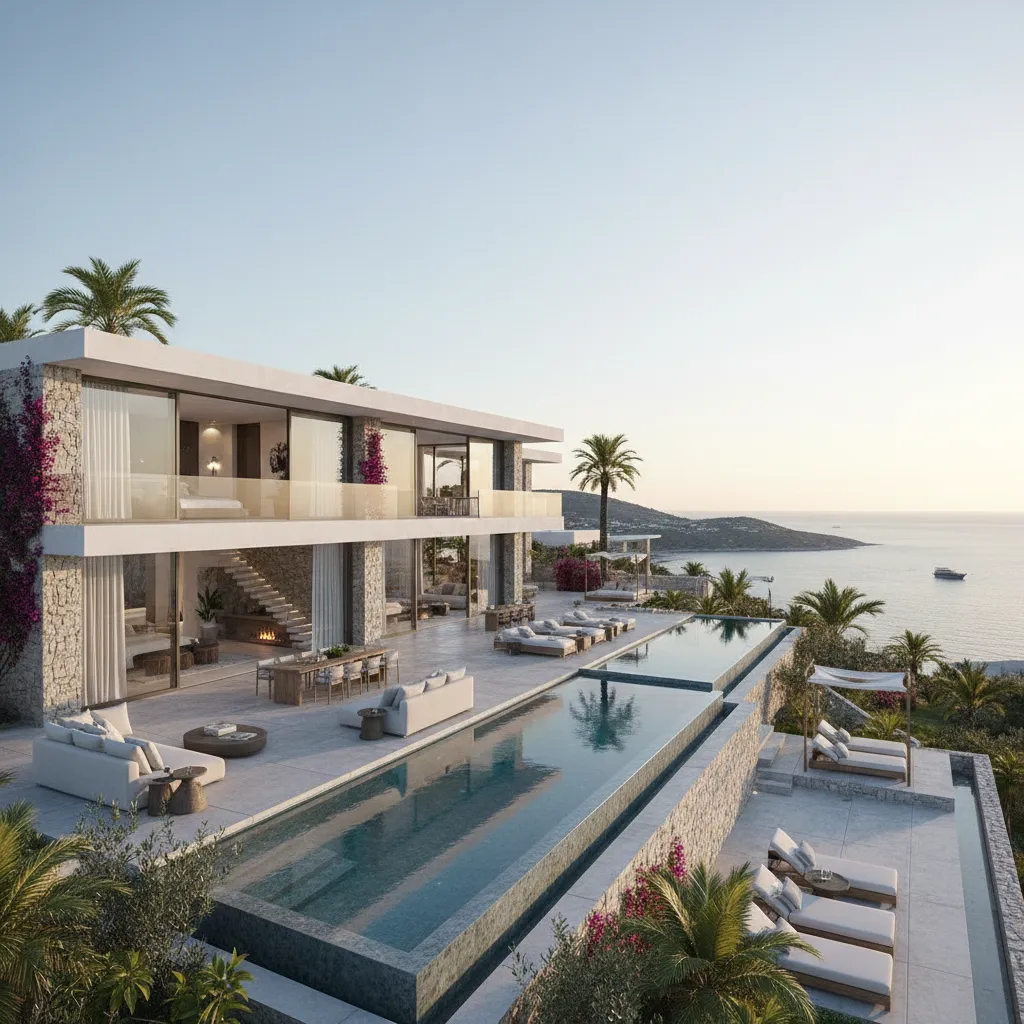
- Architectural Profile: Whitewashed stone minimalism, cantilevered glass facades, private infinity pools, and gated estates overlooking the Aegean islands.
- Market Dynamics: High-net-worth domestic and international buyers dominate cash transactions, insulating prime neighborhoods from broader macroeconomic volatility.
- Key Consideration: The peak summer season runs intensively from June through September, though gated communities with heated pools and wellness facilities increasingly attract shoulder-season residents.
2. Kalkan, Kaş, and Antalya: Cliffside Views and Extended Seasons
Moving east along the Mediterranean coast, the Lycian towns of Kalkan and Kaş offer dramatic topography where steep limestone slopes drop directly into turquoise bays. Because of this elevation, virtually every well-positioned plot enjoys uninterrupted sea vistas.
- Rental Performance: Kalkan is particularly renowned among British and Northern European travelers for weekly villa rentals, delivering some of the strongest seasonal gross yields in the Mediterranean.
- Climate Advantage: Antalya province enjoys roughly 300 days of sunshine annually, extending the viable rental and occupancy window from April well into November.
- Urban Accessibility: Antalya’s Belek, Lara, and Konyaaltı districts appeal to buyers seeking proximity to championship golf courses, international schools, and private hospitals alongside coastal views.
3. Fethiye and Göcek: Secluded Bays and Maritime Living
Positioned around a sheltered gulf dotted with twelve islands, Göcek and neighboring Fethiye cater heavily to yacht owners and nature-focused families. Strict building height limits—typically capped at two stories—preserve the low-rise charm of the region.
- Göcek: Home to multiple world-class marinas, attracting buyers looking for walkable marina-front communities and quiet hillside villas nestled in pine forests.
- Fethiye (Ovacık, Hisarönü, Çalış, Faralya): Offers a broader entry-price spectrum, ranging from contemporary family villas in Ovacık to dramatic cliffside retreats in Faralya.
4. Çeşme and Alaçatı (Izmir): Aegean Elegance
Located on a peninsula west of Izmir, Çeşme and Alaçatı combine historic stone architecture, world-class windsurfing bays, and boutique thermal resorts. Historically favored by affluent buyers from Istanbul and Izmir, the region has seen growing European interest due to its proximity to Izmir Adnan Menderes Airport and the Greek island of Chios.
- Design Identity: Locally quarried Alaçatı stone, olive-grove gardens, and breezy verandas designed for constant Aegean meltem winds.
- Value Stability: High domestic demand creates deep local resale liquidity, reducing reliance solely on foreign buyer cycles.
5. Alanya and Gazipaşa: Accessible Coastal Estates
At the eastern end of the Antalya coastline, Alanya—particularly elevated districts like Tepe, Bektaş, and Kargıcak—offers modern sea-view villas at more accessible capital entry points than Bodrum or Göcek. Improved infrastructure around Gazipaşa-Alanya Airport has steadily enhanced connectivity for year-round residents and retirees.
| Region | Typical Price Range (USD) | Target Gross Rental Yield | Primary Buyer Profile | Key Seasonality Window |
|---|---|---|---|---|
| Bodrum Peninsula | $950,000 – $6,000,000+ | 4.5% – 6.5% | UHNW, Yacht Owners, Lifestyle | June – September |
| Kalkan & Kaş | $550,000 – $2,200,000 | 6.0% – 8.5% | Yield Investors, European Families | April – November |
| Göcek & Fethiye | $450,000 – $2,500,000 | 5.0% – 7.5% | Sailors, Expats, Retirees | May – October |
| Çeşme & Alaçatı | $750,000 – $3,500,000 | 4.5% – 6.0% | Domestic Elite, Boutique Buyers | June – September |
| Alanya & Gazipaşa | $350,000 – $1,200,000 | 5.5% – 7.0% | Residency Seekers, Retirees | April – November |
Get a free consultation now, and let us help you choose the right property.
Evaluating Sea View Villas for Investment and Capital Appreciation
Acquiring a coastal home with panoramic water views requires looking beyond aesthetics to the structural drivers of return on investment. In 2026, discerning buyers evaluate coastal assets through two lenses: sustainable income generation and long-term capital preservation.
Short-Term Holiday Rentals vs. Long-Term Leasing
Income strategies in Turkey changed markedly following the introduction and strict enforcement of Law No. 7464, which regulates residential rentals under 100 days. In 2026, any owner wishing to lease a villa on a nightly or weekly basis to tourists must obtain a Tourism Residence Permit (Turizm Amaçlı Konut İzin Belgesi) from the Ministry of Culture and Tourism.
- Detached Villas Advantage: Unlike apartments inside multi-unit buildings—where obtaining unanimous consent from 100% of co-owners can be logistically difficult—detached single-title villas bypass neighbor veto hurdles, making permit acquisition far more straightforward provided the property holds a valid habitation certificate (İskan).
- Long-Term Leases (101+ Days): Owners who prefer predictable cash flow without hospitality licensing can lease villas for 101 days or longer to corporate executives, digital nomads, or winter sun-seekers under standard Turkish Code of Obligations contracts.
Core Drivers of Capital Growth
Not all sea views appreciate equally. Micro-location details frequently separate trophy assets from stagnant inventory:
- Unobstructed View Corridors: Verify the zoning status of every plot directly below your elevation. Steep gradients and green-belt (yeşil alan) designations protect sightlines from future construction.
- Energy Autonomy and Smart Systems: With rising utility expectations among luxury tenants, villas equipped with solar photovoltaic panels, heat pumps, greywater recycling, and EV charging stations command higher resale multiples and lower operating overhead.
- Privacy and Outdoor Architecture: Sunken firepits, shaded dining pergolas, heated infinity pools, and landscaped mature gardens add tangible value compared to exposed concrete terraces.
- Year-Round Infrastructure: Proximity to private healthcare, fiber-optic internet, and paved municipal access roads widens the eventual resale pool from seasonal vacationers to full-time relocators.
Understanding Net Yields and Taxation
Gross rental figures can mislead inexperienced buyers if operational leakage is ignored. When modeling net returns for a coastal villa, factor in pool chemical maintenance, garden irrigation, municipal property tax (Emlak Vergisi), comprehensive insurance, management agency commissions (typically 15% to 25% for full-service short-term management), and progressive Turkish income tax on net rental profits after allowable deductions. Additionally, under current Turkish tax rules, capital gains tax applies if a property is sold within five years of acquisition, whereas sales completed after holding the title deed for five full years are exempt from individual capital gains taxation.
Citizenship by Investment and Residency Pathways in 2026
For many international buyers, acquiring sea view villas for personal use is closely tied to securing long-term legal status in Turkey. Understanding the sharp regulatory distinction between Turkish Citizenship by Investment (CBI) and Residence Permits via property ownership prevents costly structuring mistakes.
Turkish Citizenship by Investment ($400,000 Threshold)
Turkey’s Citizenship by Investment program remains one of the most streamlined real estate-linked pathways globally. Under the prevailing framework in 2026, foreign nationals can qualify for Turkish citizenship alongside their spouse and dependent children under 18 by acquiring real estate valued at a minimum of $400,000 USD.
Key Compliance Requirements for CBI:
- Three-Year Holding Annotation: The buyer must commit not to sell the property for at least three years, recorded as an official annotation (şerh) on the Title Deed (Tapu). After 36 months, the owner may sell the villa freely without losing citizenship.
- Official SPK Valuation Report: The property’s market value must be confirmed by an independent appraisal firm licensed by the Capital Markets Board (SPK) and assigned via the official TAKBİS system. The declared sale price, bank transfer amount, and appraisal figure must all meet or exceed $400,000.
- Clean Previous Ownership History: The property must not have been owned by a foreign individual within the preceding three years, nor can it be purchased from a foreign-owned entity or the buyer’s own relatives.
- Currency Exchange Certificate (DAB): Purchase funds must be transferred from abroad or via a Turkish bank and converted into Turkish Lira through the Central Bank mechanism to generate a Döviz Alım Belgesi (DAB).
Property-Based Residence Permits ($200,000 Threshold)
Buyers who do not seek citizenship—or whose budget sits below the $400,000 threshold—can apply for a short-term renewable residence permit (Taşınmaz Amaçlı İkamet İzni) based on real estate ownership. Following regulatory updates implemented to balance urban demographics, applicants must meet a minimum property valuation of $200,000 USD confirmed by an official appraisal report.
Crucially, immigration authorities maintain a list of closed neighborhoods (kapalı mahalleler) where foreign residency registrations exceed 20% of the local population. Before placing a deposit on a villa intended for residency, buyers must verify with the Provincial Directorate of Migration Management (Göç İdaresi) that the specific neighborhood is open for new foreign registrations.
Single Villa vs. Multi-Property Portfolio Structuring
Investors targeting the $400,000 CBI threshold can either purchase a single luxury sea view villa or combine multiple properties—such as a coastal villa and a city apartment—provided all title deeds or notarized promise-to-sell contracts are linked under a single application and collectively satisfy valuation rules. However, purchasing a single qualifying detached villa significantly simplifies ongoing administration, reduces multiple closing filings, and aligns better with luxury rental demand.
| Program Criterion | Citizenship by Investment | Property Residence Permit |
|---|---|---|
| Minimum Property Value | $400,000 USD | $200,000 USD |
| Mandatory Holding Period | 3 Years (Tapu Annotation) | Retain ownership during permit validity |
| Neighborhood Restrictions | Allowed nationwide (subject to military zones) | Must be in an open neighborhood (<20% foreign ratio) |
| SPK Valuation Report | Mandatory | Mandatory |
| Family Inclusion | Spouse & children under 18 | Spouse & children under 18 |
| Right to Work | Full citizenship & work rights | Residency only (separate work permit needed) |
| Processing Timeline | Approx. 4 – 6 months | Approx. 1 – 3 months |

Get a free consultation now, and let us help you choose the right property.
Step-by-Step Legal Guide to Buying a Sea View Villa in Turkey
Purchasing real estate in Turkey is transparent and well-digitized when managed through qualified legal counsel, yet coastal properties demand heightened technical scrutiny. Below is the end-to-end acquisition roadmap for 2026.
Step 1: Pre-Contract Legal and Technical Due Diligence
Never sign a binding reservation contract or transfer a non-refundable deposit before an independent real estate lawyer completes a full check at the Land Registry (Tapu ve Kadastro Müdürlüğü) and local municipality (Belediye).
- Title Deed Verification (Tapu): Confirm freehold status (Kat Mülkiyeti for completed builds or Kat İrtifakı for off-plan/under-construction estates), verify the seller’s legal identity, and ensure zero mortgages (ipotek), tax liens (haciz), or third-party easements encumber the title.
- Habitation Certificate (İskan): This document proves the completed villa conforms exactly to approved architectural plans and seismic safety codes. Missing an İskan—or having unpermitted extensions like closed terraces or illegal pools—can block utility connections, short-term rental permits, and mortgage financing.
- Turkish Coastal Law (Kıyı Kanunu) Check: Under Law No. 3621, Turkey’s shoreline is public domain. Construction is strictly prohibited within the first 50 meters of the high-water mark, and restricted within the subsequent 50-meter buffer zone. Always verify that waterfront terraces, seawalls, or private jetties hold proper ministerial permits rather than representing encroachments subject to demolition orders.
- Geological and Seismic Audit: Ensure structural compliance with Turkey’s updated seismic building regulations, particularly for cantilevered villas built on steep coastal inclines.
Step 2: Financial Setup and Currency Conversion
Foreign buyers must obtain a Turkish Tax Identification Number (Vergi Kimlik Numarası) from the local tax office or online portal, which takes less than an hour with a valid passport. Next, open a personal Turkish bank account to handle purchase transfers and set up automated utility payments.
Under Central Bank rules governing foreign property acquisitions, the foreign currency equivalent of the purchase price must be sold to a Turkish bank, which converts the funds into Turkish Lira and issues the Döviz Alım Belgesi (DAB). The Land Registry will not schedule the final title transfer without this certificate on file.
Step 3: Sales Contract and Appraisal
For completed villas, parties sign a bilingual sales agreement detailing the payment schedule, inventory of furnishings, handover date, and penalty clauses. If buying off-plan or from a developer on installment terms, the contract must be notarized as a Promise to Sell Agreement (Satış Vaadi Sözleşmesi) and registered on the title deed to protect the buyer against double-selling. Simultaneously, order the mandatory SPK valuation report via the official WebTapu portal.
Step 4: Title Deed Transfer (Tapu) and Closing Costs
On closing day, both buyer and seller (or their attorneys acting under a notarized and apostilled Power of Attorney) appear at the Land Registry. A certified sworn translator must be present if the buyer is not fluent in Turkish to confirm full comprehension of the transaction terms. Once official signatures are executed, the new Title Deed is issued immediately.
| Closing Cost / Fee Item | Typical Cost (2026) | Who Pays? |
|---|---|---|
| Title Deed Transfer Tax (Tapu Harcı) | 4% of declared value | Negotiable (often split 2%/2% or paid by buyer) |
| Land Registry Circulating Capital Fee | Approx. $150 – $400 USD (varies by municipality) | Buyer |
| SPK Official Valuation Report | Approx. $350 – $600 USD | Buyer |
| DASK Compulsory Earthquake Insurance | $80 – $250 USD annually | Buyer |
| Sworn Translator & Notary Fees | $300 – $700 USD | Buyer |
| Independent Legal Counsel | 1% – 1.5% + VAT (or fixed fee) | Buyer |
| Licensed Real Estate Agency Commission | Up to 2% + VAT (per legal cap) | Buyer (seller pays separate up to 2% + VAT) |
Note on VAT Exemption: Foreign individuals who are non-residents in Turkey—and Turkish citizens residing abroad for more than six months—may qualify for a VAT (KDV) exemption when purchasing brand-new properties directly from a licensed developer, provided the funds enter Turkey in foreign currency and the property is held for at least one year (three years if also used for Citizenship by Investment).
Post-Purchase Property Management and Asset Protection
Owning a coastal estate from abroad requires proactive operational planning. Sea-facing properties endure harsh environmental conditions—intense UV exposure, high summer temperatures, and corrosive salt-laden winds—that quickly degrade neglected structures.
Preventative Coastal Maintenance
Engaging a reputable local property management company protects both physical integrity and guest satisfaction. A comprehensive annual maintenance schedule for sea view villas should cover:
- Salt-Air Corrosion Control: Regular rinsing and protective sealing of marine-grade stainless steel railings, aluminum window frames, outdoor kitchen appliances, and exterior lighting fixtures.
- Pool and Filtration Care: Weekly chemical balancing, pump servicing, and winterization checks to prevent algae blooms, tile staining, or saltwater chlorinator failure.
- Landscaping and Irrigation: Automated drip-irrigation audits to preserve drought-tolerant Mediterranean flora—such as bougainvillea, olive trees, and lavender—without excessive municipal water bills.
- Humidity and Winterization: Scheduled bi-weekly ventilation, dehumidifier servicing, and roof drainage clearing during winter storms to prevent dampness or mold inside unoccupied villas.
Managing Short-Term Rental Compliance
If your investment strategy involves holiday leasing, your property management partner should oversee full compliance with Turkey’s Tourism Residence Permit rules. This includes displaying the official brass plaque issued by the Ministry at the villa entrance, maintaining fire safety equipment and emergency escape schematics, and submitting mandatory daily guest passport registrations to the Gendarmerie or Police Identity Reporting System (KBS – Kimlik Bildirme Sistemi). Failure to report guest check-ins or operating without a valid permit carries substantial administrative fines in 2026.
Insurance, Security, and Remote Transparency
Beyond mandatory DASK earthquake insurance—which only covers structural minimums up to statutory caps—smart villa owners carry comprehensive private home insurance (Konut Sigortası) covering full rebuild value, luxury furnishings, liability for rental guests, glass breakage, and storm damage. Modern cloud-connected CCTV systems, smart door locks with time-limited guest PINs, and automated utility consumption dashboards allow overseas owners to monitor occupancy and maintenance transparently from anywhere in the world.
Common Pitfalls to Avoid When Buying Coastal Property
Even seasoned international investors can encounter avoidable setbacks in Turkey’s coastal markets if they rush due diligence. Keep these critical safeguards in mind:
- Avoiding Unregistered Under-Declarations: Historically, some sellers proposed declaring a lower property value on the official Title Deed than the actual price paid to reduce the 4% transfer tax. Beyond being illegal, this practice creates severe financial exposure: it disqualifies the asset from CBI/residency thresholds, exposes the buyer to heavy tax audits, and inflates future capital gains tax if the property is resold within five years. Always declare 100% of the true transaction value.
- Overlooking Site Management Fees (Aidat): Villas located within gated luxury compounds share security, road upkeep, and communal club facilities. Review the site’s management plan (Yönetim Planı) and historical Aidat budgets to ensure monthly dues match the services delivered.
- Ignoring Access Road Status: Rural hillside plots with dramatic views occasionally rely on informal dirt tracks crossing neighboring private land. Confirm registered public road frontage (kadastral yol) before purchasing.
- Assuming Automatic Rental Licensing: Never purchase a villa purely for Airbnb-style returns without verifying that its İskan, floor plan, and zoning permit a Tourism Residence Permit.
Strategic Outlook and Conclusion
As 2026 unfolds, Turkey’s Aegean and Mediterranean coastlines stand firmly established as mature, internationally competitive real estate markets. Elevated construction costs, strict coastal preservation laws, and limited waterfront land ensure that well-located sea view villas retain strong scarcity value over multi-year holding horizons. Whether your objective is a private family sanctuary overlooking the bays of Göcek, a high-yielding Mediterranean rental estate in Kalkan, or an iconic modern compound in Bodrum supporting a Turkish Citizenship by Investment application, long-term success hinges on disciplined preparation.
By anchoring your search in verified micro-locations, insisting on spotless legal documentation—including freehold Tapu, full İskan, and SPK valuation parity—and partnering with licensed legal and property management professionals, you can navigate Turkey’s coastal property landscape with confidence. Thorough planning today ensures that your investment in sea view villas for lifestyle, yield, or global mobility continues to deliver enduring value for decades to come.