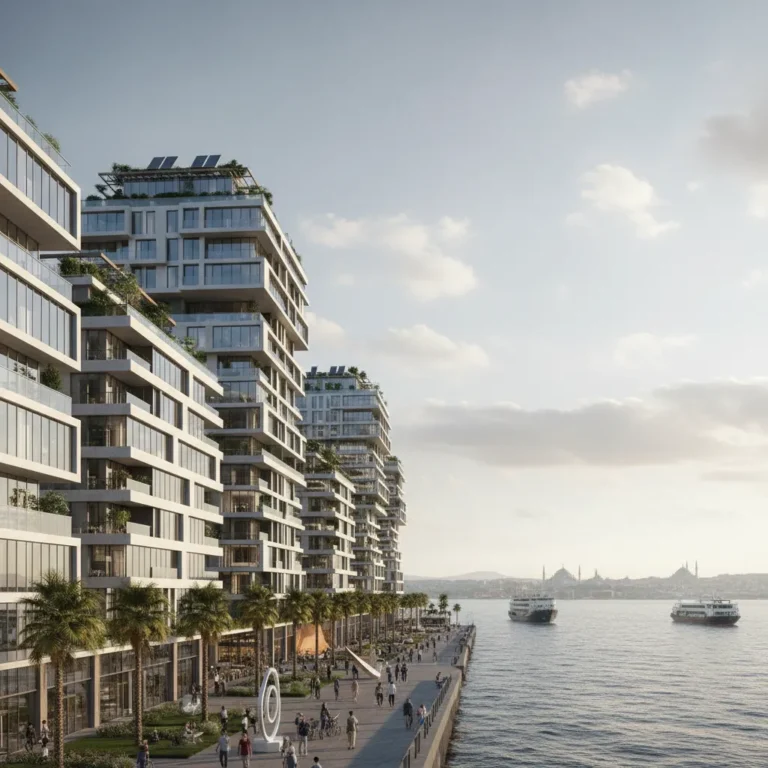
Few cities in the world sit at the crossroads of global commerce, demographic scale, and urban transformation quite like Istanbul. Entering 2026, Istanbul real estate continues to draw sustained attention from international investors, family offices, and relocating professionals seeking a resilient blend of hard-asset diversification, rental cash flow, and sovereign residency or citizenship optionality. Unlike speculative resort markets that depend heavily on seasonal tourism, Istanbul operates as a year-round metropolitan economy of more than 16 million residents, anchored by finance, logistics, technology, manufacturing, higher education, and medical tourism.
Over the past several years, Turkey’s property market has matured rapidly through stricter regulatory oversight, standardized independent appraisals, and tighter rules governing foreign exchange conversions and short-term rentals. For serious buyers in 2026, success in Istanbul is no longer about chasing generic off-plan launches. It requires granular district selection, rigorous legal due diligence, an exact understanding of citizenship and residency thresholds, and disciplined post-acquisition property management.
Understanding the Istanbul Real Estate Market in 2026
Evaluating Istanbul property requires separating short-term macroeconomic noise from structural urban fundamentals. While financing conditions and inflation dynamics shape domestic mortgage activity, high-net-worth local buyers and international investors operate primarily in cash or structured developer installment plans, creating distinct pricing tiers across the city.
Macroeconomic Drivers and Urban Transformation
Three structural forces define property values across Istanbul in 2026: seismic urban regeneration, mass transit expansion, and persistent housing undersupply in modern, earthquake-compliant stock.
- Urban Renewal (Kentsel Dönüşüm): Municipal authorities and private developers are actively replacing aging pre-1999 concrete buildings with modern developments engineered under Turkey’s updated seismic codes. Newly delivered units built under post-2018 standards command substantial price and rental premiums over older adjacent buildings.
- Transit-Oriented Value Growth: Expanded metro corridors—including lines linking Istanbul Airport to Gayrettepe and Halkalı, alongside cross-district connections on the Asian side such as the Ümraniye–Ataşehir–Göztepe line—have reshaped commute times. Properties within a 10-minute walk of operational metro stations consistently record higher occupancy rates and stronger resale liquidity.
- Demographic Household Formation: Despite periodic slowdowns in overall transaction volume, Istanbul’s young workforce and steady internal migration generate continuous demand for modern one-bedroom and two-bedroom apartments near commercial centers.
European Side vs. Asian Side: Structural Differences
Understanding the Bosphorus divide is essential before allocating capital. The European side remains the historical, commercial, and corporate heart of the city, housing prime central business districts such as Levent, Maslak, and Şişli, major universities, international schools, and dense mixed-use developments. Consequently, the European side tends to attract buyers prioritizing immediate liquidity, corporate tenant pools, and proximity to historic neighborhoods.
The Asian side, anchored by Kadıköy, Ataşehir, Üsküdar, and coastal Kartal, offers wider boulevards, newer urban planning, greener coastal promenades, and strong family-oriented residential demand. With the ongoing maturation of the Istanbul Finance Center in Ataşehir, white-collar corporate demand on the Anatolian side has accelerated, narrowing the historical price gap between prime European and Asian neighborhoods.
Off-Plan vs. Ready Resale Inventory
Buyers in 2026 face a clear strategic choice between ready-to-move resale apartments and developer off-plan projects:
- Ready Resale Properties: Offer immediate rental income, clear visibility into actual building maintenance quality and homeowner association fees (aidat), and instant eligibility for title deed (Tapu) transfer and residence or citizenship filings.
- Off-Plan Developments: Typically provide developer-backed installment plans (often 35% to 50% down with 24 to 36 months of interest-free or indexed installments) and modern resort-style amenities. However, investors must verify land ownership, construction permits, and developer delivery track records before committing capital.
Top Istanbul Districts for Property Investment in 2026
Istanbul spans 39 districts, each functioning almost like a self-contained municipality with distinct pricing ceilings, tenant profiles, and regulatory nuances. Below is a comparative overview of eight prominent districts actively targeted by international buyers in 2026.
| District | Side | Primary Buyer & Tenant Profile | Estimated Gross Rental Yield | Key Value Drivers |
|---|---|---|---|---|
| Beşiktaş | European | Executives, diplomats, ultra-high-net-worth families | 3.5% – 4.8% | Bosphorus prestige, scarcity of land, top resale liquidity |
| Şişli | European | Corporate professionals, medical tourists, urban renters | 4.5% – 6.0% | Central metro access, Nişantaşı luxury retail, mixed-use towers |
| Kağıthane | European | Young professionals, mid-level corporate staff | 5.5% – 7.0% | Proximity to Maslak/Levent, M11 airport metro, urban renewal |
| Başakşehir | European | Large families, international Arab & Asian residents | 5.0% – 6.2% | Planned gated compounds, medical city, modern infrastructure |
| Beylikdüzü | European | Middle-income families, budget-conscious investors | 5.8% – 7.2% | Metrobus access, West Marina lifestyle, lower entry price per m² |
| Kadıköy | Asian | Affluent locals, creatives, senior executives | 4.0% – 5.2% | Bağdat Caddesi renewal, Marmaray rail, high cultural appeal |
| Ataşehir | Asian | Banking, fintech, and corporate finance employees | 5.2% – 6.5% | Istanbul Finance Center spillover, modern residential towers |
| Kartal | Asian | Families, Sabiha Gökçen Airport & tech corridor staff | 5.5% – 6.8% | Marmara Sea views, courthouse & hospital hubs, new coastal stock |
Prime and Bosphorus-Facing Corridors (Beşiktaş, Sarıyer, Şişli)
For capital preservation rather than maximum percentage yield, Istanbul’s central European belt remains unmatched. Neighborhoods like Bebek, Etiler, Ulus, and Levent in Beşiktaş, along with Tarabya and İstinye in Sarıyer, operate with severe supply constraints. Strict zoning limits preserve low-rise exclusivity and green vistas. In Şişli—particularly Nişantaşı and Bomonti—modern branded residences cater to senior executives and affluent international tenants willing to pay premium rents in foreign-currency-indexed or high-value Turkish lira leases.
The Financial and Coastal Belt on the Asian Side (Ataşehir, Kadıköy, Kartal)
Kadıköy’s Bağdat Caddesi corridor represents one of Turkey’s most resilient luxury residential markets, driven by boutique urban-renewal buildings replacing older blocks with boutique luxury apartments featuring underground parking and smart-home systems. Just inland, Ataşehir anchors the Istanbul Finance Center, housing major state banks, regulatory bodies, and multinational financial institutions. Meanwhile, Kartal offers compelling entry pricing for sea-view residences along the Marmara coastline, supported by direct Marmaray rail access into central Istanbul and rapid connectivity to Sabiha Gökçen International Airport.
High-Growth Expansion Hubs on the European Side (Kağıthane, Başakşehir, Beylikdüzü)
Investors focused on balanced rental yield and capital growth frequently target Kağıthane. Once an industrial valley, Kağıthane has transformed into a dense, modern residential hub minutes from the Levent and Maslak financial towers, bolstered by direct M11 metro access to Istanbul Airport. Further west, Başakşehir appeals strongly to conservative and international families seeking spacious three- and four-bedroom apartments inside master-planned compounds near Çam and Sakura City Hospital. Beylikdüzü, particularly along the Yakuplu marina and central avenues, provides accessible entry pricing per square meter for buyers prioritizing higher initial rental yields.
Get a free consultation now, and let us help you choose the right property.
Turkish Citizenship by Investment Through Istanbul Property
One of the most compelling drivers of Istanbul real estate demand remains Turkey’s Citizenship by Investment (CBI) program. While several asset classes qualify, real estate continues to account for the vast majority of applications because investors retain direct title ownership of a tangible, income-producing urban asset.
Core Eligibility Criteria and the $400,000 Threshold
Under current regulations in 2026, foreign nationals can qualify for Turkish citizenship by acquiring one or more properties with a combined minimum value of $400,000 USD and committing not to sell the asset(s) for at least three years. This three-year non-sale restriction (şerh) is recorded directly on the title deed at the Land Registry Office.
To satisfy the General Directorate of Land Registry and Cadastre (TKGM), three distinct figures must align at or above $400,000 USD:
- Independent SPK Appraisal Value: A valuation report issued by a Capital Markets Board (SPK)-licensed firm appointed through the official WebTapu system.
- Declared Tapu Transfer Price: The official purchase price stated on the title deed.
- Verified Bank Transfer & DAB Amount: The exact foreign currency equivalent converted into Turkish lira and documented on the Foreign Exchange Purchase Certificate.
Critical Legal Rules You Cannot Overlook
Numerous citizenship applications fail or encounter months of costly delays due to technical oversights during property selection or payment structuring. Experienced legal counsel will screen every prospective property against the following mandatory rules:
Foreign-to-Foreign Ownership Restrictions
A property qualifies for Turkish citizenship only if it is acquired from a Turkish citizen or a qualifying Turkish legal entity. Furthermore, the property must not have been registered in the name of any foreign real person—or transferred by a foreign national to a Turkish citizen—within the preceding three years. Similarly, properties owned by Turkish companies in which foreign nationals hold majority shares or management control face strict eligibility exclusions. Verifying the full chain of title at the Land Registry before paying a deposit is non-negotiable.
Mandatory Currency Conversion (DAB)
All purchase funds for citizenship and residency-linked property acquisitions must pass through the Turkish banking system via a Döviz Alım Belgesi (DAB). Under Central Bank regulations, the buyer must transfer foreign currency (USD, EUR, or GBP) into a Turkish bank account, instruct the bank to sell that foreign currency to the Central Bank of the Republic of Turkey (CBRT) in exchange for Turkish lira specifically earmarked for the Tapu transaction, and deliver the official DAB certificate to the Land Registry prior to title transfer. Direct cash payments or offshore transfers outside this mechanism invalidate CBI eligibility.
Combining Multiple Units and Off-Plan Eligibility
Investors are not restricted to buying a single $400,000 apartment. You may combine two or three separate units—for example, two $210,000 apartments in Kağıthane or an apartment plus a commercial office in Ataşehir—provided all properties are covered by properly structured contracts and reach the $400,000 threshold collectively. Off-plan properties can also qualify if purchased via a notarized promise-to-sell contract (Satış Vaadi Sözleşmesi) accompanied by full upfront payment of at least $400,000 and an established construction servitude (Kat İrtifakı), though completed units with ready Tapu remain cleaner and faster to process.
Family Inclusion and Citizenship Benefits
A single qualifying investment covers the main applicant, their legal spouse, and all dependent children under the age of 18 at the time of application. Key structural advantages include:
- No Residency Stay Requirement: Applicants do not need to live in Turkey before, during, or after acquiring citizenship.
- Dual Citizenship Permitted: Turkey allows dual and multiple nationalities, meaning investors do not have to renounce existing passports (subject to their home country’s laws).