The Strategic Landscape of Turkish Real Estate in 2026
International capital allocation has undergone a structural pivot toward cross-border real estate assets that offer dual-utility: capital appreciation combined with jurisdictional hedge options. In 2026, properties across Turkey occupy a uniquely resilient niche within global portfolios. Situated at the crossroads of European commerce, Middle Eastern wealth corridors, and Central Asian trade routes, the Turkish property sector functions not merely as a housing market, but as a gateway for global mobility, wealth preservation, and institutional-grade yields.
Over the past decade, regulatory modernizations, robust infrastructure expansions, and streamlined digital title deed processes have fundamentally reshaped how foreign nationals approach Turkish real estate. The market has evolved from speculative, holiday-home acquisitions into an institutionalized asset class governed by comprehensive consumer protection laws, mandatory independent appraisals, and formalized real estate residency pipelines. Whether evaluating high-density urban regenerations in Istanbul or prime seaside compounds along the Aegean Riviera, international buyers must navigate a multifaceted ecosystem of legalities, tax treatments, and location-specific yield dynamics to optimize their acquisition strategies.

Get a free consultation now, and let us help you choose the right property.
Key Drivers Fueling the Turkish Property Market
Understanding the macroeconomic and domestic engines powering property valuations across the republic is vital for calculating ten-year net present value (NPV) and exit yields. Several compounding variables dictate market behavior in 2026:
- Sustained Demographic Expansion and Urbanization: Turkey maintains one of Europe’s youngest median demographics. The continuous movement toward metropolitan commercial centers fuels an unrelenting baseline demand for modern, earthquake-engineered residential stock.
- Strategic Infrastructure Megaprojects: The operational maturity of the Istanbul Airport ecosystem, expanded high-speed rail (YHT) arteries linking Ankara, Izmir, and Bursa, and modernized maritime logistics hubs have permanently elevated peripheral and inter-city land valuations.
- Dual Currency Dynamics and Hedging Mechanisms: While domestic transactions utilize the Turkish Lira, prime commercial spaces and luxury residential enclaves remain benchmarked against hard currencies (USD and EUR). International investors leverage foreign exchange differentials to capture high-spec construction at advantageous price-per-square-meter valuations relative to Western European counterparts.
- Global Mobility Incentives: Turkey’s administrative pathways—specifically the Citizenship by Investment (CBI) scheme and tiered real estate residency permits—provide an alternative jurisdictional base for high-net-worth individuals (HNWIs) seeking portfolio diversification and unfettered regional mobility.
Prime Real Estate Asset Classes
Sourcing properties requires granular sector segmentation. Diverse sub-asset classes feature distinct operational risk profiles, capital expenditure demands, and capitalization rates.
1. High-Density Urban Residential Units
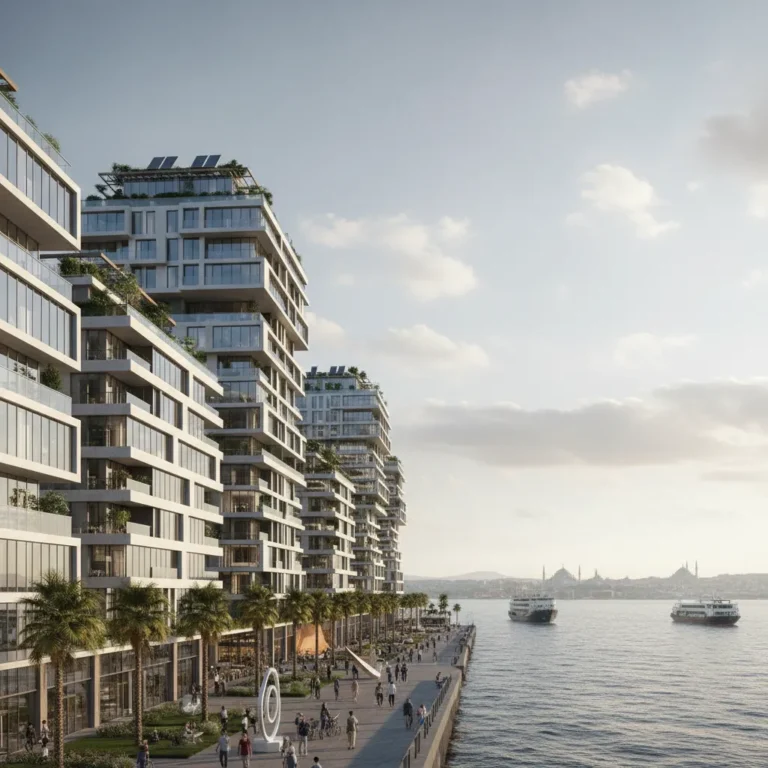
Found primarily within Istanbul, Ankara, and Izmir, these properties range from master-planned suburban community towers to high-end historical restorations. Institutional residential properties generally offer robust liquidity profiles, predictable rental absorption among corporate tenants, and integrated community amenities such as round-the-clock concierge services, subterranean parking, and comprehensive seismic stabilization systems.
2. Luxury Waterfront and Resort Villas
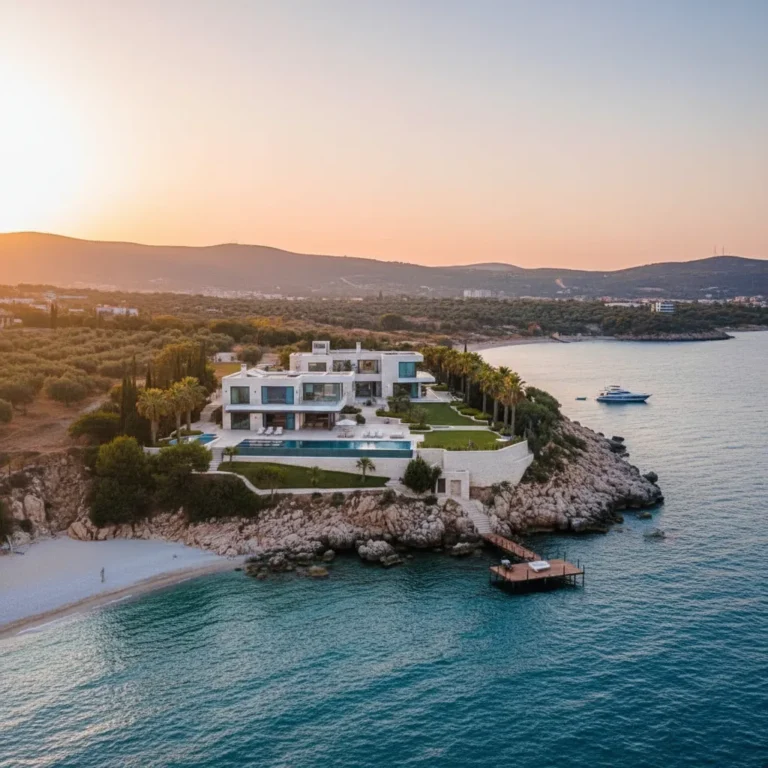
Concentrated throughout the Bodrum Peninsula, Antalya’s Lara and Konyaaltı districts, Kalkan, and Fethiye, coastal luxury villas cater to lifestyle acquirers and seasonal ultra-high-net-worth renters. These standalone or compound-based estates command significant weekly yields during peak tourism periods (May through October), though they require proactive property management models to handle off-season upkeep and asset maintenance.
3. Commercial Real Estate and Grade-A Office Spaces
Commercial assets—including institutional retail units, logistics distribution facilities, and Grade-A corporate office suites—appeal to institutional funds and experienced syndicates. These spaces typically utilize triple-net lease (NNN) contracts where blue-chip corporate tenants shoulder property insurance, maintenance fees, and municipal operational taxes, providing passive euro- or dollar-linked revenue streams.
4. Agricultural and Development Land Parcels (Arsa)
Acquiring undeveloped land presents exponential upside alongside strict municipal oversight. Foreign buyers face statutory limits regarding agricultural parcel ownership, requiring formal development project submissions within two years of acquisition. Investors pursuing residential development zoning (İmar) focus on strategic urbanization corridors along projected public transport and logistics axes.
Top Investment Locations Across Turkey
Location selection dictates both tenant quality and long-term capital appreciation. Every metropolitan and coastal region possesses distinct micro-market characteristics.
| Region / City | Primary Investor Profile | Target Asset Class | Average Gross Yield (Est.) | Appreciation Profile |
|---|---|---|---|---|
| Istanbul (Central) | HNWIs, Institutional Funds | Branded Residences, Penthouses | 4.5% – 6.0% | High liquidity, steady long-term gain |
| Istanbul (Suburban/Growth) | Growth Investors, CBI Seekers | Master-Planned Mixed-Use Projects | 6.0% – 8.0% | Rapid capital growth driven by transit |
| Antalya & Alanya | Expatriates, Short-Term Renters | Coastal Condos, Gated Villas | 6.5% – 9.0% | High seasonal income, consistent demand |
| Bodrum Peninsula | Ultra-HNWIs, Luxury Lifestyle | Bespoke Seafront Estates | 4.0% – 5.5% | Elite capital preservation, prestige pricing |
| Izmir & Urla | Domestic Migration, Expats | Modern Urban Units, Boutique Villas | 5.0% – 6.5% | Sustained upward price trajectory |
Istanbul: The Metropolitan Powerhouse
Istanbul remains the undisputed financial and cultural center of Turkey. The megacity operates as dozens of distinct micro-economies rather than a single market:
- The Historical & Financial Core (Şişli, Beşiktaş, Sarıyer): Home to prestigious Bosphorus-fronting mansions (Yalı), prime corporate towers, and heritage brownstones. Supply is structurally constrained, creating an exceptionally stable capital-preservation sanctuary with low default volatility.
- The Western Growth Corridor (Başakşehir, Küçükçekmece, Beylikdüzü): Modern master-planned communities adjacent to strategic transit lines and exhibition zones. These districts draw mid-market families and foreign investors seeking competitively priced developments with clear rental demand pipelines.
- The Anatolian Prestige Line (Kadıköy, Bağdat Avenue, Üsküdar): Characterized by high domestic purchasing power, tree-lined boulevards, upscale lifestyle amenities, and sustained gentrification via urban renewal programs.
Antalya and the Mediterranean Coastal Axis
Antalya provides unmatched year-round international flight connectivity, drawing steady domestic and international demographics. The central districts of Konyaaltı and Lara represent tight urban coastal markets where beachfront adjacency protects secondary market valuations. Further east, Alanya has transitioned from a sleepy resort town into an independent property powerhouse featuring modern resort-residential projects that appeal directly to Northern and Eastern European retirees and digital professionals.
Bodrum: The Luxury Bastion of the Aegean
Bodrum operates on international luxury metrics akin to Saint-Tropez, Marbella, or Mykonos. Locations such as Yalıkavak (anchored by its superyacht marina), Türkbükü, and Gümüşlük mandate strict municipal zoning limits, preserving traditional Aegean architecture and low-rise building density. Consequently, acquisition costs remain the highest per square meter in Turkey, insulated from broader domestic market shifts by international equity transactions.

Get a free consultation now, and let us help you choose the right property.
Citizenship and Residency Pathways Through Real Estate
Foreign acquisition strategies in Turkey frequently intersect with state-managed legal frameworks designed to incentivize foreign direct investment (FDI). Acquiring real estate grants access to two foundational administrative tracks.
1. The Citizenship by Investment (CBI) Program ($400,000 Threshold)
Under statutory amendments governed by the Directorate General of Migration Management and the General Directorate of Land Registry and Cadastre (TKGM), foreign nationals who acquire qualifying properties valued at a minimum of $400,000 USD (or foreign currency equivalent) can secure Turkish citizenship for themselves, their spouse, and minor children.
Key procedural requirements include:
- Official Valuation Assessment: An independent, CMB-licensed (Capital Markets Board) valuation firm must formulate a detailed valuation report verifying that the transactional value matches or exceeds the statutory $400,000 mark.
- Döviz Alım Belgesi (DAB / Currency Purchase Certificate): Buyers must channel their foreign currency through a Turkish operating bank to the Central Bank of the Republic of Turkey (TCMB) before purchasing. The bank issues a formal DAB confirming the currency conversion into Turkish Lira specifically for property acquisition.
- Title Deed Annotation (Şerh): A statutory restriction is legally registered on the title deed (Tapu), binding the owner not to dispose of, convey, or sell the underlying asset for a mandatory period of three consecutive years.
- Investor Residence Permit & Passport Issuance: Once the Conformity Certificate (Uygunluk Belgesi) is cleared, applicants receive expedited investor residency, followed by permanent national identification and passport delivery without mandatory physical presence or linguistic testing mandates.
2. Real Estate-Based Residency (İkamet)
For investors whose target acquisition values fall below the CBI threshold, purchasing residential property provides eligibility for renewable short-term residence permits under Article 31 of Law No. 6458. Regulatory updates establish minimum valuation metrics (typically evaluated at $200,000 in major metropolitan sectors as of recent administrative guidelines) to qualify for property-based residency. The underlying property must be categorized exclusively as residential and occupied solely by the investor and qualifying direct dependents.
The Step-by-Step Acquisition Process
Acquiring real estate in Turkey is safe and rapid when performed in accordance with statutory conveyancing protocols. Standard cross-border acquisitions are routinely executed within three to six business days once funding mechanisms are active.
Phase 1: Preparatory Due Diligence and Administrative Setup
The investor obtains a potential Turkish Tax Identification Number (Vergi Numarası) through the interactive tax office system (İVD). Concurrently, a domestic bank account is established at a tier-one institution to manage fund transfers, escrow mechanisms, and currency conversions. Engaging an independent, bilingual real estate attorney (Avukat) registered with the local Bar Association (Baro) is strongly advised to conduct conflict-of-interest-free due diligence.
Phase 2: Cadastral and Title Deed Examination
Before any deposits or contract executions occur, the legal counsel queries the Land Registry and Cadastre Information System (TAKBİS). This review confirms:
- Clear Title Ownership: Verifying that the vendor named on the title possesses absolute, unencumbered rights to convey the property.
- Absence of Encumbrances (İpotek ve Haciz): Ensuring no outstanding mortgages, judicial liens, creditor claims, tax foreclosures, or third-party usage rights shadow the registry.
- Zoning Verification and Habitation Certificates (İskan): Confirming that the asset holds full ‘Kat Mülkiyeti’ (established property ownership) rather than merely ‘Kat İrtifakı’ (construction servitude). The possession of an ‘İskan’ guarantees the structure complies with approved municipal architectural, structural, and seismic building codes.
Phase 3: Central Bank DAB Protocol Execution
In accordance with foreign currency regulations, the total purchase capital must be processed via an authorized Turkish bank, selling the foreign currency to the Central Bank of Turkey. The generated Döviz Alım Belgesi (DAB) acts as the non-negotiable legal basis for the Land Registry Office to approve conveyance to a foreign national.
Phase 4: Execution of Notarized Agreements and Tapu Conveyance
Preliminary sales promises must be executed directly before a certified Notary Public to achieve enforceability under Turkish contract law. The final ownership transfer happens exclusively at the regional Land Registry Directorate (Tapu Müdürlüğü). Both parties—or their legally designated representatives carrying a specialized Power of Attorney (Vekaletname)—appear in person. Following identity verification, official translation services, and clearance of property transfer taxes, the registrar hands over the pristine red-bordered Title Deed (Tapu Senedi).
Associated Acquisition Costs and Transactional Expenses
Purchasing properties requires structural budgeting beyond the raw sticker price. Capital allocation models must account for standard frictional acquisition costs:
| Expense Category | Responsible Party | Standard Rate / Cost (2026 Metrics) | Notes |
|---|---|---|---|
| Title Transfer Tax (Tapu Harcı) | Split equally (Buyer/Seller) | 4% total (2% buyer / 2% seller) | Often negotiated for buyer to pay full 4% in practice |
| Independent Valuation (Ekspertiz) | Buyer | Approx. 10,000 – 25,000 TRY | Mandatory for all foreign transactions via CMB firm |
| Value Added Tax (KDV) | Buyer | 1% to 20% (Asset dependent) | Foreigners can claim full exemption subject to conditions |
| Legal Representation Fee | Buyer | 1.0% – 1.5% of asset value | Provides fiduciary protection and TAKBİS checks |
| Notary & Sworn Translation Fees | Buyer | Approx. $400 – $1,200 USD | Covers POA, passport translations, and sworn interpreters |
| Land Registry Circulating Capital (Döner Sermaye) | Buyer | Approx. 3,000 – 8,000 TRY | Standardized administrative municipal transfer fee |
Legal and Regulatory Safeguards: Mitigating Risk
While the Turkish property framework offers strong protections for international buyers, avoiding procedural oversights requires adherence to primary compliance protocols.
1. Distinguishing Property Ownership Classifications
Foreign buyers must verify whether the property deed is designated as Kat İrtifakı or Kat Mülkiyeti:
- Kat İrtifakı (Construction Servitude): Indicates that individual shares of a plot of land have been apportioned for specific units within an unfinished or developing building project. While legally common during construction, developers must transition to full condominium ownership upon completion.
- Kat Mülkiyeti (Full Condominium Ownership): Confirms that the physical building has successfully passed every engineering, fire, and municipal inspection, and has been granted an institutional Habitation Certificate (İskan). This represents the highest, most secure classification of ownership under Turkish property law.
2. KDV (VAT) Exemption Conditions for Foreigners
Under Article 13/i of the Value Added Tax Law, foreign natural persons who are not tax residents of Turkey can apply for complete exemption from Value Added Tax (which ranges from 1% up to 20% depending on urban development indices and square meters) when purchasing off-plan or new-build properties directly from licensed construction firms. Qualifying conditions dictate that funds must enter Turkey from an offshore account in foreign currency, and the acquired asset must not be sold for at least three consecutive years following title transfer.
3. Foreign Ownership Zoning Ceilings
Under the Turkish Land Registry Law No. 2644, foreign nationals face statutory ownership constraints. Total acquisitions by a foreign individual cannot exceed 30 hectares nationwide without specialized presidential dispensation. Furthermore, foreign property acquisition within any given district (İlçe) cannot exceed 10% of that district’s total registered private land zone. Strategic zones near military reserves and national security corridors remain strictly closed to foreign ownership.
Asset Management, Leasing Strategies, and Yield Optimization
Acquiring prime properties represents only the first phase of an effective investment lifecycle; long-term total return depends heavily on active, legally compliant asset management.
Navigating Short-Term Rental Regulations
The regulatory framework governing short-term rentals (such as Airbnb and vacation leases) mandates operational compliance under the Ministry of Culture and Tourism guidelines. Key regulations include:
- Homeowner Association (HOA) Unanimity: Owners in residential complexes must obtain a notarized 100% consent from all fellow property co-owners in the building to receive a tourism rental license, unless the complex holds a pre-certified high-end “residence” permit featuring commercial operational allowances.
- Official Certification and Signage: Operating units must display authorized Ministry plaques at their entrance, maintain integrated links with the identity-declaration system (KBS) for police registry, and pay applicable tourism lodging taxes.
- Subletting Restrictions: Leases exceeding 100 days transition into standard residential lease law, bypassing short-term tourism licensing requirements while operating under traditional tenant protections.
Long-Term Leasing Realities and CPI Caps
Long-term tenancies in Turkey are governed by the Turkish Code of Obligations (Türk Borçlar Kanunu). Annual rental price adjustments for residential contracts are tied directly to the trailing twelve-month average of the Consumer Price Index (TÜFE). While leases automatically renew annually on the tenant’s behalf, landlords retain definitive eviction rights after ten extension years without providing specific statutory cause, or earlier if substantiated family occupancy needs or structural municipal rebuilds (Kentsel Dönüşüm) are legally certified.
Taxation, Exit Strategies, and Capital Repatriation
Sound investment architectures evaluate ongoing corporate, municipal, and exit tax parameters from day one:
- Annual Property Tax (Emlak Vergisi): Ranging between 0.1% and 0.4% of the municipality’s determined cadastral tax baseline, this local tax is split into two equal annual installments payable directly to the district municipality.
- Individual Capital Gains Exemption (5-Year Rule): One of the most tax-friendly mechanisms within Turkish jurisdiction states that if a real property owned by a natural person is held for five complete calendar years (measured from the exact registration date on the Tapu), any recognized capital gains realized upon sale are 100% exempt from personal income tax.
- Corporate SPV Structures: Institutional or large-scale acquisitions often establish a Turkish Limited Liability Company (Anonim Şirket or Limited Şirket). While subject to corporate income taxation, corporate vehicles allow for clean capital pooling, structured operating expense deductions, and simplified bulk-property disposals via share sales.
- Capital Repatriation: Turkey imposes no statutory capital control barriers preventing foreign nationals from repatriating the net proceeds of property sales back to overseas accounts. With a fully documented chain of transaction, including the original DAB exchange records and Land Registry payout receipts, commercial banks authorize immediate wire executions in any major global reserve currency.
Strategic Outlook for 2026 and Beyond
The contemporary landscape for properties across Turkey stands as an attractive, multifaceted frontier for discerning international investors. While the era of non-vetted, speculative acquisition is over, it has been replaced by a mature regulatory climate, institutional appraisal systems, and transparent property registers. International purchasers who conduct comprehensive cadastral due diligence, engage qualified local legal counsel, and balance yield performance with legal tenure discover that Turkish real estate offers an exceptional mix of lifestyle value, global mobility optionality, and capital appreciation potential.
As urban transformation programs modernize core metropolitan centers and the republic expands its influence as a central infrastructure nexus, quality property assets continue to act as durable wealth stores. Success lies in identifying prime locations, understanding regulatory frameworks, and running clean, transparent transactions that protect assets across multi-generational horizons.