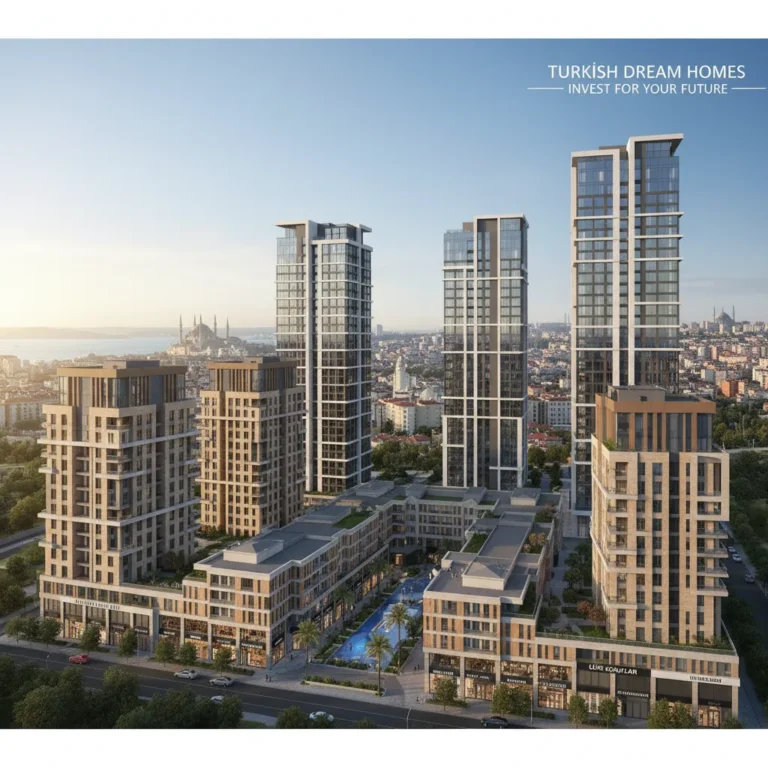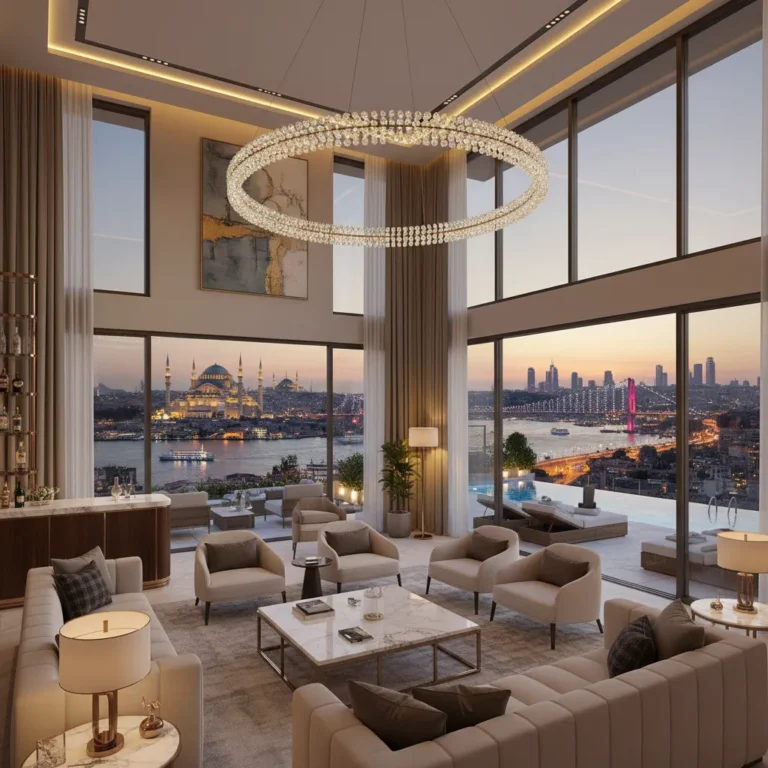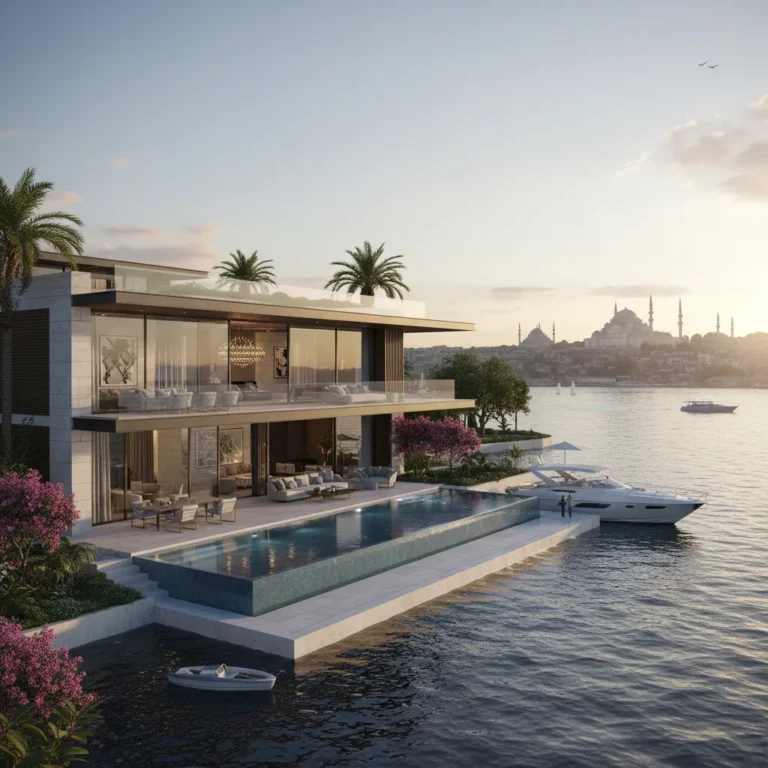
Strategic Overview: Identifying the Best Areas for Turkish Real Estate in 2026
Selecting the best areas for property acquisition in Turkey requires far more than tracking headline appreciation figures or coastal appeal. In 2026, the Turkish real estate landscape operates under a mature, tightly regulated framework where zoning compliance, foreign currency valuation rules, neighborhood residency quotas, and short-term rental licensing directly govern both asset liquidity and net yield. Investors who succeed in this market treat location selection as a multi-layered exercise that balances macroeconomic resilience against street-level fundamentals.
Over the past several years, Turkey has transitioned away from speculative, credit-fueled price spikes toward a bifurcated market driven by real end-user demand, corporate relocation, tourism infrastructure, and sovereign wealth diversification. Foreign buyers entering the market in 2026 encounter clearer legal guardrails, stricter appraisal oversight, and pronounced performance gaps between prime urban districts and oversupplied suburban developments. Understanding why certain neighborhoods command enduring international and domestic demand—while adjacent districts stagnate—is the single most important step before committing capital.
Whether your primary objective is securing Turkish Citizenship by Investment, establishing long-term residency, capturing inflation-hedged rental income, or building a professionally managed coastal portfolio, choosing among Turkey’s best areas demands an objective evaluation of local infrastructure, tenant demographics, building age, and municipal regulations. This guide breaks down the country’s top-performing cities and micro-districts for 2026, providing an actionable blueprint for buyers and portfolio managers alike.
Core Criteria Defining the Best Areas in Turkey for 2026
Before comparing Istanbul’s financial corridors with the Mediterranean coastline or Aegean luxury enclaves, investors must filter prospective neighborhoods through three non-negotiable 2026 regulatory and financial criteria. Failing to verify these parameters at the neighborhood level can result in rejected residency applications, disqualified citizenship files, or vacant properties that cannot legally be operated as holiday rentals.
Citizenship by Investment ($400,000 Threshold) and Appraisal Integrity
Turkey’s Citizenship by Investment (CBI) program continues to anchor high-value transactions in 2026, requiring a minimum real estate investment of $400,000 USD held for at least three years. However, the mechanics of qualifying have tightened considerably. Every transaction must be supported by an independent valuation report issued by a firm licensed by the Capital Markets Board (SPK) and assigned centrally through the WebTapu system, eliminating the historical practice of shopping for inflated appraisals.
Furthermore, the declared title deed (Tapu) price, the official bank transfer converted via a Foreign Currency Purchase Certificate (Döviz Alım Belgesi or DAB), and the SPK valuation must all meet or exceed the $400,000 threshold. Because secondary-market transactions between foreign nationals do not qualify—the property must be purchased from a Turkish citizen or a Turkish-owned corporate developer—the best areas for CBI buyers are districts with robust primary development pipelines, transparent corporate developers, and genuine resale liquidity once the three-year holding annotation expires.
Residency Permits ($200,000 Threshold) and Closed Neighborhood Quotas
For buyers targeting a short-term real estate residency permit (Ikamet) rather than citizenship, the minimum property valuation requirement stands at $200,000 USD across all Turkish provinces. Crucially, meeting the financial threshold is no longer sufficient on its own. The Presidency of Migration Management enforces a strict 20% foreign population cap per neighborhood (mahalle), keeping over 1,100 neighborhoods nationwide closed to new foreign residency registrations.
In major coastal and metropolitan hubs, several traditionally popular expat districts remain restricted. Consequently, identifying the best areas for residency in 2026 requires cross-referencing target streets against the official closed-neighborhood registry before signing a reservation contract. Buyers seeking residency must pivot toward high-standard urban districts or emerging master-planned communities where domestic Turkish residents constitute the vast majority of the local population.
Rental Yield Dynamics, Short-Term Licensing, and Property Management
Following the expiration of temporary residential rent caps and the full implementation of Law No. 7464 governing tourism-purpose rentals, landlord economics in Turkey have normalized around transparent, contract-driven rules. Long-term residential lease renewals are tied to the 12-month average Consumer Price Index (TÜFE), restoring predictable cash-flow indexing for buy-to-let owners.
Conversely, operating a short-term holiday rental (stays under 100 days) now legally requires a Tourism Purpose Rental Permit from the Ministry of Culture and Tourism. In multi-unit apartment buildings, securing this permit requires unanimous written consent from 100% of all unit owners in the building—a virtually impossible hurdle in traditional residential blocks. Therefore, the best areas for short-term yield are strictly those featuring standalone villas, boutique estates, or modern high-rise residences explicitly zoned for serviced hospitality operations with professional on-site property management.
| Investment Objective | 2026 Regulatory Benchmark | Ideal Area Profile | Primary Risk to Mitigate |
|---|---|---|---|
| Turkish Citizenship by Investment | Minimum $400,000 USD valuation, SPK appraisal, DAB bank transfer, 3-year hold | Prime Istanbul districts, branded Antalya developments, Bodrum luxury estates | Overpaying above local resale value; non-compliant developer title history |
| Property Residency (Ikamet) | Minimum $200,000 USD valuation in an open neighborhood (below 20% quota) | Kadikoy, Atasehir, Sariyer, Konyaalti (selected pockets), Ankara Cankaya | Buying in a closed mahalle or failing SPK valuation thresholds |
| Long-Term Rental Yield | TÜFE-indexed annual renewals; 1-year+ standard lease contracts | Transit-connected Istanbul hubs, university & corporate zones, Izmir | Currency depreciation vs. USD; high building maintenance fees (aidat) |
| Short-Term Tourism Yield | Ministry Tourism Permit (Law No. 7464); 100% owner consent or detached status | Kas, Kalkan, Fethiye, Bodrum villas, licensed Antalya apart-hotels | Unlicensed Airbnb fines; severe off-season occupancy drops |
Istanbul: Prime Districts for Capital Appreciation and Urban Liquidity
As Turkey’s commercial, financial, and cultural engine, Istanbul remains the undisputed anchor for institutional-grade property investment. Contributing roughly a third of the nation’s GDP and housing over 15 million residents, the city offers unmatched market depth. Unlike seasonal resort towns where resale liquidity depends heavily on foreign buyer sentiment, Istanbul’s best areas are sustained by deep domestic demand from corporate executives, multinational headquarters, tech startups, and upper-middle-class families.
In 2026, Istanbul’s real estate performance is shaped by two overriding factors: proximity to rail transit (specifically the Marmaray cross-continental line and expanded metro corridors like the M11 airport line) and structural seismic resilience. Below is an analysis of the city’s strongest districts across both continents.
Get a free consultation now, and let us help you choose the right property.
European Side Prestige and Business Hubs: Sariyer, Besiktas, and Sisli
For capital preservation, prestigious lifestyle appeal, and resilient USD-denominated rental demand, Istanbul’s northern European Bosphorus and central business axis remains unrivaled.
- Sariyer (Maslak, Zekeriyakoy, Tarabya): Spanning both the Maslak financial skyscraper corridor and the leafy villa communities bordering the Belgrade Forest, Sariyer attracts senior multinational executives, diplomats, and affluent families. Zekeriyakoy stands out for low-rise gated villa compounds offering 24/7 security and international school access, making it one of the best areas for family-oriented residency buyers and long-term corporate leases. Meanwhile, branded residential towers in Maslak and Ayazaga deliver strong liquidity for $400,000+ citizenship portfolios.
- Besiktas (Levent, Etiler, Bebek, Ulus): Besiktas represents Istanbul’s blue-chip core. Supply is severely constrained by strict heritage and Bosphorus zoning laws, creating a natural floor under property values. Etiler and Ulus remain prime targets for high-net-worth buyers seeking boutique luxury apartments and urban transformation (kentsel dönüşüm) rebuilds featuring modern seismic engineering. While entry prices per square meter rank among the highest in Turkey, vacancy rates are virtually zero.
- Sisli (Nisantasi, Bomonti, Mecidiyekoy): Nisantasi is Turkey’s premier luxury retail and heritage residential quarter, prized for walkability and upscale medical tourism proximity. Just adjacent, Bomonti has evolved into a dynamic vertical hub of branded residences, co-working spaces, and boutique hotels. For investors seeking strong corporate tenant turnover and walkable access to metro lines, Sisli provides reliable year-round occupancy.
High-Growth Infrastructure Corridors: Kagithane, Basaksehir, and Basin Ekspres
Investors targeting higher gross rental yields and medium-term capital appreciation frequently look beyond saturated Bosphorus districts toward Istanbul’s rapidly modernizing transit nodes.
- Kagithane: Positioned directly beside Maslak and Levent and connected to Istanbul Airport via the high-speed M11 metro line, Kagithane has undergone sweeping urban renewal. Once an industrial valley, it now features contemporary mid-rise residential complexes tailored to young professionals and white-collar commuters. Because entry prices remain significantly lower than neighboring Besiktas or Sisli, Kagithane consistently delivers superior rental yield percentages relative to purchase price.
- Basaksehir: Anchored by the massive Cam and Sakura City Hospital, expansive public parks, and modern master-planned infrastructure, Basaksehir is a magnet for conservative domestic families, healthcare specialists, and Middle Eastern investors. Buildings here are predominantly post-2015 construction built on solid bedrock, offering high earthquake safety confidence alongside large-format family apartments well suited to citizenship acquisitions.
- Basin Ekspres (Bagcilar / Kucukcekmece Axis): Serving as the commercial highway connecting the TEM and E-5 arterials near the old Ataturk Airport site, Basin Ekspres hosts international hotel chains, corporate campuses, and serviced residence towers. Careful asset selection is crucial here: buyers should avoid generic, high-density blocks with excessive maintenance fees and instead focus on branded, metro-adjacent developments managed by reputable hospitality operators.
Asian Side Coastal and Residential Strongholds: Kadikoy, Uskudar, and Atasehir
Historically viewed as quieter commuter suburbs, Istanbul’s Asian side has emerged in 2026 as the city’s most balanced market for quality of life, urban planning, and steady appreciation.
- Kadikoy (Bagdat Caddesi, Suadiye, Fenerbahce, Moda): Bagdat Avenue (Bagdat Caddesi) is the undisputed jewel of the Anatolian side. Stretching parallel to the Marmara Sea, neighborhoods like Suadiye, Caddebostan, and Fenerbahce offer tree-lined boulevards, boutique luxury shopping, Marmaray rail access, and coastal parks. Over the past decade, extensive urban transformation has replaced aging 1970s structures with ultra-modern, seismically compliant boutique buildings. Demand from affluent Turkish buyers ensures exceptional resale liquidity.
- Atasehir: Home to the Istanbul International Financial Center (IFC), Atasehir has cemented its status as the Asian side’s corporate hub. Relocation of major state banks, financial regulators, and fintech firms to the IFC continues to fuel sustained demand for modern one- to three-bedroom executive apartments. Wide avenues, shopping complexes, and new metro connections make Atasehir a standout choice for long-term buy-to-let investors.
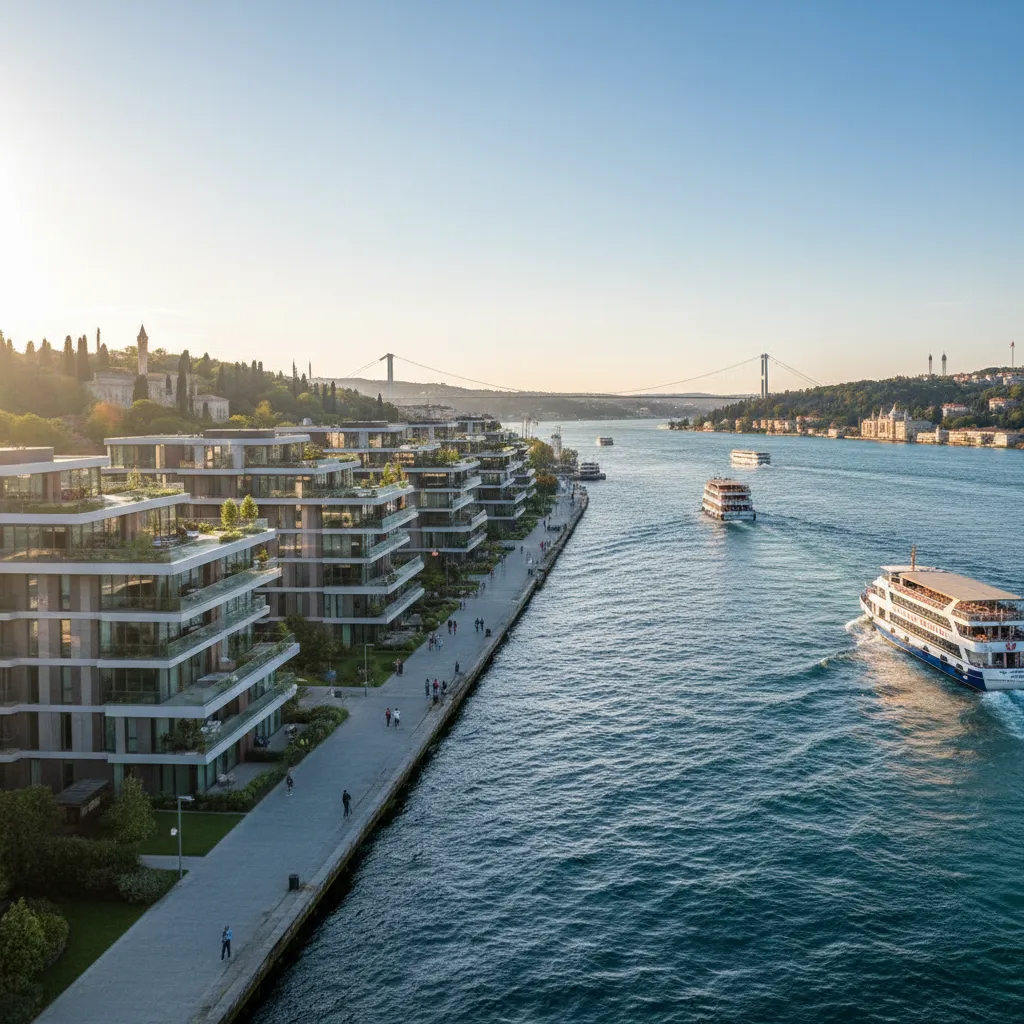
- Uskudar (Acibadem, Kandilli, Cengelkoy): Offering panoramic Bosphorus views, historic charm, and direct ferry and rail links to the European side, Uskudar appeals to buyers seeking calmer, prestigious residential enclaves. Cengelkoy and Kandilli feature sought-after low-rise hillside compounds and Bosphorus-view estates that hold their value exceptionally well during broader market slowdowns.