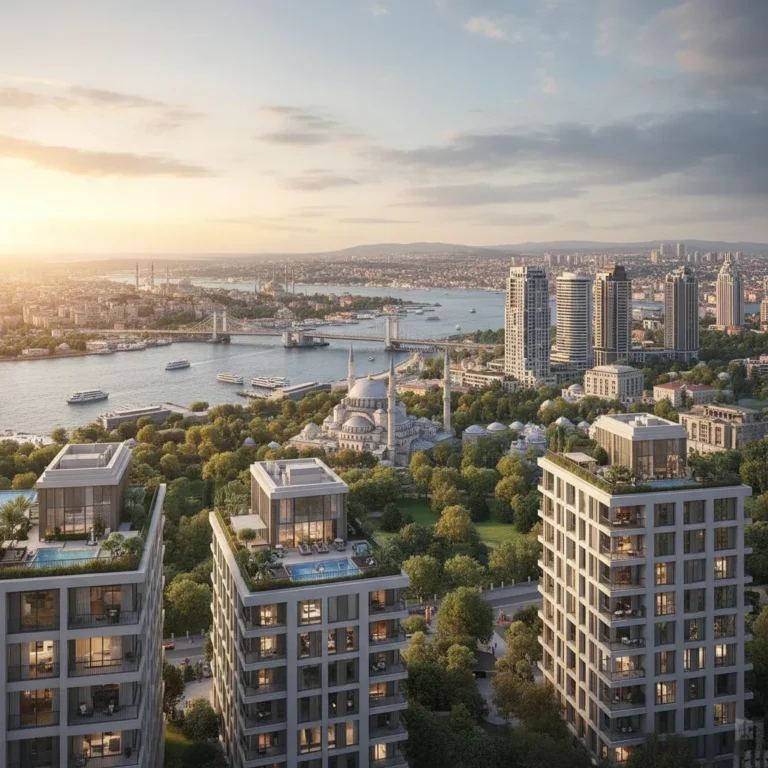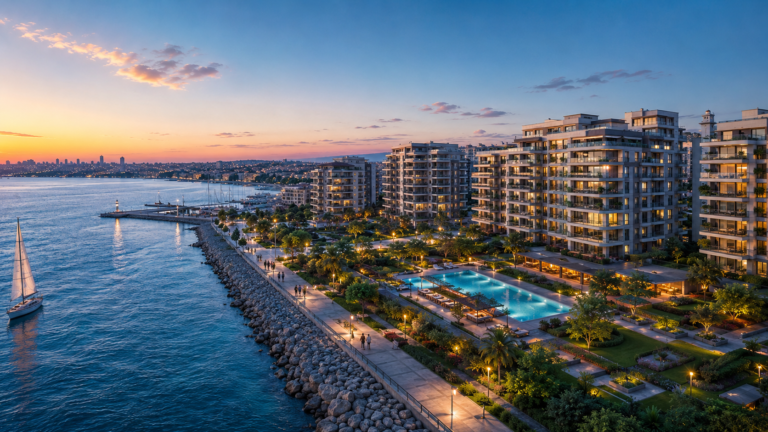
Turkey’s Citizenship by Investment (CBI) program remains one of the world’s most dynamic and accessible economic naturalization pathways. Anchored by the nation’s strategic geographic position bridging Europe and Asia, a thriving domestic economy, and an alluring Mediterranean lifestyle, foreign investors continue to view Turkish residential property not merely as a high-yield asset class, but as a gateway to global mobility and long-term security. Acquiring an apartment in Turkey that qualifies for citizenship requires adherence to rigorous legal, financial, and procedural standards established by the Directorate General of Land Registry and Cadastre (TKGM) and the Presidency of Migration Management.
Navigating this investment journey demands an understanding of real estate acquisition rules, valuation audits, foreign exchange protocols, and property registration mechanics. In this comprehensive guide, we provide an exhaustive analysis of buying apartments for sale in Turkey suitable for citizenship, dissecting the regulatory framework, due diligence parameters, top-performing regional markets, and legal processes required to secure both a viable real estate asset and a Turkish passport.
The Legal Framework of Turkish Citizenship Through Real Estate
The legal foundation of acquiring Turkish citizenship through property acquisition is codified under Article 20 of the Regulation on the Implementation of the Turkish Citizenship Law. Designed to stimulate foreign direct investment (FDI), the regulation grants foreign buyers the statutory right to apply for exceptional citizenship provided their real estate holdings satisfy explicit monetary benchmarks and procedural hurdles.
The $400,000 Minimum Valuation Threshold
To qualify for naturalization, an investor must purchase real estate valued at a minimum of $400,000 USD (or the equivalent in convertible foreign currency). It is crucial to distinguish between the developer’s marketed sales price and the officially recognized valuation:
- Appraisal Parity: The property must undergo an independent appraisal by an inspection firm licensed by the Capital Markets Board of Turkey (Sermaye Piyasası Kurulu – SPK). The assessed value on the appraisal report must equal or exceed $400,000 USD based on the official Central Bank exchange rates on the date of transaction.
- Title Deed Stated Value: The transaction price declared at the Land Registry Directorate (Tapu Müdürlüğü) must reflect this same minimum threshold. Undervaluing properties on the title deed to minimize transfer taxes—a historical practice in domestic secondary markets—disqualifies an apartment from citizenship eligibility.
- Cumulative Acquisition: Investors are not restricted to purchasing a single unit. You may aggregate multiple apartments, provided that all properties are processed collectively or within compatible timelines, and their cumulative evaluated worth surpasses the statutory $400,000 minimum.
The Foreign Exchange Purchase Certificate (DAB) Protocol
A central pillar of the financial process is the mandatory acquisition of the Döviz Alım Belgesi (DAB), or Foreign Exchange Purchase Certificate. Under Central Bank circulars, foreign property buyers cannot transfer foreign currency directly to a Turkish property seller.
Instead, the foreign funds (USD, EUR, GBP, etc.) must be routed through an authorized Turkish commercial bank to the Central Bank of the Republic of Turkey (TCMB). The Central Bank converts these funds into Turkish Lira (TRY) at the institutional clearing rate of the day. The commercial bank then issues the official DAB certificate detailing the investor’s full passport name, nationality, passport number, and the specific foreign currency amount converted. This document confirms legitimate capital inflow and must be presented directly to the Land Registry before title deed transfer.
The Three-Year Resale Restriction (Şerh)
Acquiring an apartment for citizenship does not entail an open-ended transaction; it carries an explicit statutory lock-in clause. Upon executing the title transfer, an official annotation (şerh) is registered against the property deed stating: “This property cannot be sold or transferred to any third party for a period of three (3) years from the date of acquisition, pursuant to the Turkish Citizenship Law.”
While you retain total ownership, rental rights, and can generate recurring yield throughout this holding period, any attempt to divest, encumber, or liquidate the title deed will trigger the immediate revocation of the Certificate of Conformity and subsequent cancellation of naturalization proceedings.
Property Lineage and Secondary Ownership Restrictions
A critical trap for unguided buyers involves the historical ownership chain of the selected apartment. Turkish citizenship regulations enforce a strict single-use policy regarding citizenship-related properties:
- The property being acquired must be registered in the name of a Turkish citizen or a corporate entity registered and incorporated in Turkey.
- If the seller is a foreign individual, or if the unit was previously owned by a foreign investor who utilized it for their own citizenship application, the property is permanently disqualified from being used by another foreign investor for citizenship.
- Properties transferred back to a developer from a previous foreign buyer within certain prohibited look-back windows are heavily scrutinized and often rejected by cadastre auditors to prevent artificial circular sales.

Get a free consultation now, and let us help you choose the right property.
Due Diligence: Identifying Qualified Citizenship Apartments
Not every residential listing marketed as “luxury” or “investment-ready” satisfies administrative citizenship scrutiny. Executing comprehensive due diligence before executing non-refundable deposits or drafting sales promises prevents critical financial and legal setbacks.
Title Deed Classifications: Kat Mülkiyeti vs. Kat İrtifakı
Understanding the legal taxonomy of Turkish title deeds (Tapu Senedi) is vital for safety and regulatory compliance:
- Kat Mülkiyeti (Full Condominium Ownership): The gold standard of real estate ownership in Turkey. It signifies that the building is fully completed, has passed municipal structural engineering checks, and holds an occupancy permit (İskan). The unit possesses an independent, unchallengeable legal status.
- Kat İrtifakı (Construction Servitude): Typical for off-plan and ongoing developments. It allocates fractional ownership of the underlying land corresponding to the specific residential unit planned for construction. Off-plan properties with Kat İrtifakı are eligible for citizenship, provided the transaction is executed via a Notarized Sales Promise Agreement (Noter Satış Vaadi Sözleşmesi) and at least $400,000 has been paid upfront in cash.
- Arsa Payı (Land Share Only): Projects lacking formal architectural zoning clearances remain registered merely as raw land shares. These carry substantial legal risk and are generally disqualified from receiving the requisite Certificate of Conformity from the Ministry of Environment, Urbanization and Climate Change.
Verifying the Occupancy Permit (İskan)
The İskan is the municipal habitation certificate confirming that a building adheres strictly to approved fire codes, earthquake safety mandates, environmental metrics, and structural blueprints. Purchasing an apartment in a building lacking an İskan exposes the owner to ongoing utility connection hurdles, punitive municipal fines, and potential devaluation during the mandatory SPK appraisal process.
Encumbrance and Lien Audits (Takyidat)
Before submitting documents to the Land Registry, an independent real estate lawyer must retrieve the comprehensive Takyidat (encumbrance records) from the relevant cadastre portal. This audit verifies that the apartment is unencumbered by developer mortgages (ipotek), judicial foreclosures, executive attachments (haciz), or historical tax obligations that could cloud the title transfer or delay the 3-year restrictive annotation.
Top Turkish Real Estate Markets for Citizenship Investment
Choosing the right location requires balancing legal citizenship conformity with fundamental capital preservation, liquidity, and rental yield. Turkey’s dynamic urban landscape provides varied investment profiles across its premier cities.
Istanbul: Global Megacity and Financial Powerhouse
Istanbul accounts for the vast majority of all real estate acquisitions linked to Turkish citizenship. As the economic, commercial, and educational nucleus of the nation, it maintains high domestic demand, tenant occupancy rates, and global capital appreciation.
Central Business Districts and Prime Luxury Corridors
For investors focused on premier locations and liquid capital exit options after the 3-year holding period, central Istanbul remains unmatched:
- Şişli, Beşiktaş, and Nişantaşı: These historical and upscale commercial corridors command top-tier square-meter prices. Properties here feature branded residences managed by international hotel operators, offering dollar-pegged or euro-hedged rental returns and immediate appeal for executive expatriate tenants.
- Maslak and Levent: The primary financial districts. Modern high-rise residential towers here offer integrated lifestyle facilities, immediate metro connectivity, and steady leasing absorption from multinational corporate employees.
Strategic Growth and Urban Transformation Corridors
Investors seeking higher capital upside alongside rental yields often pivot toward infrastructure-led master-planned zones:
- Basın Ekspres (Media Highway): Connecting the TEM and E-5 highways with direct transit lines to Istanbul Airport, this corridor has transformed into a major business and commercial hub. It offers a dense selection of new-build residential towers with pre-approved citizenship appraisals and active rental management setups.
- Kağıthane and Cendere Valley: Adjacent to the central districts of Maslak and Şişli, Kağıthane has seen significant public investment in mass transit (M7 and M11 metro lines to Istanbul Airport). Its newer developments provide strong capital growth profiles at competitive price points compared to traditional luxury postcodes.
Family-Centric Suburban Developments
For large-format apartments (3+1, 4+1 layouts) targeted at regional families relocating permanently to Turkey, western corridors like Başakşehir, Beylikdüzü, and Bahçeşehir provide spacious gated communities with on-site schools, landscaped parks, and healthcare infrastructure.
Antalya: Mediterranean Tourism and High-Yield Short-Term Rentals
Antalya is Turkey’s premier holiday destination and a major coastal hub for foreign relocation. Driven by its international airport operating year-round flights across Europe, Central Asia, and the Middle East, Antalya’s property market boasts strong short-term holiday rental performance.
- Konyaaltı and Lara: High-end districts offering proximity to Blue Flag beaches, established social infrastructure, and scenic coastal boulevards. Strict urban zoning and a scarcity of vacant land in central coastal pockets have created a structural supply shortage, supporting price growth for citizenship-qualifying luxury apartments.
- Alanya: Known for competitive price-to-space ratios, integrated resort-style apartment complexes, and significant seasonal tourism yields. Investors can often bundle multiple beachfront units to hit the $400,000 threshold.
Ankara: Stable Diplomatic Capital with Steady Long-Term Tenants
As the political and administrative capital of Turkey, Ankara offers a stable real estate market sheltered from seasonal tourism fluctuations. Anchored by foreign embassies, ministerial headquarters, major state institutions, and elite universities (METU, Bilkent, Hacettepe), the city’s affluent neighborhoods—such as Çankaya, İncek, and Çayyolu—deliver reliable domestic rental demand and strong tenant longevity.
Izmir and Bodrum: The Aegean Coast Lifestyle
Izmir, Turkey’s third-largest city, combines cosmopolitan commercial activity with relaxed coastal living. Neighborhoods such as Bornova, Alsancak, and Bayraklı (the newly designated financial district) host new, earthquake-engineered high-rises popular among young professionals.
Meanwhile, the Bodrum Peninsula represents the pinnacle of luxury Aegean real estate. While standalone villas predominate, exclusive marina-adjacent apartments and branded hotel serviced residences in Yalıkavak, Türkbükü, and Bodrum Town offer exceptional high-season rental yields, catering to high-net-worth investors seeking both lifestyle use and a solid citizenship investment.

Get a free consultation now, and let us help you choose the right property.
Investment Comparison Across Property Asset Classes
Evaluating which residential archetype best suits your portfolio strategy is essential when matching the $400,000 citizenship threshold. The table below delineates key operational, legal, and financial indicators across standard residential asset profiles in Turkey:
| Property Asset Class | Target Investor Profile | Average Gross Yield (%) | Liquidity / Resale Velocity | Appraisal Conformity Risk |
|---|---|---|---|---|
| Branded Residences & Serviced Apartments | Hands-off foreign investors seeking passive management and foreign currency rental agreements. | 6.5% – 9.0% | High (Global brand recognition, international buyer pool) | Very Low (Developers work directly with licensed SPK institutions) |
| City-Center Urban Apartments (Completed) | Investors prioritizing stable, multi-year domestic leases and capital preservation. | 4.5% – 6.0% | Very High (Consistent domestic and international transaction volume) | Low (Clear comparable historical sales data) |
| Master-Planned Suburban Off-Plan Units | Investors chasing early-phase capital growth and multi-unit citizenship bundling. | 5.0% – 7.0% | Moderate (Dependent on completion schedule and local supply absorption) | Moderate (Requires verified Notarized Sales Promise and fixed cash payment) |
| Coastal Holiday & Resort Apartments | Lifestyle buyers balancing personal holiday usage with high summer holiday yields. | 7.0% – 10.0% (Seasonal) | Moderate to High (Driven predominantly by foreign seasonal demand) | Low to Moderate (Scarcity of prime coastal land supports high valuations) |
Step-by-Step Acquisition and Naturalization Roadmap
Achieving citizenship through property acquisition follows a chronological legal pathway governed by institutional benchmarks. Bypassing any step can result in procedural delays or application rejections.
Step 1: Legal Representation and Power of Attorney (PoA)
Engaging an independent, bar-certified Turkish real estate attorney is paramount. Through an overseas Turkish Consulate or a local notary, the investor executes a specialized Power of Attorney (PoA). This document grants the attorney explicit authority to:
- Open a tax identification number (Vergi Numarası) and a non-resident bank account in Turkey.
- Review municipal cadastre archives and execute property title acquisitions on the investor’s behalf.
- Place the mandatory 3-year resale restriction annotation at the Land Registry.
- Submit naturalization dossiers to the relevant ministries.
Step 2: Property Shortlisting and SPK Appraisal Issuance
Following property selection and preliminary price negotiation, the attorney commissions an authorized valuation firm via the central automated web-appraisal system (TADEBISS) run by the Land Registry. The appraiser independently inspects the apartment, audits construction permits, evaluates local comparable transactions, and submits the finalized, official valuation certificate.
Step 3: Central Bank Currency Exchange and Transaction Clearance
The investor deposits the purchase funds into their Turkish commercial bank account in foreign currency. The bank handles the conversion with the Central Bank of Turkey, issues the official DAB document, and executes an electronic wire transfer of the equivalent Turkish Lira directly to the seller’s verified bank account with clear reference to the specific property lot number.
Step 4: Title Deed Conveyance and 3-Year Restriction Annotation
Both parties (or their legal representatives holding valid PoAs) attend the local Land Registry Directorate. The conveyance tax is settled, the title deed is officially transferred into the investor’s name, and the Land Registrar places the official 3-year “citizenship pledge” onto the property’s digital and physical cadastre registry.
Step 5: Securing the Certificate of Conformity (Uygunluk Belgesi)
Upon title transfer, the official land registration documents, payment receipts, valuation assessment, and DAB certificate are transmitted to the General Directorate of Land Registry and Cadastre. The regulatory authority audits the transaction trail. Upon verification that the investment meets all legal parameters, it issues the formal Certificate of Conformity (Uygunluk Belgesi). This document serves as the legal foundation for the naturalization application.
Step 6: Investor Residence Permit Application
Before applying for Turkish citizenship, the primary applicant must be granted a specialized short-term residence permit under Article 31/1-j of Law No. 6458 on Foreigners and International Protection. This unique residence card is designated exclusively for economic investors and does not require minimum physical stay periods or language proficiency tests.
Step 7: Naturalization Submission and Biometrics
With the Certificate of Conformity and Investor Residence Permit secured, the comprehensive citizenship dossier is submitted to the Special Investor Citizenship Bureau (established jointly by the Ministry of Interior and Directorate of Civil Registration and Citizenship Affairs). The file includes:
- Apostilled and notarized translations of all family birth certificates and marriage certificates (covering the primary investor, spouse, and all children under the age of 18).
- Apostilled clean criminal background records from the applicant’s country of origin and current legal residency.
- Valid passport copies and specialized medical insurance coverage.
Following comprehensive inter-agency national security and intelligence background checks, the naturalization decree is ratified by the Presidency of the Republic of Turkey. The investor and eligible family members are then scheduled for a brief biometrics appointment (conducted at a local provincial population office in Turkey or any Turkish Embassy/Consulate worldwide) to finalize their Turkish identity cards and passports.
Financial Considerations: Taxes, Associated Fees, and Operating Costs
Achieving total cost transparency requires factoring ancillary transactional fees and recurring carrying costs into your overall financial projection. While purchasing property in Turkey remains significantly more cost-effective than in many Western European jurisdictions, buyers must account for the following expenses:
Title Deed Conveyance Tax (Tapu Harcı)
The standard statutory title deed transfer tax is 4% of the declared sales value. Legally, this cost is intended to be split equally (2% by the buyer and 2% by the seller). However, common commercial market convention in Turkey often places the full 4% liability upon the foreign purchaser, unless negotiated otherwise in the primary sales contract.
Value Added Tax (KDV) and Statutory Exemptions
Residential property transactions are subject to Value Added Tax (Katma Değer Vergisi – KDV), ranging between 1%, 10%, or 20% depending on the property’s gross square footage, luxury categorization, and location. Crucially, non-resident foreign investors who purchase new residential units directly from developer companies using foreign capital brought into Turkey from abroad may be fully exempt from KDV under Article 13/i of the Value Added Tax Law. Claiming this exemption requires obtaining an official tax clearance certificate prior to deed conveyance, which can unlock substantial capital savings.
Ancillary Legal and Administrative Expenses
- Independent Legal Fees: Approximately 1.0% to 2.0% of the total purchase volume, or a negotiated flat advisory fee covering real estate conveyance and full citizenship naturalization filings for all family members.
- Official SPK Appraisal Fee: Mandated by the Land Registry, typically ranging between $250 and $500 USD per property unit.
- Sworn Translation and Notarization Costs: Legal translation of passports, family registers, birth certificates, and notarial authorizations generally averages between $800 and $1,500 USD depending on family size.
- Revolving Capital Fund (Döner Sermaye): Administrative municipal cadastre processing fee, generally between $100 and $300 USD.
Ongoing Carrying and Maintenance Costs
- Annual Property Tax (Emlak Vergisi): Varies between 0.1% and 0.4% of the taxable property valuation determined by the local municipality, with higher rates applying within metropolitan administrative zones such as Istanbul, Ankara, and Izmir.
- Maintenance and Building Dues (Aidat): Modern residential towers and luxury compounds with on-site security, swimming pools, fitness centers, and underground parking charge monthly maintenance fees. These usually range from $0.80 to $2.50 USD per square meter.
Common Pitfalls and How to Mitigate Risk
Navigating the intersection of real estate acquisition and naturalization carries legal nuances. Unprepared investors frequently encounter avoidable obstacles that delay their path to citizenship:
1. The “Cash Rebate” and Overvaluation Scam
A major risk involves developers or unlicensed brokers promising to sell an apartment worth $250,000 for an official valuation of $400,000, promising a private post-closing “cash rebate” to the buyer. The Land Registry and Ministry audits cross-reference land value indexes and satellite urban databases to detect such discrepancies. If an appraisal is flagged as fraudulent, the Certificate of Conformity will be rejected, the property blacklisted, and the investor exposed to potential criminal scrutiny for immigration fraud.
2. Buying From the Wrong Entity
Properties acquired from foreign corporate entities, companies with foreign shareholder majorities, or individuals who obtained their own Turkish citizenship via investment will fail ministerial audits. Every property must be checked for clean domestic title lineage going back through historical transfers.
3. Inappropriate Payment Routing
Making payments directly in foreign currency or executing cash transfers between private parties violates Central Bank and Land Registry regulations. Every single lira transferred must match the official DAB currency exchange slip and originate from traceable bank accounts registered to the primary investor.
4. Overlooking Off-Plan Completion Guarantees
While off-plan properties are eligible for citizenship via a Notarized Sales Promise, investors must evaluate developer capitalization, construction schedules, and corporate track records. If a developer faces insolvency or fails to construct the building to code, the investor’s capital and naturalization timeline are both compromised. Preferentially target developments supported by public-private partnerships (such as Emlak Konut or TOKİ) or developers with verified balance sheets and bank performance guarantees.
Frequently Asked Questions (FAQ)
Can I purchase multiple apartments to reach the $400,000 threshold?
Yes. The legislation permits investors to aggregate several properties, provided their combined official SPK appraised value and stated title deed amounts exceed $400,000 USD. The properties do not need to be in the same building or city, but all applications must be submitted in coordination through the Land Registry to secure a unified Certificate of Conformity.
Are my spouse and children granted citizenship under the same investment?
Yes. The single investment of $400,000 grants naturalization rights to the primary applicant, their legally recognized spouse, and all biological or legally adopted children under the age of 18 at the time of application submission. Children over 18 or dependent parents must apply through independent immigration or investment channels.
Can I rent out my apartment during the 3-year mandatory holding period?
Yes. The 3-year statutory annotation limits your ability to sell or transfer ownership, but it does not restrict your property rights. You are fully entitled to lease the apartment on long-term residential contracts, engage short-term holiday rental management agencies, or reside in the property personally.
What happens after the 3-year holding period expires?
Once the three years have elapsed, you can petition the Land Registry to remove the restrictive annotation (şerh) from your title deed. You can then sell or liquidate the apartment on the open market, retain the capital and any price appreciation, while permanently retaining your Turkish citizenship and passport.
Do I need to learn the Turkish language or reside in the country?
No. The Turkish Citizenship by Investment pathway does