Introduction: Navigating the Turkish Real Estate Market in 2026
The cross-continental nation of Turkey remains one of the world’s most compelling destinations for cross-border real estate investment. Straddling Europe and Asia, the country combines geopolitical centrality, robust demographic expansion, world-class modern infrastructure, and an enduring lifestyle appeal. Over the past decade, buying property in Turkey has evolved from an adventurous speculative endeavor into an institutionalized, highly regulated asset class that attracts family offices, private wealth investors, digital nomads, and retirees from across the globe.
Entering 2026, the Turkish property market exhibits structural maturity. Regulatory reforms over recent years—ranging from mandatory valuation reports and stricter oversight of tourism rentals to tightened residence permit minimums—have brought institutional transparency to what was once a fast-moving, fragmented market. Investors looking for capital appreciation, recurring rental yields, or second citizenship through real estate acquisition now encounter a sophisticated framework designed to protect foreign capital while fostering sustainable urban regeneration.
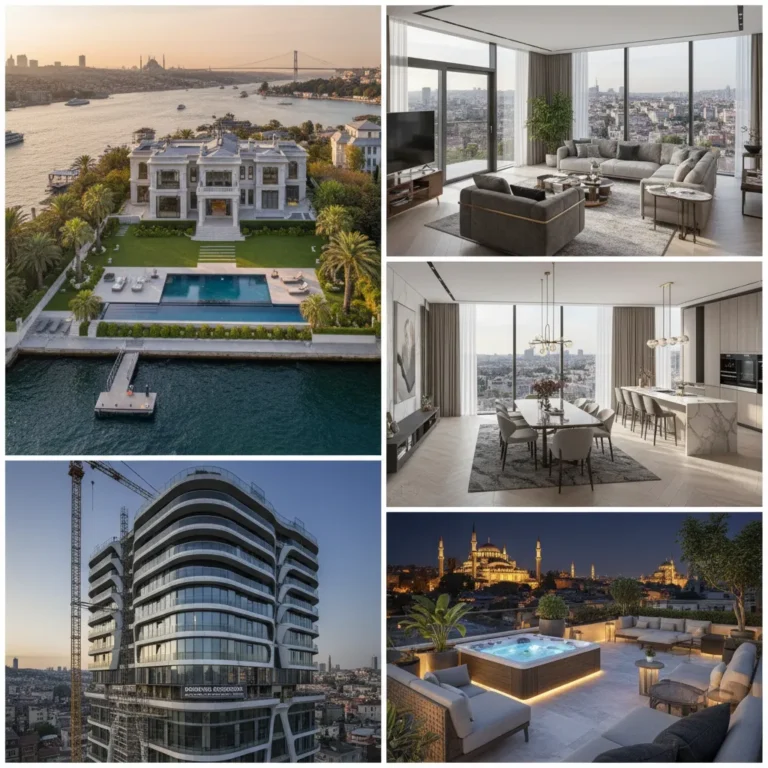
Whether you are seeking a luxury penthouse overlooking the Bosphorus, a family villa in an integrated Mediterranean enclave, or high-yielding commercial units in emerging commercial hubs, successfully buying property in Turkey demands comprehensive market intelligence, rigorous due diligence, and an intimate grasp of local legal mechanics. This guide offers an exhaustive, professional roadmap to navigate your acquisition journey with confidence and financial acumen.
Macroeconomic Drivers and Investment Fundamentals
To understand the intrinsic value of Turkish real estate, international buyers must examine the macroeconomic pillars underpinning housing demand across the country’s primary economic corridors.
Demographics and Rapid Urbanization
Unlike many Western European nations confronting demographic contraction, Turkey benefits from a median population age of approximately 34 years. This young, digitally savvy demographic drives persistent domestic household formation. Tens of thousands of new households enter the housing market annually, creating an unyielding baseline demand for entry-level and mid-tier residential properties. Furthermore, Turkey’s rapid urban transformation initiatives—aimed at replacing pre-2000 structures with earthquake-resilient, energy-efficient modern communities—guarantee sustained domestic transactions regardless of global macroeconomic cycles.
Strategic Infrastructure Megaprojects
Turkey’s sustained public and public-private infrastructure investments over the past fifteen years continue to unlock exponential real estate value. Key game-changers include:
- Istanbul Airport (IST): Operating as one of the world’s largest transit hubs, catalyzing commercial and logistics real estate development across Arnavutköy and Başakşehir.
- High-Speed Rail Networks: Rapid passenger and freight rail connections linking Istanbul, Ankara, Eskişehir, Konya, and Sivas, decentralizing business operations and elevating provincial real estate valuations.
- The Northern Marmara Highway and Suspension Bridges: Reorienting regional supply chains, commuter belts, and industrial corridors across the Marmara economic zone.
Foreign Capital Inflow and Exchange Rate Realities
Currency dynamics continue to offer foreign-currency denominated buyers substantial purchasing power advantages. While domestic inflation has adjusted localized construction costs and nominal Lira pricing, foreign investors deploying US Dollars, Euros, or British Pounds continue to access luxury prime real estate at price-per-square-meter valuations dramatically lower than those seen in Southern Europe, the Gulf Cooperation Council (GCC), or North America. To explore current pricing models across premier assets, consult our curated portfolio of Real Estate Investment in Turkey | Apartments and Villas for Sale.

Get a free consultation now, and let us help you choose the right property.
The Legal Framework: Foreign Ownership Protections
Foreign real estate investment in Turkey operates under a transparent, constitutionally protected legal framework governed primarily by the Turkish Land Registry Law (Law No. 2644), which was decisively amended by Law No. 6302 in May 2012 to abolish the historical “principle of reciprocity.”
Who Can Buy Property in Turkey?
Under current statutes, citizens of more than 180 countries are legally permitted to acquire freehold real estate within Turkey. Minor statutory restrictions exist solely based on national security considerations and bilateral diplomatic parameters:
- Foreign individuals may acquire up to 30 hectares of land in aggregate across Turkey (with ministerial discretion to increase this up to 60 hectares).
- A foreign national’s total acquisitions cannot exceed 10% of the private land area within any given administrative district (ilçe).
- Foreigners cannot acquire property inside designated military forbidden zones or strategic security zones. Military clearance protocols, once a tedious administrative hurdle taking months, are now streamlined digitally through the General Directorate of Land Registry and Cadastre (Tapu ve Kadastro Genel Müdürlü÷ü – TKGM).
Understanding Freehold Title (Tapu)
Unlike leasehold jurisdictions where foreign buyers merely acquire long-term usage rights, property ownership in Turkey is exclusively freehold. The Title Deed (Tapu Senedi) is the absolute legal certificate of ownership issued exclusively by the regional Land Registry Office. Turkish law recognizes no valid private sales contracts for final conveyance unless the deed transfer is executed in the presence of an authorized Land Registry officer.
The Tapu categorizes real estate into distinct classes:
- Kat İrtifakı (Floor Servitude / Easement): Indicates legal ownership of a specific unit within a development that is either under construction or awaiting full architectural sign-off.
- Kat Mülkiyeti (Full Condominium Ownership): The gold standard of title deeds, issued only after the municipal authority grants an İskan (Occupancy Certificate) confirming the building meets every seismic, architectural, and safety code.
- Müstakil Tapu: Independent, standalone freehold title typically issued for detached private villas, land plots, or agricultural parcels.
Step-by-Step Property Acquisition Process
Acquiring property in Turkey is an efficient, well-defined administrative process when managed alongside licensed legal practitioners and verified real estate consultants. A transaction can conclude in as few as 3 to 10 working days from offer acceptance to deed conveyance.
Phase 1: Property Selection and Commercial Agreement
Once you identify an asset aligning with your investment criteria, your representative structures a formal Offer to Purchase. Following verbal or written acceptance, a preliminary sales contract (Satış Vaadi Sözleşmesi) is drawn up. This agreement details payment schedules, handover conditions, penalty clauses for non-performance, and exact architectural specifications. At this point, a reservation deposit (typically 1% to 5% of the purchase price) is placed in escrow to remove the property from the open market.
Phase 2: Administrative and Financial Pre-Requisites
Before closing the transaction, the foreign buyer must satisfy three foundational statutory requirements:
-
- Tax Identification Number (Vergi Numarası): Obtained instantly from any local tax office or online via the Interactive Tax Office portal using a valid passport.
- Opening a Turkish Bank Account: While not strictly required if paying directly via international SWIFT from overseas, a local bank account significantly simplifies utility setups, property tax payments, and rental income management. Required documentation includes passport verification, a certified utility bill validating foreign home residency, and the Turkish tax ID.
- Foreign Exchange Document (Döviz Alım Belgesi – DAB): Since 2022 and remaining firmly in place throughout 2026, foreign buyers must convert foreign currency (USD, EUR, GBP) into Turkish Lira via an authorized Turkish retail bank, which transacts directly with the Central Bank of the Republic of Turkey (TCMB). The bank issues an official DAB certificate confirming the conversion. The Land Registry will refuse deed transfers without this authenticated document.
Phase 3: The Mandatory Valuation Report (Ekspertiz)
To eliminate artificial under-declaration of property values and protect international buyers from inflated pricing, the Turkish government requires an independent Valuation Report for every single property transaction involving a foreign national. The valuation must be prepared by a certified appraiser registered with the Capital Markets Board of Turkey (SPK). The appraiser inspects the premises, verifies architectural plans against municipal filings, cross-checks registered encumbrances, and declares the fair market value. The declared transaction price at the Land Registry cannot be lower than the appraised valuation.
Phase 4: Execution at the Land Registry (Tapu Devri)
Once the Land Registry office inspects all documentation—including the appraisal, DAB document, earthquake insurance (DASK), and tax clearances—an appointment is scheduled for formal conveyance. The buyer, seller (or their respective attorneys operating under a notarized Power of Attorney), and a sworn state translator convene at the registry office. Both parties sign the official registry ledger, and the Land Registry issues the original Tapu Senedi under the buyer’s name.
Associated Acquisition Costs and Ongoing Taxes
Budgeting accurately for closing costs ensures financial clarity during transaction execution. Compared to Southern European jurisdictions (such as Spain, Italy, or Portugal) where aggregate acquisition taxes frequently exceed 10% to 15%, Turkey remains a low-transaction-cost environment.
| Cost Item | Statutory / Standard Rate | Party Responsible |
|---|---|---|
| Title Deed Transfer Tax (Tapu Harcı) | 4% of declared valuation | Customarily split 2% / 2%, or 4% paid by buyer (subject to negotiation) |
| Value Added Tax (KDV) | 1% to 20% (Exemption available for non-residents) | Buyer (Applicable only to off-plan/primary sales) |
| Independent SPK Valuation Report | Approx. $300 – $600 USD | Buyer |
| Land Registry Working Capital (Döner Sermaye) | Approx. $150 – $350 USD | Buyer |
| Legal / Notary / Translation Fees | Approx. 1% to 1.5% of purchase price | Buyer |
| Real Estate Agency Service Fee | 2% + VAT (regulated by Turkish law) | Buyer (Often waived on select primary developments) |
Value Added Tax (VAT / KDV) Exemption
Foreign investors who do not reside in Turkey and transfer funds in foreign currency are legally eligible to apply for an official KDV Exemption under Article 13/i of the VAT Law. This exemption eliminates the 1% to 20% VAT burden on first-hand commercial and residential acquisitions directly from development companies. The core statutory caveat: the property cannot be sold for at least three years following acquisition, or the exempted VAT must be reimbursed with legal interest.
Ongoing Property Ownership Costs
Holding real estate in Turkey is remarkably cost-effective compared to Western peers:
- Annual Property Tax (Emlak Vergisi): Ranges from 0.1% to 0.2% of the municipality’s assessed tax value for standard residential assets, and 0.2% to 0.4% in metropolitan municipalities (such as Istanbul, Antalya, or Izmir).
- Compulsory Earthquake Insurance (DASK): Mandated by federal law, costs average between $40 and $150 annually, depending on square footage, construction quality, and seismic zone classification.
- Maintenance Fees (Aidat): Managed residential complexes with luxury amenities (indoor pools, wellness centers, 24/7 security, landscaped grounds) assess monthly maintenance levies typically ranging from $1.00 to $3.50 per square meter.
Residency and Citizenship Pathways via Real Estate
A primary incentive drawing international capital to Turkey is the country’s progressive integration between real estate acquisition and immigration rights. Turkey operates some of the most accessible and commercially viable residency and citizenship programs in the world.
Short-Term Residence Permits (Ikamet)
Foreign property owners can obtain a real estate-based short-term residency permit (Taşınmaz İkamet İzni). Under regulatory measures implemented to stabilize regional housing accessibility, foreign buyers must meet a statutory minimum real estate valuation threshold of $200,000 USD (based on the SPK valuation and Tapu declared value) across designated metropolitan and provincial areas to qualify for property-based residency. This residency permit can be renewed annually or biennially, provides domestic healthcare and banking access, and serves as an exceptional base for extended family stays.
The Turkish Citizenship by Investment (CBI) Program
Turkey’s Citizenship by Investment initiative represents one of the most successful direct-economic citizenship pathways globally. Under current investment statutes, foreign investors who acquire real estate valued at a minimum of $400,000 USD (or its foreign currency equivalent) qualify to petition for full Turkish citizenship for themselves, their spouse, and dependent children under the age of 18.
Get a free consultation now, and let us help you choose the right property.
The core structural mandates of the program require:
- Acquiring one or multiple properties whose combined SPK appraisal values and Foreign Exchange (DAB) conversion documents total or exceed $400,000 USD.
- Registering an official legal restriction on the Title Deed at the Land Registry, committing not to sell or liquidate the assets for a minimum duration of three years.
- Securing a formal Certificate of Conformity (Uygunluk Belgesi) from the Ministry of Environment, Urbanization and Climate Change.
For a detailed breakdown of the documentation, legal workflow, and strategic timeline, read our definitive procedural manual: Turkish Citizenship by Property: Step Guide. Investors evaluating the latest policy alignments, investment quotas, and legal updates can cross-reference our forward-looking analysis in the Turkish Citizenship by Property 2026: Full Guide.
Geographic Breakdown: Prime Investment Locations
Turkey is not a monolithic real estate market. Performance dynamics, rental yields, capital appreciation patterns, and tenant profiles vary significantly across geographical regions.
1. Istanbul: The Economic and Cultural Epicenter
Accounting for nearly 20% of Turkey’s total population and roughly one-third of its Gross Domestic Product, Istanbul remains the uncontested core of commercial and high-end residential real estate.
- The Central Business Districts (CBD) & Historic Center: Neighborhoods such as Şişli, Beşiktaş, Nişantaşı, and Beyo÷lu represent blue-chip legacy real estate. Space is constrained, prices per square meter are the highest in the country, and yields are supported by continuous diplomatic, corporate, and tourism demand.
- The Basin Express & West Istanbul Arteries: Connecting the E-5 and TEM highways, Basin Express has transformed into a high-density corporate hub characterized by mixed-use office towers, branded residences, and business hotels. It provides strong recurring yields from multinational enterprise professionals.
- Suburban Master-Planned Communities: Districts such as Başakşehir, Beylikdüzü, and Bahçeşehir offer extensive lifestyle compounds with internal schools, parks, and retail centers. These zones appeal heavily to middle-class domestic families and foreign investors pursuing large-format, cost-effective apartments.
- The Anatolian (Asian) Side: Kadıköy, Üsküdar, and the prestigious Ba÷dat Avenue corridor present a more relaxed lifestyle characterized by green spaces, coastal promenades, and highly educated domestic tenant demographics.
2. Antalya & Alanya: The Mediterranean Tourism Hub
The Turkish Riviera, anchored by Antalya and extending east toward Alanya, delivers premier yields driven by international tourism, vacation rentals, and European and CIS retirement demographics. Prime areas include Konyaaltı (renowned for modern beachfront apartments and proximity to marinas), Lara (famed for corporate residential enclaves), and Belek (Turkey’s world-renowned golfing capital). Strict municipal zoning along coastal strips maintains scarcity, sustaining steady mid-to-long-term capital appreciation.
3. Bodrum & The Aegean Coastline: Luxury and Branded Residences
Known as the Saint-Tropez of Turkey, the Bodrum Peninsula caters exclusively to ultra-high-net-worth individuals (UHNWI). Real estate here centers around bespoke luxury stone villas, modern architectural estates with private moorings, and ultra-prime developments managed by global hospitality giants such as Mandarin Oriental, Aman, and Ritz-Carlton. Yields in Bodrum are heavily compressed into the hyper-lucrative May-October tourism season, generating phenomenal short-term cash flows that rival European yachting havens.
4. Izmir & Ankara: Stable Domestic & Commercial Hubs
- Izmir: Turkey’s third-largest city, situated on the Aegean, draws educated professionals migrating away from Istanbul. It features thriving commercial waterfront developments in Bayraklı and high-end coastal escapes in nearby Çeşme and Alaçatı.
- Ankara: As the political capital, Ankara’s market is insulated from tourism fluctuations. It offers exceptional stability, lower entry prices, and dependable rental returns supported by civil servants, diplomats, university faculties, and military personnel.
Yield Optimization, Rental Strategies, and Law No. 7464
An informed investor must formulate a clear operational strategy for yield generation immediately after acquiring title deeds. Real estate yields in Turkey generally express themselves via two primary mechanisms: long-term institutional residential leasing or regulated short-term vacation stays.
Long-Term Residential Leasing
Traditional 12-month lease contracts (governed under the Turkish Code of Obligations) deliver predictable, headache-free operational returns. In metropolitan centers like Istanbul and Izmir, gross rental yields for standard unfurnished residential assets typically average between 5% and 8% annually. Investors who strategically furnish properties targeting executive corporate expat tenants can frequently achieve net yields exceeding 8% to 10% in hard currencies.
Short-Term Tourism Rentals: Navigating Modern Regulations
Prior to recent regulatory interventions, peer-to-peer vacation rentals (e.g., Airbnb) operated in a decentralized regulatory gray zone. Today, investors operating in short-term tourist lettings must comply strictly with Law No. 7464 (The Law on the Rental of Residential Properties for Tourism Purposes):
- Tourism Operation License: Any residential rental lasting under 100 days requires a formal permit issued by the Ministry of Culture and Tourism before marketing or hosting guests.
- Unanimous Building Consent: In standard residential apartment buildings, obtaining a permit mandates securing the 100% unanimous written consent of all title deed holders within the building.
- Exemptions for High-End Residences: High-specification developments that boast integrated management, front-desk concierge operations, commercial dining, security, and cleaning services (officially designated as “High-Quality Residential Units” or Branded Residences) are granted statutory exemptions from unanimous building votes, allowing individual owners to execute turnkey tourist rental operations directly through certified management entities.
Purchasing units within verified branded residences or developments possessing pre-approved tourism licenses is the most reliable strategy for investors prioritizing flexible holiday usage paired with institutional short-stay rental yields.
Comprehensive Due Diligence: Mitigating Investment Risks
While the rewards of Turkish real estate are considerable, capital preservation demands thorough due diligence. Never bypass independent legal scrutiny in favor of developer guarantees or verbal assurances.
1. Title Deed Encumbrance Verification
A property might appear pristine on-site while carrying invisible encumbrances on the state registry ledger. Your attorney must conduct a comprehensive legal investigation (Tapu Kayıt Sorgulama) before funds move from escrow. They verify that the title is free of:
- İpotek (Mortgages / Liens): Debts owed by previous owners or builders to lending institutions.
- Haciz (Judicial Foreclosure Annotations): Confiscation orders resulting from private commercial disputes or tax debts.
- Şerh (Restrictive Covenants): Third-party pre-emption rights, family home annotations, or pending litigation that could freeze title transfers.
2. Architectural Compliance and İskan Verification
The presence of an İskan (Occupancy Certificate) is paramount. This document proves that municipal engineers inspected the completed building and verified that the development adheres faithfully to approved architectural blueprints, fire regulations, and structural seismic engineering standards. Properties lacking an Iskan often face punitive municipal utility surcharges, commercial operational restrictions, and severe difficulties during future resale.
3. Structural Resilience and Earthquake Codes
Turkey modernized its national building regulations following the 1999 Marmara earthquake, introducing further strict updates in 2018. When evaluating assets:
- Prioritize properties constructed after 2018, which strictly adhere to the updated Turkish Building Earthquake Code (TBDY-2018).
- Demand to review the developer’s geotechnical ground surveys (Zemin Etüdü) and certified foundation engineering blueprints.
- Examine the developer’s track record, capital structure, and history of past completions to guarantee project delivery without construction abandonment risk.
Exit Strategies and Capital Repatriation
A sophisticated investment plan is only as robust as its liquidation protocol. Turkey places zero sovereign restrictions on capital repatriation. When an international investor sells Turkish real estate, the proceeds (denominated in Lira or converted back into foreign currency via formal banking channels) can be freely remitted overseas upon satisfying local capital gains tax obligations.
Capital Gains Tax (De÷er Artış Kazancı Vergisi)
Turkish tax law offers a major incentive for patient investors:
- If an individual property owner holds real estate in their personal name for five full calendar years (measured from the exact registration date on the Tapu), the entire capital gain generated upon subsequent sale is 100% exempt from Turkish capital gains tax.
- If the asset is liquidated prior to the five-year mark, capital gains tax is assessed on the net inflation-adjusted profit at standard progressive income tax rates (ranging from 15% to 40%).
Strategic Checklist for Foreign Real Estate Buyers
Before executing your purchase, verify that each milestone on this operational checklist has been systematically addressed:
- Define Investment Objective: Clarify whether your primary goal is high-yield rental returns, long-term capital preservation, lifestyle residency, or obtaining Turkish citizenship.
- Retain Independent Legal Counsel: Hire an English-speaking, licensed Turkish attorney who is unaffiliated with the seller, developer, or agency to perform independent title deed checks.
- Secure Certified Currency Conversion: Work with an accredited Turkish financial institution to execute the TCMB foreign currency conversion and obtain the authenticated DAB document.
- Inspect the Official Appraisal: Ensure the certified SPK valuation matches or closely reflects the actual commercial purchase price before signing final contracts.
- Confirm Construction Milestones: For off-plan purchases, structure payments according to verified construction milestones, backed by formal bank guarantees or notarized completion assurances.
- Plan Post-Handover Management: Secure professional property management services to oversee tenant vetting, rent collection, routine maintenance, and local municipal tax filings.
Conclusion: Capitalizing on Turkey’s Real Estate Potential
Buying property in Turkey in 2026 offers international buyers an attractive blend of lifestyle appeal and real estate investment potential. With strategic infrastructure links connecting Eastern and Western