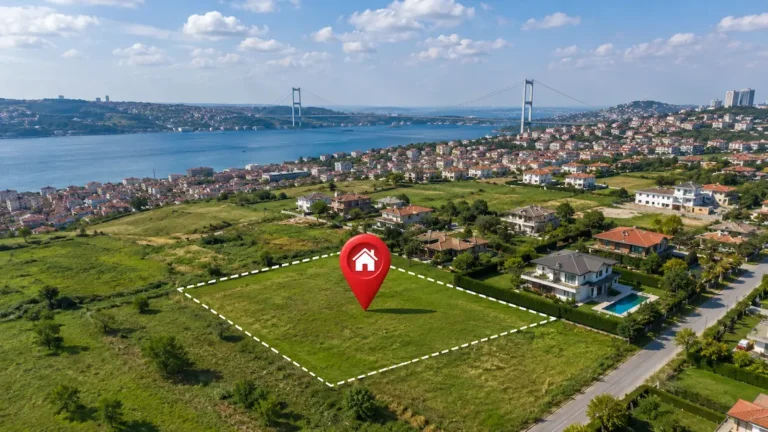
Introduction to Turkey’s Real Estate Citizenship Program
Turkey’s Citizenship by Investment (CBI) program stands as one of the most accessible, dynamic, and economically sound direct routes to a second passport in the global immigration landscape. Introduced under Article 20 of the Regulation on the Implementation of the Turkish Citizenship Law, the program underwent significant regulatory shifts before establishing its modern framework. For international high-net-worth individuals, entrepreneurs, and global families, acquiring Turkish citizenship through property acquisition bridges western lifestyle amenities with strategic eastern market access.
As of 2026, the real estate route remains the premier choice for foreign nationals seeking Turkish naturalization. Unlike conventional European golden visas that offer only temporary residency permits or non-domiciled status with strict physical presence obligations, Turkey grants an irrevocable, lifelong citizenship, complete with voting rights, a national identification card, and biometric passport privileges for both the principal applicant and eligible family members. This comprehensive guide details the legal prerequisites, structural transaction requirements, documentation protocols, and financial considerations necessary to successfully obtain Turkish citizenship via property investment.
The Legal Framework and Investment Thresholds
Foreign property acquisition for naturalization purposes is heavily institutionalized under the General Directorate of Land Registry and Cadastre (Tapu ve Kadastro Genel Müdürlüğü – TKGM) alongside the Presidency of Migration Management (Göç İdaresi Başkanlığı). To qualify, foreign buyers must strictly adhere to statutory investment limits, payment corridors, and legal encumbrance rules.
Current Financial Baseline
The minimum real estate purchase threshold is pegged at a minimum statutory value of $400,000 USD (or the exact equivalent in a foreign currency approved by the Central Bank of the Republic of Turkey). This threshold applies to either a single premium property or a portfolio of multiple properties, provided that the transaction dates and registrations meet official regulatory harmonization guidelines.
The Foreign Exchange Purchase Certificate (DAB / YAB-SÜS)
One of the most consequential procedural steps introduced into the Citizenship by Investment framework is the compulsory submission of the Foreign Exchange Purchase Certificate, formally known as the Döviz Alım Belgesi (DAB). Foreign buyers cannot directly transfer Turkish Liras or foreign currency to the developer’s account without state financial mediation.
- Foreign currency (USD, EUR, GBP, etc.) must be remitted from abroad or deposited from an international account into a regulated Turkish commercial bank.
- The receiving Turkish bank sells this foreign currency directly to the Central Bank of the Republic of Turkey (TCMB) at the institution’s official daily exchange rate.
- The bank issues the formal DAB certificate indicating the equivalent Turkish Lira value, buyer passport details, and explicit declaration of purpose (Citizenship by Investment).
- Only after the issuance of the DAB does the bank transfer the corresponding Turkish Lira funds directly to the seller’s institutional or private account.
The Three-Year Holding Restriction (Şerh)
Investors must commit to maintaining ownership of the purchased asset for a mandatory minimum of three years. During the title deed registration at the local Land Registry Directorate, a formal legal restriction (şerh) is annotated directly onto the deed records: “Pursuant to Article 20 of the Regulation on the Implementation of the Turkish Citizenship Law, there is a commitment not to sell this property for three years.” While owners are prohibited from transferring legal title during this window, they retain uninhibited rights to generate passive rental income or inhabit the property.

Get a free consultation now, and let us help you choose the right property.
Eligible Property Categories for Citizenship
Not every real estate asset located within Turkish sovereign borders qualifies for citizenship endorsement. The Land Registry implements rigid qualification filters regarding zoning, title types, and contractual standing.
1. Completed Residential Real Estate (Kat Mülkiyeti)
Properties with established Kat Mülkiyeti (full ownership / habitation certificate) represent the most frictionless asset class for applicants. These include completed apartments, standalone villas, and mixed-use luxury developments that possess an official occupancy permit (İskan). The title reflects distinct private property rights and clear infrastructural certification.
2. Construction Servitude Real Estate (Kat İrtifakı)
Properties undergoing active construction that possess Kat İrtifakı (construction servitude title) are fully eligible, provided that a valid building license (Ruhsat) exists and the physical shares are demarcated on architectural master plans. The declared valuation on the deed, verified through independent assessment, must exceed the $400,000 threshold at the exact date of notarization or deed creation.
3. Off-Plan Notarized Preliminary Sales Contracts (Satış Vaadi Sözleşmesi)
For large-scale developments where individual title deeds are not yet partitioned, foreign investors can qualify using a notarized preliminary sales contract (Gayrimenkul Satış Vaadi Sözleşmesi). Under legal stipulations:
- The contract must be signed before an official Turkish Notary Public.
- The entire purchase price (minimum $400,000) must be paid upfront in cash via bank transfer and backed by a verified DAB certificate.
- The contract must be annotated at the Land Registry with the identical three-year non-sale undertaking.
- This vehicle can only be executed on projects with floor servitude or construction permissions.
4. Commercial and Mixed-Use Assets
Investors seeking commercial yields can acquire corporate offices, retail high-street shops, logistics warehouses, or branded hotel suites. Commercial assets often command institutional lease agreements, providing predictable yields alongside nationality benefits.
5. Land and Agricultural Plots
Zoned development land (Arsa) can qualify for citizenship applications. However, if unconstructed land is acquired, the investor must legally submit an architectural construction project to the relevant municipal authority within two years of registration. Agricultural acreage (Tarla) entails distinct foreign ownership caps and strict Ministry of Agriculture clearances, rendering it complex for immediate citizenship processing.
Chain of Title and Seller Restrictions
A critical, frequently misunderstood legal prerequisite centers on the nationality and background of the seller. Turkish citizenship regulations enforce definitive restrictions to eliminate circular asset trading schemes.
| Transaction Dimension | Eligible Status | Ineligible Status |
|---|---|---|
| Seller Nationality | Turkish citizens by birth with no foreign origin, or corporate entities registered in Turkey owned by native Turkish shareholders. | Foreign nationals, naturalized Turkish citizens who acquired citizenship via investment, or foreign-controlled corporate entities. |
| Asset History | The property has never been used by any foreign investor to claim Turkish citizenship in past transfers. | Properties previously utilized by a foreign individual for citizenship qualification, even if subsequently transferred back to a Turkish national. |
| Family Proximity | Third-party arm’s-length sellers. | Spouses, direct ascendants (parents, grandparents), or direct descendants (children, grandchildren) of the buyer. |
| Resale to Prior Owner | Open-market disposition to independent buyers after the 3-year holding period expires. | Transferring the real estate back to the original developer or vendor from whom the investor acquired it. |
The Compulsory Real Estate Appraisal Report (Ekspertiz)
A central pillar of the citizenship application is the official valuation report (Değerleme Raporu). This process safeguards the state and the applicant against arbitrary market inflation.
The appraisal must be performed solely by valuation firms authorized by the Capital Markets Board of Turkey (Sermaye Piyasası Kurulu – SPK) and the Banking Regulation and Supervision Agency (BDDK). The appraisal assignment is automatically distributed via the Land Registry’s centralized algorithm (TADEBİS) to avoid conflicts of interest. Key requirements include:
- Currency Parity: The market valuation declared in the SPK report must reflect a minimum value of $400,000 USD based on the effective Central Bank exchange rate on the report’s preparation date.
- Three-Way Value Alignment: The appraised value, the officially registered Land Registry title transfer value, and the total cash transferred via DAB certificate must all independently meet or exceed the $400,000 threshold.
- Validity Duration: An appraisal report is legally valid for three months from its formal date of compilation for title deed procedures.
Step-by-Step Acquisition and Application Roadmap
Navigating the end-to-end naturalization trajectory requires disciplined coordination between legal counsel, financial institutions, municipal entities, and immigration directorates.

Get a free consultation now, and let us help you choose the right property.
Phase 1: Preparatory Due Diligence and Legal Representation
Prior to executing financial transfers, retain independent legal counsel licensed by a Turkish Bar Association. Grant a tailored Special Power of Attorney (Vekaletname), either executed at an authorized Turkish notary or through a Turkish Consulate overseas. This document authorizes counsel to open tax numbers, establish bank accounts, negotiate contracts, and conduct comprehensive title searches to confirm the asset is free of mortgages, liens (haciz), historic easements, or bankruptcy orders.
Phase 2: Banking Execution and DAB Certificate Acquisition
Once legal due diligence validates the property, open a non-resident client account at a tier-one Turkish bank. Capital is remitted from the investor’s overseas account into this repository. The bank executes the conversion of foreign currency to the Central Bank of Turkey, issuing the formal Döviz Alım Belgesi detailing the buyer’s identity and property transaction codes.
Phase 3: Title Deed Transfer (Tapu) and Encumbrance Registration
With the DAB issued and the SPK valuation uploaded to the state registry, parties attend the local Land Registry Directorate. The title transfer tax is settled, legal transfer signatures are finalized, and the official three-year non-alienation undertaking is placed upon the deed ledger. The official title deed (Tapu Senedi) is issued in the investor’s name.
Phase 4: Securing the Certificate of Eligibility (Uygunluk Belgesi)
Following title registration, the complete file—including title copies, valuation report, DAB documents, and bank payment receipts—is formally dispatched to the General Directorate of Land Registry and Cadastre’s Department of Foreigners. Upon granular inspection, the department issues the statutory Certificate of Eligibility (Uygunluk Belgesi). This critical certificate officially recognizes that the real estate transaction satisfies the statutory criteria of Article 20.
Phase 5: Short-Term Residence Permit (Article 31/J)
Before applying for citizenship, the principal applicant must secure an exceptional short-term investor residence permit under Article 31, paragraph 1, item (J) of Law No. 6458 on Foreigners and International Protection. This procedure is handled through dedicated investor desks at the Provincial Directorate of Migration Management. Unlike standard touristic residency permits, the 31/J permit does not require extended physical residency or language examinations and is processed expeditiously.
Phase 6: Citizenship Dossier Submission
With the residency permit issued, the comprehensive naturalization dossier is lodged with the Special Bureau for Citizenship (Nüfus ve Vatandaşlık İşleri Genel Müdürlüğü). The application undergoes multi-agency review, traversing thorough background screenings by:
- The National Intelligence Organization (MİT)
- The General Directorate of Security (Emniyet Genel Müdürlüğü)
- The Ministry of Interior
The security audit verifies that the applicant and adult dependents present no threat to Turkish national security or public order. Upon successful clearance, the dossier is submitted to the Presidency of the Republic of Turkey for final executive sign-off.
Phase 7: Biometrics and Passport Issuance
Once presidential approval is gazetted, the investor and registered family members schedule an appointment at their provincial Civil Registration Office (Nüfus Müdürlüğü) or an accredited Turkish Embassy/Consulate abroad to submit biometric fingerprints and finalize signature records. Turkish Identity Cards and biometric 10-year passports are printed centrally and dispatched via secure courier.
Family Inclusion and Dependent Eligibility Criteria
The Turkish Citizenship by Real Estate framework features inclusive family reunification parameters within a single qualifying investment baseline of $400,000 USD.
Direct Dependents Included
- Principal Investor: The deed holder.
- Legal Spouse: Legally recognized husband or wife (Turkey does not acknowledge polygamous unions or civil partnerships outside formal civil marriage; only one legal spouse may be naturalized).
- Minor Children: Biological or legally adopted children under the age of 18 at the exact date of application submission.
- Disabled Children of Any Age: Dependent offspring possessing certified medical commission documentation proving lifelong, total disability requiring ongoing parental care.
Exclusions and Separate Pathways
Parents of the investor, siblings, and adult children aged 18 and over cannot be included within the principal applicant’s $400,000 real estate application. Adult children seeking naturalization must execute an independent investment of at least $400,000 in their individual names, or alternatively, obtain renewable property-based residence permits under standard migration provisions.
Transaction Costs, Taxes, and Operational Outlays
Beyond the baseline asset acquisition price, cross-border buyers must account for closing expenses, statutory stamp taxes, and professional service retainers.
| Expense Component | Statutory Basis / Approximate Rate | Payer Responsibility |
|---|---|---|
| Title Deed Transfer Tax (Tapu Harcı) | 4% of the declared Land Registry transfer value. | Conventionally divided 2% buyer / 2% seller, though developers frequently contract this to the buyer entirely. |
| Value Added Tax (KDV) | 1%, 10%, or 20% depending on asset category, net square meters, and urban classification. | Buyer. (Foreign investors can apply for a formal KDV Exemption if capital is brought into Turkey in foreign currency and held for over one year). |
| SPK Official Appraisal Fee | Regulated scale based on surface area; typically $400 – $800 USD. | Buyer. |
| Land Registry Revolving Fund (Döner Sermaye) | Fixed government fee plus localized cadastral operational charges (~$300 – $600 USD). | Buyer. |
| Legal & Retainer Representation Fees | Market-determined professional legal fees; typically $5,000 – $10,000 USD depending on family scale. | Investor. |
| Document Translation, Notarization, & Apostille | Official sworn translation of birth certificates, marriage certificates, passports (~$1,000 – $2,500 USD). | Investor. |
| Residence Permit & Citizenship Government Fees | State service duties, card issuance fees, health insurance policies (~$500 – $1,200 USD per family). | Investor. |
Required Documentation: Assembly and Authentication
Administrative errors in personal documentation often cause significant processing delays. Every foreign document must undergo precise authentication protocols before official review.
Authentication Rules (Apostille vs. Consular Legalization)
- Hague Convention States: Official documents (birth records, marital status certificates, criminal record checks) issued by signatory states of the 1961 Hague Apostille Convention need an Apostille certificate affixed by the competent domestic authority.
- Non-Apostille States: Documents originated in non-signatory nations must be authenticated by the originating country’s Ministry of Foreign Affairs and countersigned by the competent Turkish Embassy or Consulate in that jurisdiction.
- Turkish In-Country Processing: Once authenticated, documents are officially translated into Turkish by a registered sworn translator and notarized by a Turkish Notary Public.
Core Document Checklist
- Valid passports for all applicants (must be valid for at least 12 months beyond the filing date).
- Original, apostilled/legalized Birth Certificates for all family members.
- Original, apostilled/legalized Marriage Certificate or Single Status Certificate (where applicable).
- Family Record Ledger or equivalent demographic registry documents confirming parental-child lineage.
- Passport-compliant biometric photographs (white background, taken within the last 6 months).
- Valid Health Insurance covering in-country medical treatments for the duration of the 31/J residency application.
- Title Deed copy (Tapu Senedi) alongside the annotated Land Registry registry sheet confirming the three-year encumbrance.
- Approved SPK Real Estate Valuation Report.
- Certified Döviz Alım Belgesi (DAB) and original stamped bank payment receipts (Dekont) from both sending and receiving banks.
- Approved Certificate of Eligibility (Uygunluk Belgesi).
Strategic Benefits of Turkish Citizenship
Obtaining a Turkish passport through real estate delivers tangible personal, financial, and geopolitical advantages that extend beyond traditional visa waivers.
1. Global Mobility and International Travel
A Turkish passport grants visa-free, visa-on-arrival, or electronic authorization (e-Visa) access to more than 110 countries and territories worldwide. Notable destinations include major commercial hubs across Latin America, East Asia (Japan, South Korea, Singapore, Hong Kong), the Western Balkans, and significant trade centers throughout the Middle East and Africa.
2. The United States E-2 Investor Visa Gateway
Turkey maintains an established Treaty of Commerce and Navigation with the United States. As citizens of a treaty nation, Turkish passport holders qualify to apply for the prestigious U.S. E-2 Non-Immigrant Investor Visa. This pathway allows investors and their families to launch or acquire a commercial enterprise in the United States and reside there with unrestricted work, operational, and schooling liberties without meeting the substantial financial commitments associated with the standard EB-5 immigrant route.
3. Unrestricted Dual Nationality (Çifte Vatandaşlık)
Turkish legislation explicitly sanctions dual and multiple citizenships under Turkish Citizenship Law No. 5901. Successful applicants are not required to renounce their birth nationalities or existing passports, provided their country of origin equally permits multiple allegiances. The Turkish state does not disclose naturalization registries to foreign tax or governmental institutions.
4. Complete Commercial and Socio-Economic Parity
Naturalized investors operate on completely equal footing with native Turkish citizens. There are zero foreign quotas on equity ownership, banking allocations, corporate formations, or asset transactions. Investors enjoy access to Turkey’s universal state healthcare system (Sosyal Güvenlik Kurumu – SGK), advanced private medical infrastructure, and established private and state university systems.
5. Strategic Real Estate Capital Appreciation
Unlike programs requiring non-refundable government donations or investments in low-yield sovereign bonds, Turkish CBI centers on hard real estate equity. Turkish metropolitan centers—especially Istanbul, Antalya, Ankara, and Izmir—represent dynamic domestic markets driven by demographic growth, structural urbanization, and sustained international logistics demand. Investors retain full authority to capture capital gains or ongoing rental returns during and after their mandatory three-year holding term.
Comparing Real Estate to Alternative Turkish Investment Routes
While property remains the primary choice for over 85% of Turkish CBI applicants, Article 20 accommodates alternative institutional pathways. Evaluating these options demonstrates why tangible real estate maintains structural supremacy.
| Investment Track | Statutory Capital Baseline | Mandatory Term | Primary Strategic Advantage | Key Risk or Drawback |
|---|---|---|---|---|
| Real Estate Acquisition | $400,000 USD | 3 Years | Physical asset ownership, continuous rental yields, potential for capital appreciation, personal residency use. | Property acquisition taxes, closing costs, liquidity timing during eventual asset exit. |
| Bank Capital Deposit | $500,000 USD | 3 Years | High speed, minimal closing paperwork, zero asset management responsibilities. | Mandatory conversion to Turkish Liras under Central Bank YUVAM accounts; exposure to foreign exchange risk and inflation differentials. |
| Government Debt Bonds | $500,000 USD | 3 Years | Sovereign backing, institutional custody via Ministry of Treasury and Finance. | Opportunity cost of trapped liquidity, fixed-income yields that may trail market inflation. |
| Real Estate Investment Fund (REIF / GSYF) | $500,000 USD | 3 Years | Institutional regulatory oversight (SPK), professional management, zero individual maintenance. | Management fees, liquidity constraints, lack of personal physical utilization of an underlying asset. |
| Job Creation | 50 Full-Time Employees | 3 Years | Zero passive capital lockup; targets established active manufacturing/service enterprises. | High operational oversight, labor compliance risks, employer social security contribution overhead. |
Critical Pitfalls, Traps, and How to Avoid Them
Navigating cross-border real estate acquisitions carries legal and logistical considerations. Avoiding the following common missteps preserves both capital security and application viability.
1. The “Declared vs. Actual” Value Discrepancy
In standard domestic Turkish property sales, buyers and sellers sometimes register a declared value at the Land Registry that is lower than the actual transaction amount to minimize municipal transfer taxes. In a citizenship transaction, this practice causes immediate failure. The figure recorded on the title deed, the figure documented on bank payment receipts (dekont), the valuation report total, and the DAB certificate must align and independently surpass $400,000 USD. If any element falls short, the Land Registry will reject the application for the Certificate of Eligibility.
2. Inappropriate Seller Nationality Status
If an investor buys a property from a foreigner, or from a Turkish corporate entity where a foreign individual holds shares, the property is categorically disqualified from citizenship eligibility. Title records must be audited back through prior transfers to confirm the asset was not used by another foreigner for citizenship purposes within preceding ownership cycles.
3. Executing Transfers Without DAB Documentation
Sending international currency directly to a real estate developer’s bank account without first processing the transaction through the Central Bank’s official Döviz Alım Belgesi structure invalidates the entire financial track. Retaining legal counsel prior to releasing any international bank wires prevents this irreversible error.
4. Reliance on Unregulated Brokers
Unlicensed intermediaries and unregulated property promoters frequently mark up real estate assets to meet the $400,000 requirement, only for the independent SPK appraisal to assess the property at fair market value far below the citizenship threshold. Work directly with licensed legal counsel and established, reputable corporate brokerages that use transparent pricing indices.
Post-Citizenship Considerations: Taxes, Military Service, and Dual Status
Taxation Realities for Naturalized Citizens
Acquiring Turkish citizenship does not automatically trigger worldwide taxation on personal earnings. Turkey enforces a residency-based taxation regime under the Income Tax Law (Law No. 193):
- Non-Tax Residents: Individuals whose legal residence remains outside Turkey and who spend fewer than 183 days continuously within Turkish territory during a calendar year are taxed solely on their Turkey-sourced income (e.g., local rental yields, commercial activities within Turkey).
- Tax Residents: Individuals who reside permanently in Turkey or reside physically in Turkey for more than six months per calendar year are deemed tax residents and are subject to taxation on global income, governed by applicable bilateral Double Taxation Avoidance Treaties (DTT).
Compulsory Military Service (Askerlik Hizmeti)
Compulsory military obligations apply uniquely to male Turkish citizens between the ages of 20 and 41. However, statutory legal protections apply to individuals naturalized through investment programs:
- Individuals who obtain Turkish citizenship after the age of 22 are exempt from military service under current conscription regulations.
- Individuals who have already completed equivalent military service in their country of origin, or who present verified documentary proof of prior military duty, are likewise exempted.
- Minor male dependents who acquire citizenship alongside their parents may become subject to military service duties once they attain adulthood, although statutory exemptions or foreign currency military compensation payments (Bedelli Askerlik) are commonly utilized options.