Navigating Real Estate Investment in Turkey for 2026
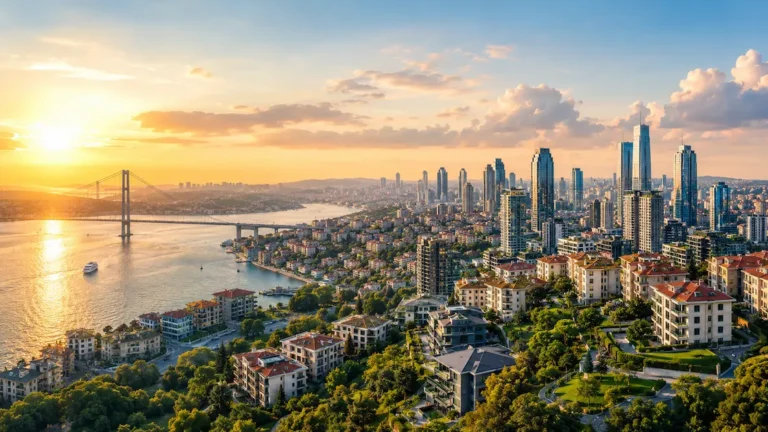
The landscape of cross-border property acquisitions has transformed rapidly, positioning Turkey as one of the most compelling markets for global capital. As we navigate 2026, international investors look beyond traditional European capitals toward the dynamic Eurasian bridge. Turkey delivers an unmatched synthesis of strategic geography, favorable price-per-square-meter valuations, and lucrative residency and citizenship pathways. However, capital allocation in this vibrant market requires more than superficial market familiarity; it demands a granular understanding of regulatory frameworks, currency dynamics, zoning classifications, and taxation policies.
Over the past few years, the Turkish government has methodically refined foreign property ownership legislation. From elevating statutory investment thresholds to standardizing official valuation mechanisms, these policy adaptations ensure institutional maturity and mitigate speculative inflation. Whether your objective is capital appreciation, sustainable rental yields through hospitality assets, or securing a tier-one secondary passport, navigating property investment in Turkey in 2026 requires data-driven decision-making and meticulous legal due diligence.
The Macroeconomic Blueprint: Why Invest in Turkish Property Today?
Turkey’s enduring appeal lies in fundamental economic and structural tailwinds that insulate tangible assets against global volatility. Unlike saturated Western markets marked by demographic stagnation, Turkey benefits from an expansive, urbanizing population with sustained domestic housing demand, creating a structural supply-demand deficit in tier-one metropolitan hubs.
Urban Transformation and Modern Infrastructure Expansion
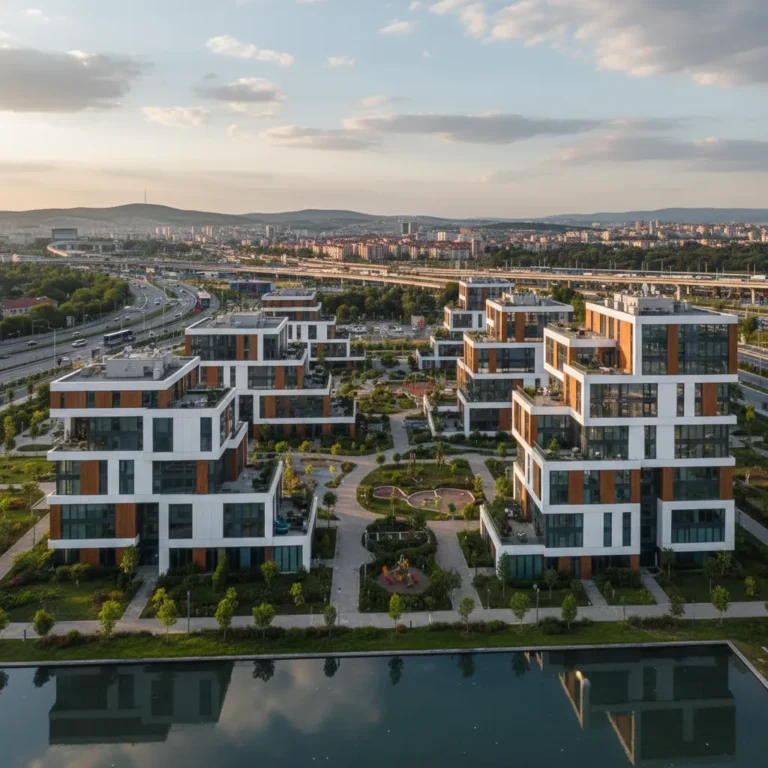
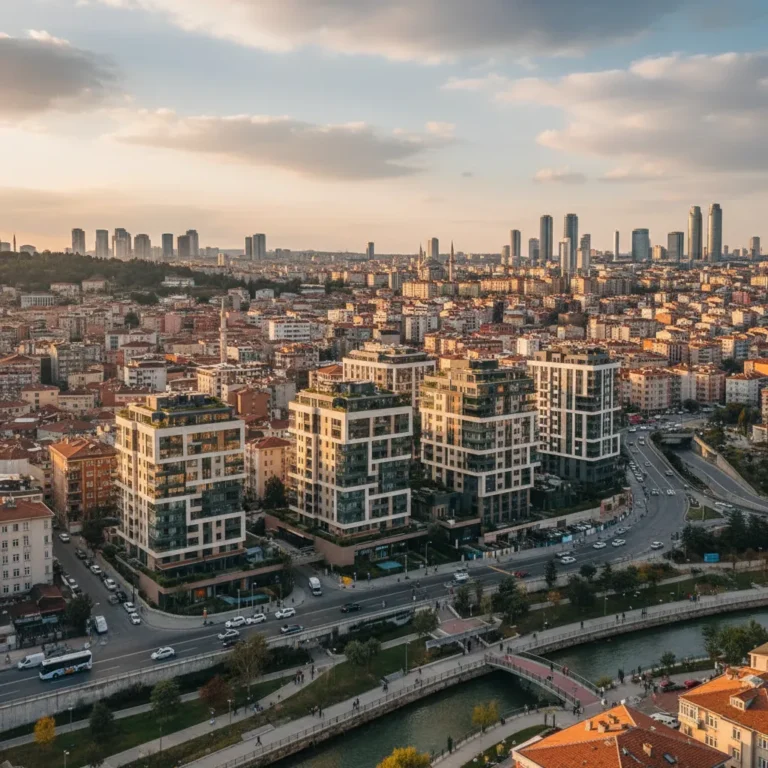
Mega-infrastructure initiatives completed over the last decade—including the expansive transit networks connecting Istanbul Airport, high-speed intercity rail lines, and newly commissioned metro arteries—have reshaped urban mobility. In 2026, urban regeneration projects (Kentsel Dönüşüm) serve as the primary catalyst for market value appreciation. Older building stock is progressively replaced with earthquake-resilient, smart-home developments governed by stringent post-2018 seismic building codes. Consequently, master-planned developments in emerging urban expansion corridors consistently outperform baseline market indices.
Foreign Direct Investment and Currency Dynamics
Foreign investors entering the Turkish market with hard currency (USD, EUR, GBP) operate from a position of relative purchasing power. While inflation and local currency fluctuations have reshaped nominal listing prices in Turkish Lira, prime residential and commercial assets are fundamentally benchmarked against foreign currency valuations. This provides international buyers with an entry valuation advantage while allowing institutional assets to generate robust foreign-currency-indexed yields via serviced apartments, long-term corporate leases, and international student housing.
Beyond Istanbul’s urban density, Turkey’s premier regional hubs offer varied investment profiles. Exploring the Most Beautiful Turkish Cities reveals how lifestyle migrations toward coastal paradises like Antalya, Izmir, and Muğla have sparked secondary luxury markets with distinct seasonal rental yield profiles.
The Legal Architecture: Foreign Property Ownership in Turkey
Article 35 of the Turkish Land Registry Law No. 2644 forms the statutory foundation of international real estate transactions in Turkey. In 2012, Turkey abolished the historic reciprocity requirement, allowing citizens of more than 180 nations to acquire freehold property without reciprocal property rights for Turkish nationals in their home countries.
Statutory Restrictions and Prohibitions
While the market is remarkably accessible, foreign acquisitions are subject to clear statutory boundaries:
- Aggregate Surface Area Limits: A single foreign national cannot acquire more than 30 hectares (300,000 square meters) of land across Turkey, unless authorized by presidential decree.
- District-Level Density Limits: Total foreign real estate ownership within any given administrative district (İlçe) cannot exceed 10% of that district’s privately-owned land area.
- Military and Strategic Security Zones: Real estate situated within designated military surveillance, strategic security, or defense installation zones remains strictly off-limits to non-Turkish buyers. Title deeds (Tapu) issued in 2026 feature streamlined digital clearances directly through the Land Registry Directorate (Tapu ve Kadastro Genel Müdürlüğü), eliminating bureaucratic delays.
- Vacant Land Development Commitments: Non-Turkish nationals acquiring unconstructed agricultural or urban land parcels must present an architectural project to the relevant ministry for statutory approval within two years of acquisition.

Get a free consultation now, and let us help you choose the right property.
Step-by-Step Guide to Purchasing Real Estate in Turkey in 2026
Acquiring real estate in Turkey is straightforward, typically reaching completion within three to seven business days once the property and documentation are aligned. Below is the structured roadmap every international investor must follow.
Phase 1: Due Diligence and Title Deed Verification
The paramount legal document in any Turkish property transaction is the Tapu (Title Deed). Investors must verify that the property holds Kat Mülkiyeti (full architectural condominium ownership) rather than merely Kat İrtifakı (construction servitude), ensuring the building is fully finalized and holds a valid İskan (habitation certificate). Working with an independent property lawyer ensures that the title register is free from encumbrances, hypothecs (İpotek), judicial liens (Haciz), or back taxes.
Phase 2: Obtaining a Potential Tax Number and Opening a Bank Account
Every foreign purchaser must obtain a Foreigner Tax Identification Number (Vergi Kimlik Numarası), which can be acquired online via the Turkish Revenue Administration portal (İnteraktif Vergi Dairesi) using a notarized passport translation. Armed with this tax number and proof of overseas address (e.g., utility bills), investors can open an operational account with major Turkish corporate and retail banks.
Phase 3: The Mandatory Real Estate Valuation Report (SPK Appraisal)
Instituted to enforce price transparency and eliminate tax underreporting, an official valuation report prepared by an expert licensed by the Capital Markets Board of Turkey (Sermaye Piyasası Kurulu – SPK) is mandatory for every foreign real estate acquisition. The SPK report evaluates physical condition, structural compliance, municipal zoning permissions, comparable market transactions, and current market value. The valuation report remains valid for three months from the date of issue.
Phase 4: Currency Exchange Certificate (Döviz Alım Belgesi – DAB)
Under regulations enforced by the Central Bank of the Republic of Turkey (TCMB), foreign buyers must convert foreign currency into Turkish Lira through an authorized Turkish banking institution before completing the transfer of ownership. The bank issues a Currency Exchange Certificate (Döviz Alım Belgesi, or DAB), which explicitly states the buyer’s identity, the foreign currency amount exchanged, its Lira equivalent, and the specific property parcel identification. The Land Registry Office will not register the property without this certified document.
Phase 5: Title Deed Transfer at the Land Registry Directorate
The definitive closing takes place in person or via a registered Power of Attorney (Vekaletname) at the local Land Registry Office. Following the signing of registry books in the presence of a sworn state-certified translator, the registry issues the official Tapu, confirming the buyer’s unencumbered freehold ownership.
Turkish Citizenship by Investment (TCBI) Framework for 2026
The Turkish Citizenship by Investment Program remains one of the world’s most accessible, reliable, and expedited economic citizenship avenues. Providing an irrevocable second passport, visa-free or visa-on-arrival access to over 110 global destinations, and an entry point to the E-2 Investor Visa program with the United States, TCBI has channeled billions of dollars into high-grade residential and commercial developments.
The $400,000 Real Estate Threshold
To qualify for expedited Turkish citizenship, an investor must purchase real estate with a minimum aggregate value of $400,000 USD (or the equivalent in convertible foreign currency). Key conditions dictate that:
- The total investment can comprise a single asset or multiple properties, provided all property deeds are submitted simultaneously or under unified application procedures.
- The value declared in the Title Deed, the amount certified on the DAB currency exchange certificate, and the official SPK appraisal report must all meet or exceed the $400,000 milestone.
- A statutory pledge (Şerh) is annotated directly onto the Title Deed, legally committing the investor to retain ownership without selling for a minimum of three consecutive years.
Secondary Market vs. Primary Market Eligibility Rules
To avoid synthetic resale loops designed to exploit the citizenship mechanism, current legislation stipulates that the subject property must not have been previously used for a Turkish citizenship application by another foreign national. Furthermore, the property must be acquired directly from a Turkish citizen or a Turkish corporate entity. Purchasing a property that was owned by a foreign individual within the prior three-year window disqualifies the asset from eligibility under the citizenship program.
Application Trajectory and Timeline
Once the Land Registry annotates the 3-year holding restriction, a Certificate of Conformity (Uygunluk Belgesi) is issued by the General Directorate of Land Registry and Cadastre. The investor and their eligible dependents (spouse and biological/legally adopted children under 18 years of age) apply for an exceptional investor residence permit, followed immediately by their naturalization dossier submission. Under standard administrative processing in 2026, the complete process from deed registration to receiving Turkish biometric passports takes between 90 and 120 calendar days.
Real Estate Residency Permit: The $200,000 Regulatory Paradigm
For investors whose capital deployment does not target citizenship, real estate remains the most reliable foundation for obtaining legal residency in Turkey. Historically, real estate residency lacked uniform property value floors, which led to administrative uncertainty and speculative registrations in low-tier municipalities.
Under the statutory framework governing 2026, international buyers seeking property-based residency must comply with the unified $200,000 valuation rule. Understanding the operational guidelines for Real estate residency in Türkiye is essential for setting expectations, ensuring property compliance, and structuring family relocations smoothly.
Key Provisions of the $200,000 Valuation Requirement
To qualify for an immovable property short-term residence permit (Taşınmaz İkamet İzni under Law No. 6458 on Foreigners and International Protection):
- The sales price declared on the Title Deed must be at least $200,000 USD (or equivalent) across all 81 provinces, standardizing regulations nationwide without urban/rural divisions.
- The property must be purely residential in nature and designated for actual personal living; commercial units, offices, or bare land parcels do not qualify for this specific residency category.
- The residence permit grants an initial one-to-two-year tenure, renewable continuously as long as the title deed remains registered under the investor’s name.
- Crucially, property-based residency counts as eligible time toward standard Turkish naturalization after five consecutive years of legal, uninterrupted physical residence, provided statutory residency conditions are met.
Closed Neighborhoods (Kapalı Mahalleler)
Investors must verify that their target property does not sit within one of the designated “closed zones.” Under migration management quotas, any neighborhood where the foreign population surpasses 20% of the aggregate local registry is closed to new initial residence permit issuances. While foreigners may still legally buy property within closed neighborhoods, they cannot secure residency based on those deeds. Thorough geographic vetting is essential prior to executing transactions.
Comparative Regional Analysis: Where to Allocate Capital in 2026
Turkey’s real estate market is diverse, with regional micro-climates, demand structures, and yield mechanics varying significantly between cities and districts.
| Investment Hub | Primary Asset Classes | Targeted Annual Rental Yield | 5-Year Capital Growth Potential | Dominant Investor Profile |
|---|---|---|---|---|
| Central Istanbul (Şişli, Beşiktaş, Beyoğlu) | Ultra-Luxury Apartments, Branded Residences | 4.5% – 6.0% (USD Base) | High / Stable Capital Preservation | HNWIs, Institutional Funds, Citizenship Seekers |
| Suburban Istanbul Growth Corridors | Master-Planned Community Gated Compounds | 6.5% – 8.5% (Net) | Very High (Infrastructure-Driven) | Capital Growth Investors, Middle-Market Families |
| Antalya (Konyaaltı, Muratpaşa, Alanya) | Resort Condos, Coastal Serviced Apartments | 7.0% – 9.5% (Short-Term/Tourism) | Moderate to High | Lifestyle Buyers, Holiday Let Operators |
| Bodrum Peninsula | Prime Waterfront Detached Villas | 4.0% – 5.5% (Euro Base) | Exceptional / Ultra-Prime | Global Luxury Elite, High-Yield Summer Renters |
| Ankara (Çankaya, Çayyolu) | Commercial Offices, Diplomatic Rentals | 6.0% – 7.5% (Predictable) | Moderate / Low Volatility | Long-Term Corporate Landlords, Value Investors |
Focus on Istanbul: The European Shore
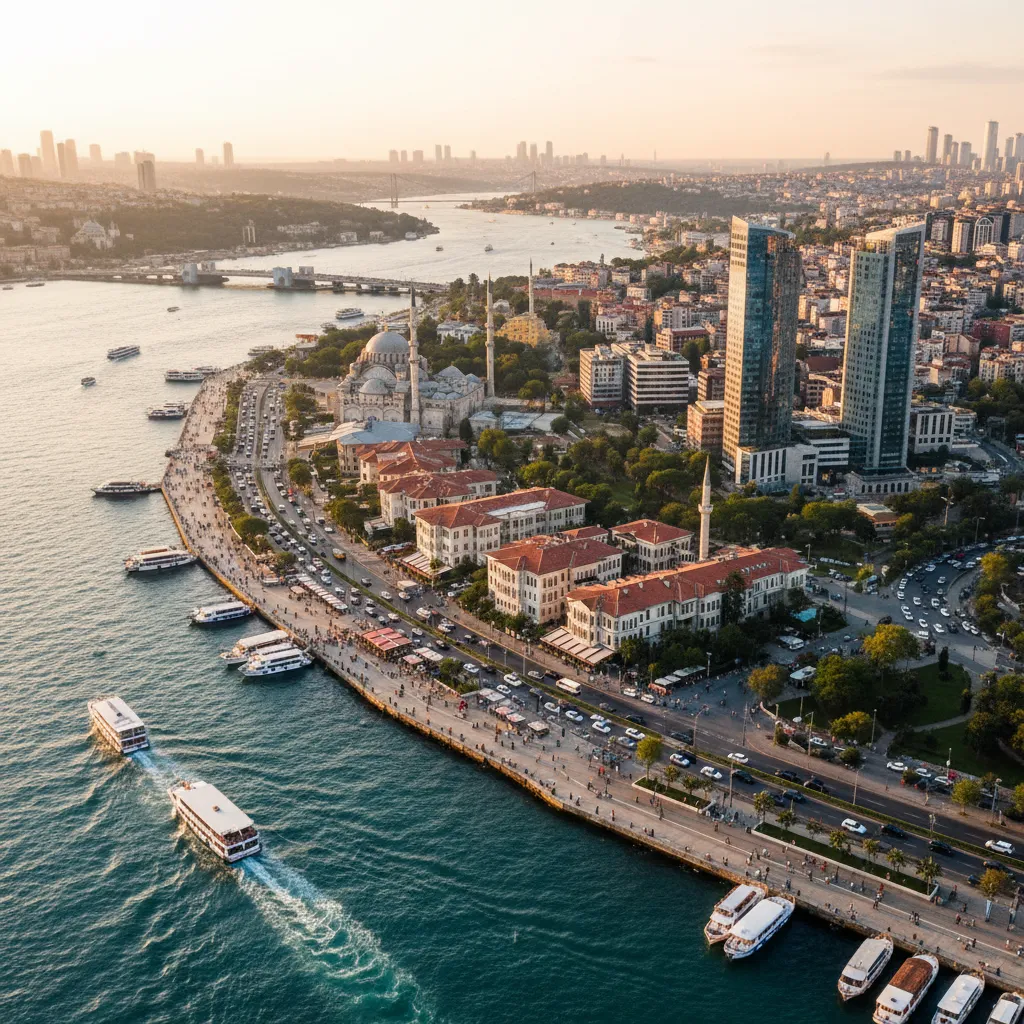
Istanbul remains the undisputed financial and cultural center of Turkey. The European side of the metropolis continues to draw the vast majority of institutional and international capital, driven by connectivity, historic prestige, financial infrastructure, and major regeneration projects. For in-depth micro-location metrics, consult our comprehensive Best Areas to Buy Apartments in European Istanbul 2026 Guide to pinpoint neighborhoods that balance infrastructure growth with high rental demand.
Get a free consultation now, and let us help you choose the right property.
Taxation, Transactional Costs, and Associated Outlays
Accurate financial underwriting requires accounting for all initial and recurring property expenses. Turkey boasts one of the most competitive property tax environments among OECD nations, but investors must account for several specific transaction costs.
Initial Transactional Expenses
- Title Deed Transfer Tax (Tapu Harcı): Standardized at 4% of the declared sales value. Legally split equally (2% by the buyer and 2% by the seller), current market conventions in off-plan and foreign transactions often place the full 4% liability on the purchaser unless explicitly negotiated otherwise in the preliminary sales contract.
- Value Added Tax (KDV): Ranges from 1% to 20% depending on the property’s size, classification, and municipal luxury land assessment score. Notably, non-resident foreign investors who purchase directly from licensed development firms using foreign currency transferred from abroad are legally eligible for a Full KDV Exemption (KDV Muafiyeti), provided the property is held for a minimum of one year.
- Appraisal & Cadastral Fees: Certified SPK valuation reports cost approximately $250 to $450 USD. Cadastral revolving fund fees (Döner Sermaye) and dedicated foreign processing surcharges total approximately $300 to $600 USD per title deed issuance.
- Sworn Translation and Notarization: Translation of international identity documents, passports, powers of attorney, and legal apostilles runs approximately $200 to $500 USD per transaction.
Recurring and Holding Taxes
- Annual Immovable Property Tax (Emlak Vergisi): Extremely low by international standards. Residential properties in metropolitan municipalities (such as Istanbul, Ankara, and Izmir) are taxed at 0.2% of their municipally assessed statutory value per annum. Commercial real estate is assessed at 0.4%, while non-metropolitan regions face half these rates (0.1% for residential, 0.2% for commercial).
- Compulsory Earthquake Insurance (DASK / ZAS): All residential assets must carry annual seismic insurance via the Natural Catastrophe Insurance Pool (DASK), recently modernized as the broader Compulsory Disaster Insurance (ZAS). Annual premiums typically range between $50 and $150 USD depending on square footage, location, and structural design.
- Rental Income Tax (Gelir Vergisi): Rental revenues derived from Turkish real estate are taxed on a progressive bracket scale ranging from 15% to 40%. Landlords can select between the “Actual Expense Method” (deducting real depreciation, maintenance, and operational expenses) and the “Lump-Sum Expense Method” (applying a flat percentage deduction against gross receipts).
- Capital Gains Tax (Değer Artış Kazancı): Capital gains derived from the resale of residential real estate are subject to income tax. However, properties held by individual owners for more than five full calendar years from the date of title deed registration are 100% exempt from capital gains tax, making long-term holdings an exceptionally tax-efficient strategy.
Professional Property Management & Rental Yield Optimization
Acquiring prime property is only the first step; maximizing ongoing net yields requires structured property management, proactive tenant vetting, and compliance with local rental laws.
The Regulatory Landscape for Short-Term Tourism Rentals (Airbnb Law)
Turkey enacted transformative legislation regulating short-term and holiday rentals (Law No. 7464 on Tourism Rentals). Investors intending to generate high-yield daily or weekly rental returns must strictly adhere to the following rules:
- Building-Wide Unanimous Consent: Operators must obtain 100% written consent from every registered co-owner within the residential apartment building before offering units for short-term tourism leases (leases under 100 days).
- Ministry of Culture and Tourism License: Properties must hold an official Tourism Residence License and display a government-issued QR-coded plaque at the entry doorway.
- Identity Registration Integration (KBS): Landlords must register guests on the National Identity Reporting System (KBS), directly reporting guest passports to police and gendarmerie databases in real time, matching hotel security protocols.
- Branded Residence Exemption: Standalone villas and units situated in master-planned “High-Standard Residences” (comprising on-site concierge services, security, fitness complexes, and integrated commercial operations) are exempt from unanimous building consent, provided short-term letting is explicitly allowed in the building’s registered condominium management plan. Investors pursuing hospitality yields should target units in developments with built-in short-term rental permits.
Managing Long-Term Leases
For investors focused on stable, hands-off income, long-term residential leases offer steady returns with low day-to-day management overhead. In 2024, the Turkish government phased out the emergency 25% rent increase cap, returning to standard consumer price index adjustments calculated via the trailing 12-month average (TEFE-TÜFE). Well-drafted lease agreements should always include an official Eviction Undertaking (Tahliye Taahhütnamesi) signed and notarized after the lease inception, giving landlords clear legal leverage if tenant disputes arise.
Risk Mitigation and Essential Due Diligence Checklist
While the Turkish real estate market offers outstanding returns, foreign buyers must implement strict risk mitigation protocols to protect their capital:
- Verify Construction Licensing and Habitation (İskan): Never purchase a completed property without verifying its permanent habitation certificate (Yapı Kullanma İzin Belgesi). Properties lacking an İskan are technically classified as active construction sites, leaving owners with commercial-rate utility tariffs and significant legal vulnerabilities.
- Independent Legal Representation: Always engage an independent, English-speaking Turkish attorney who represents your interests alone, avoiding legal counsel affiliated with or recommended by the selling party or development agency.
- Match Payment Chains Precisely: All cross-border capital transfers must match the legal buyer’s exact name across bank accounts, the DAB currency certificate, municipal registry records, and final title deed registration. Mismatched payer identities can delay or invalidate residency and citizenship filings.
- Audit Project Delivery Guarantees: When buying off-plan, partner with developers that provide sovereign-backed completion guarantees (such as Emlak Konut or TOKİ partnerships) or developers backed by major bank completion warranties and transparent equity reserves.
- Structural and Seismic Auditing: Inspect structural engineering logs and verify post-2018 earthquake code compliance. Look for deep-pile foundation systems, soil remediation studies, and certified C30/C35 grade reinforced concrete frameworks.
Frequently Asked Questions (FAQ)
Can foreigners buy commercial property and land in Turkey?
Yes. Foreign nationals can acquire all major asset classes, including residential apartments, detached homes, commercial office suites, retail shops, and industrial properties. Agricultural or unconstructed land acquisitions are permitted up to 30 hectares, provided the buyer submits an approved development project to the relevant ministry within two years of acquisition.
Can I buy real estate in Turkey remotely without visiting the country?
Yes. International buyers can complete the entire property transaction remotely by granting a Power of Attorney (Vekaletname) to a licensed Turkish attorney. This document can be executed at any Turkish Embassy or Consulate abroad, or prepared via a local public notary in your home country accompanied by an Apostille certification and official Turkish translation.
How long does the Turkish Citizenship by Investment process take in 2026?
From the moment your property is purchased, surveyed by an SPK valuer, and annotated at the Land Registry, the citizenship application process generally concludes within 90 to 120 days. Biometric fingerprinting can be completed at Turkish foreign missions abroad or within Turkey, after which Turkish passports are delivered by registered consular mail.
Can multiple buyers co-own a single property and apply for residency or citizenship?
For the $400,000 Citizenship by Investment Program, shared ownership across unrelated parties is restricted; each applicant must demonstrate sole title deed ownership meeting the $400,000 threshold. For the $200,000 Real Estate Residency permit, title deeds may be jointly held by legal spouses, covering both individuals and dependent minor children under a unified family application.
What currency is used to complete real estate purchases in Turkey?
Final settlement figures must be registered at the Land Registry in Turkish Lira, backed by an official Central Bank Currency Exchange Certificate (DAB). However, international investors routinely transfer funds into Turkey in US Dollars, Euros, or British Pounds. Contracts, off-plan payment milestones, and developer pricing lists are typically indexed to hard currencies to protect international buyers against domestic exchange rate volatility during construction.
Conclusion: Charting Your Investment Strategy in Turkey
Property investment in Turkey in 2026 offers a compelling mix of lifestyle appeal, capital appreciation, and tangible residency and passport benefits. The key to success lies in moving past generic marketing claims and working with verified legal, financial, and market data. By prioritizing prime locations, verifying structural and title deed compliance, selecting an optimal management strategy, and coordinating closely with independent legal counsel, investors can build a resilient, high-yielding Turkish real estate portfolio that delivers lasting security and attractive financial returns.