
Introduction to Turkish Citizenship by Investment
Turkey has emerged as one of the most attractive destinations for obtaining citizenship through real estate investment, offering a streamlined pathway for international investors seeking a second passport. The Turkish Citizenship by Investment Program, officially launched in 2017 and significantly enhanced in subsequent years, provides foreign nationals with the opportunity to acquire Turkish citizenship by making qualifying real estate investments.
This comprehensive program has transformed Turkey into a global hub for citizenship seekers, combining the benefits of property ownership with the advantages of holding a Turkish passport. With its strategic location bridging Europe and Asia, robust economy, and favorable investment climate, Turkey presents an compelling proposition for those looking to diversify their citizenship portfolio while building wealth through real estate.
Understanding the Turkish Citizenship Investment Program
Historical Background and Legal Framework
The Turkish government introduced the citizenship by investment program as part of its broader economic strategy to attract foreign direct investment and stimulate the real estate sector. The legal foundation rests on Turkish Citizenship Law No. 5901, which was amended to include specific provisions for investment-based citizenship acquisition.
Initially, the program required a minimum investment of $1 million USD in real estate. However, recognizing the need to remain competitive in the global citizenship market, Turkish authorities reduced this threshold to $400,000 USD in 2018, and further lowered it to $250,000 USD in 2022, making it one of the most accessible citizenship programs worldwide.
Current Investment Thresholds and Requirements
As of 2024, the minimum real estate investment requirement for Turkish citizenship stands at $400,000 USD, following recent adjustments to maintain program sustainability while ensuring continued attractiveness to international investors. This investment must be maintained for a minimum period of three years from the date of acquisition.
The program operates under strict regulatory oversight, with the Ministry of Environment, Urbanization and Climate Change, along with the General Directorate of Land Registry and Cadastre, ensuring compliance with all investment criteria and documentation requirements.
Eligibility Criteria and Requirements
Basic Eligibility Standards
To qualify for Turkish citizenship through real estate investment, applicants must meet several fundamental criteria:
- Be at least 18 years of age
- Have no criminal record or security concerns
- Make the required minimum investment in qualifying real estate
- Maintain the investment for the specified holding period
- Provide all necessary documentation and undergo background checks
Property Investment Specifications
The real estate investment must comply with specific technical and legal requirements:
- Minimum Value: $400,000 USD equivalent in Turkish Lira at the time of purchase
- Property Types: Residential, commercial, or land properties are acceptable
- Location: Properties can be located anywhere within Turkey
- Ownership Structure: Must be owned individually or through a Turkish company
- Valuation: Professional appraisal required to confirm minimum value threshold
Holding Period and Restrictions
Investors must commit to maintaining their real estate investment for a minimum of three years. During this period, the property cannot be sold, transferred, or used as collateral for loans exceeding the investment value. A legal annotation is placed on the property deed to ensure compliance with these restrictions.
Get a free consultation now, and let us help you choose the right property.
Step-by-Step Application Process
Phase 1: Pre-Investment Planning and Due Diligence
Market Research and Property Selection
Before making any investment decisions, thorough market research is essential. Prospective investors should analyze different regions, property types, and market trends to identify opportunities that align with both citizenship requirements and investment objectives.
Key considerations during this phase include:
- Location analysis and growth potential
- Property type selection (residential vs. commercial)
- Developer reputation and project quality
- Legal status and proper documentation
- Future resale potential and market liquidity
Legal and Financial Preparation
Engaging qualified legal counsel familiar with Turkish real estate law and citizenship procedures is crucial. Legal professionals can assist with:
- Due diligence on selected properties
- Contract review and negotiation
- Compliance verification with citizenship requirements
- Tax planning and optimization strategies
Phase 2: Property Acquisition Process
Purchase Agreement and Documentation
The property acquisition process involves several critical steps:
- Preliminary Agreement: Initial contract outlining terms and conditions
- Due Diligence Period: Comprehensive property and legal review
- Final Purchase Contract: Detailed agreement with all specifications
- Payment Processing: Structured payment schedule and fund transfers
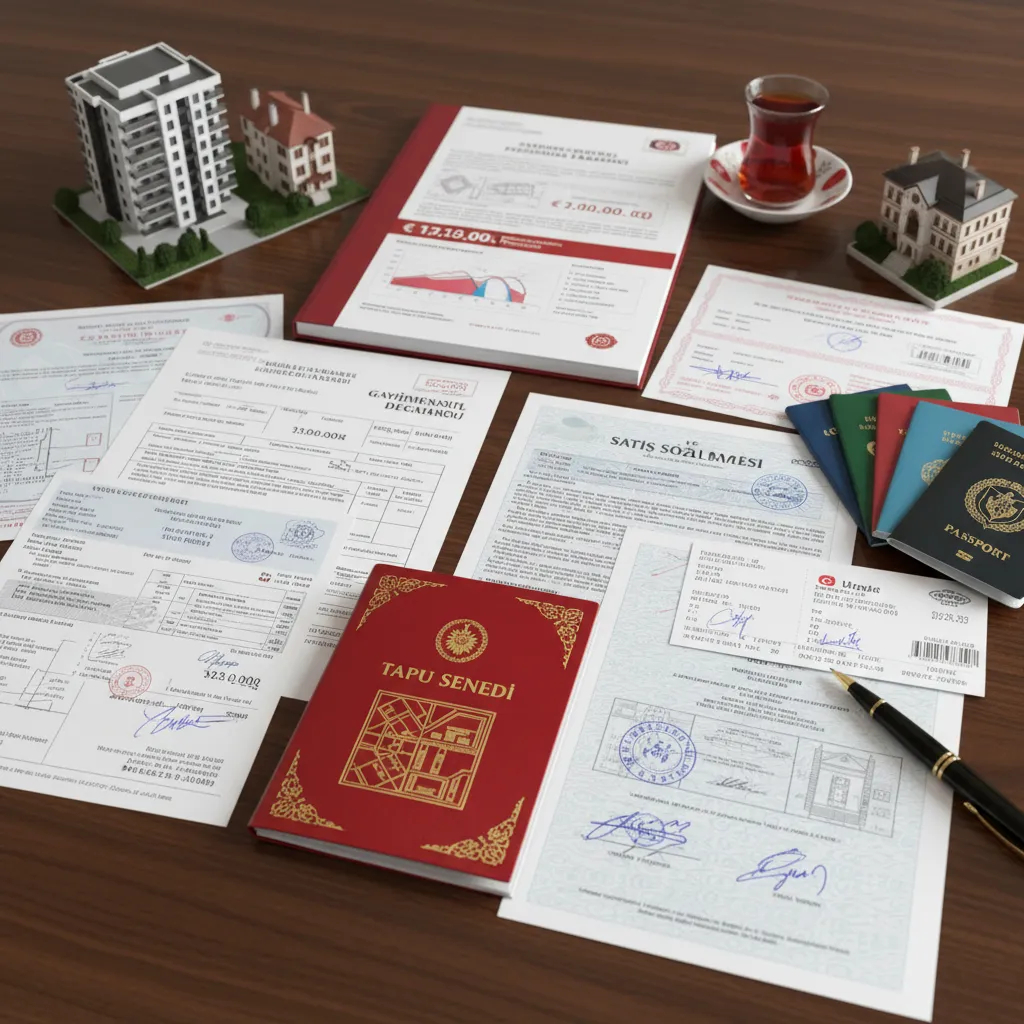
- Title Transfer: Official registration with land registry offices
Required Documentation for Property Purchase
Essential documents include:
- Valid passport and identification
- Tax identification number (Turkish)
- Proof of funds and bank statements
- Property valuation report
- Insurance documentation
- Legal representation authorization
Phase 3: Citizenship Application Submission
Preparing the Citizenship Dossier
Once property acquisition is complete, the citizenship application process begins. The comprehensive dossier must include:
- Completed citizenship application forms
- Property deed and ownership documentation
- Official property valuation report
- Bank statements confirming investment source
- Criminal background checks from all countries of residence
- Birth certificate and family documentation
- Medical examination results
- Passport-style photographs
Submission and Processing Timeline
Applications are submitted to the General Directorate of Civil Registration and Nationality. The standard processing timeline ranges from 3-6 months, depending on application completeness and background verification requirements.
Investment Options and Property Types
Residential Real Estate Opportunities
Luxury Apartments and Condominiums
Turkey’s major cities offer extensive luxury residential developments that meet citizenship investment criteria. Istanbul, Ankara, and Antalya feature numerous high-end projects with amenities and services attractive to international buyers.
Popular residential investment areas include:
- Istanbul: Sisli, Besiktas, Kadikoy, and Beyoglu districts
- Antalya: Lara, Konyaalti, and Alanya coastal regions
- Ankara: Cankaya and Yenimahalle business districts
- Bursa: Nilufer and Osmangazi developing areas
Villa and Single-Family Properties
For investors seeking larger properties with greater privacy and space, Turkey offers exceptional villa developments along the Mediterranean and Aegean coastlines. These properties often provide higher appreciation potential and rental income opportunities.
Commercial Real Estate Investments
Office Buildings and Business Centers
Commercial real estate presents opportunities for investors focused on income generation and capital appreciation. Modern office complexes in Istanbul’s financial districts and Ankara’s government quarter offer stable rental yields and long-term growth potential.
Retail and Hospitality Properties
Shopping centers, hotels, and mixed-use developments provide diversified investment exposure to Turkey’s growing tourism and retail sectors. These properties often generate higher rental returns but require more active management.
Land and Development Opportunities
Raw land purchases can qualify for citizenship investment, particularly in areas designated for future development. However, investors should carefully evaluate zoning regulations, development potential, and infrastructure plans before committing to land investments.

Get a free consultation now, and let us help you choose the right property.
Benefits of Turkish Citizenship
Passport and Travel Advantages
Visa-Free Travel Access
Turkish passport holders enjoy visa-free or visa-on-arrival access to over 110 countries worldwide, including significant destinations in Europe, Asia, and South America. This mobility advantage is particularly valuable for business professionals and frequent travelers.
Key travel destinations include:
- European Union countries (90 days visa-free)
- United Kingdom (6 months visa-free)
- Japan, South Korea, and Singapore
- Most South American countries
- Many African and Middle Eastern nations
EU Candidacy Benefits
As a candidate country for European Union membership, Turkey maintains special relationships with EU member states, potentially providing future advantages as integration progresses.
Economic and Business Opportunities
Access to Turkish Markets
Turkish citizenship provides unrestricted access to Turkey’s $800 billion economy, offering opportunities in sectors including manufacturing, technology, tourism, and energy. Citizens can establish businesses, access local financing, and participate in government contracts without foreign investment restrictions.
Regional Business Hub Access
Turkey’s strategic location provides access to European, Asian, and Middle Eastern markets, making it an ideal base for international business operations. The country’s customs union with the EU and free trade agreements with numerous countries enhance commercial opportunities.
Social and Lifestyle Benefits
Healthcare and Education Systems
Turkish citizens have access to the country’s universal healthcare system and can enroll in public universities at domestic tuition rates. The education system includes numerous internationally recognized institutions and programs.
Cultural and Social Integration
Turkey offers a rich cultural heritage, diverse lifestyle options, and welcoming communities for international residents. The country’s blend of Eastern and Western influences creates unique living experiences in both urban and coastal environments.
Costs and Financial Considerations
Direct Investment Costs
Property Purchase Price
The minimum $400,000 USD investment represents the baseline requirement, but investors should budget for additional costs including:
- Property transfer taxes (4% of purchase price)
- Legal fees (1-2% of purchase price)
- Valuation and survey costs ($1,000-$2,000)
- Insurance premiums (0.1-0.3% annually)
- Notary and registration fees ($500-$1,500)
Ongoing Ownership Expenses
Annual Property Costs
Property owners must budget for recurring expenses:
- Property taxes: 0.1-0.3% of assessed value annually
- Maintenance fees: $500-$2,000 annually depending on property type
- Utilities: $100-$300 monthly for average properties
- Property management: 5-10% of rental income if applicable
Citizenship Application Fees
Government Processing Costs
Official fees for citizenship processing include:
- Application processing fee: $300 per applicant
- Document authentication and translation: $500-$1,000
- Background check fees: $200-$500
- Medical examination costs: $200-$400
Professional Service Fees
Engaging professional services typically involves:
- Legal representation: $5,000-$15,000
- Immigration consulting: $3,000-$10,000
- Property sourcing and acquisition: 2-3% of purchase price
Regional Investment Opportunities
Istanbul: Turkey’s Economic Capital
Market Overview and Opportunities
Istanbul remains the most popular destination for citizenship investors, offering diverse property options from luxury waterfront developments to modern city center apartments. The city’s economic significance, cultural attractions, and international connectivity make it an attractive long-term investment destination.
Key investment districts include:
- Sisli and Besiktas: Central business districts with high rental demand
- Kadikoy and Uskudar: Asian side developments with growth potential
- Beylikduzu and Esenyurt: New residential areas with modern amenities
- Sariyer and Zekeriyakoy: Upscale residential communities
Antalya: Mediterranean Coastal Paradise
Tourism and Lifestyle Investment
Antalya’s Mediterranean coastline offers exceptional lifestyle investments with strong tourism-driven rental potential. The region’s year-round climate, beaches, and cultural attractions support both personal enjoyment and investment returns.
Popular investment areas:
- Lara Beach: Luxury resort developments and high-end apartments
- Konyaalti: Beachfront properties with mountain views
- Alanya: Established expat communities and rental markets
- Kas and Kalkan: Boutique coastal towns with villa opportunities
Ankara: Political and Administrative Center
Stable Government Sector Investment
As Turkey’s capital city, Ankara offers stable investment opportunities driven by government employment and administrative functions. The city’s universities and research institutions also support rental demand from students and professionals.
Emerging Markets and Growth Areas
Bursa and Industrial Centers
Turkey’s industrial cities present opportunities for investors seeking exposure to the country’s manufacturing sector growth. These markets often offer better value propositions and higher rental yields compared to major tourist destinations.
Legal Framework and Regulatory Compliance
Turkish Real Estate Law
Foreign Ownership Regulations
Turkish law permits foreign nationals to own real estate with certain restrictions and requirements:
- Maximum 30 hectares of land ownership per individual
- Restrictions in military zones and border areas
- Reciprocity requirements for certain nationalities
- Mandatory use of Turkish legal representation
Citizenship Law Compliance
Investment Verification Process
The government maintains strict verification procedures to ensure investment authenticity:
- Source of funds documentation
- Property valuation verification
- Ownership structure confirmation
- Compliance with holding period requirements
Legal Obligations and Responsibilities
New Turkish citizens must understand their legal obligations, including:
- Tax residency implications
- Military service requirements (for males under 41)
- Voting rights and civic responsibilities
- Potential dual citizenship restrictions
Tax Implications and Optimization
Property Taxation Structure
Purchase and Transfer Taxes
Real estate transactions in Turkey are subject to various taxes:
- Title Deed Transfer Tax: 4% of property value (split between buyer and seller)
- VAT: 1-18% depending on property type and buyer status
- Stamp Duty: 0.948% on purchase contracts
Ongoing Tax Obligations
Annual Property Taxes
Property owners face annual tax obligations:
- Real Estate Tax: 0.1-0.3% of assessed value
- Environmental Cleaning Tax: Varies by municipality
- Rental Income Tax: 20% on net rental income for non-residents
International Tax Planning
Double Taxation Treaties
Turkey maintains double taxation treaties with over 80 countries, potentially reducing overall tax burden for new citizens. Professional tax planning can optimize structures to minimize global tax exposure while maintaining compliance.
Risk Assessment and Mitigation
Market and Investment Risks
Currency Fluctuation Exposure
Turkish Lira volatility can impact investment values and returns. Investors should consider:
- Currency hedging strategies
- USD or Euro-denominated payment structures
- Natural hedging through rental income
- Diversification across multiple properties or regions
Legal and Regulatory Risks
Policy Changes and Compliance
Government policy changes could affect investment requirements or citizenship procedures. Mitigation strategies include:
- Engaging experienced legal counsel
- Maintaining compliance with all current requirements
- Monitoring regulatory developments
- Building relationships with local professionals
Property-Specific Risks
Development and Construction Risks
Off-plan property investments carry additional risks:
- Developer financial stability
- Construction quality and completion timing
- Market conditions upon project completion
- Regulatory approvals and permits
Professional Services and Support
Legal Representation
Selecting Qualified Attorneys
Choosing experienced legal counsel is crucial for successful citizenship acquisition. Key qualifications include:
- Specialization in Turkish real estate and immigration law
- Proven track record with citizenship applications
- Multilingual capabilities and international experience
- Strong relationships with government agencies
Real Estate Professionals
Property Sourcing and Acquisition Support
Experienced real estate professionals provide valuable services:
- Market analysis and property identification
- Due diligence and valuation coordination
- Negotiation and contract management
- Post-purchase property management
Financial and Tax Advisory
Comprehensive Planning Services
Financial advisors help optimize investment structures:
- Tax planning and optimization strategies
- Financing options and structures
- Investment portfolio diversification
- Estate planning considerations
Future Outlook and Considerations
Program Evolution and Sustainability
Government Policy Trends
The Turkish government continues to refine the citizenship by investment program to balance economic benefits with security concerns. Recent trends indicate:
- Enhanced due diligence procedures
- Stricter source of funds verification
- Potential adjustments to investment thresholds
- Improved processing efficiency and transparency
Market Development Projections
Real Estate Market Outlook
Turkey’s real estate market shows continued growth potential driven by:
- Urbanization and population growth
- Infrastructure development projects
- Tourism sector expansion
- Foreign investment attraction initiatives
Conclusion
Obtaining Turkish citizenship through real estate investment represents a compelling opportunity for international investors seeking to diversify their citizenship portfolio while building wealth through property ownership. The program’s competitive investment threshold, combined with Turkey’s strategic location, growing economy, and attractive lifestyle options, makes it one of the most accessible and valuable citizenship by investment programs available today.
Success in this endeavor requires careful planning, thorough due diligence, and engagement with qualified professional services. Investors who approach the process systematically, with proper legal and financial guidance, can achieve their citizenship objectives while making sound real estate investments that provide long-term value and enjoyment.
The Turkish citizenship by investment program continues to evolve, reflecting the government’s commitment to attracting quality investors while maintaining program integrity. For those considering this pathway to Turkish citizenship, the current environment presents favorable conditions and opportunities that may not persist indefinitely.
As with any significant investment and life decision, prospective applicants should conduct comprehensive research, seek professional advice, and carefully evaluate their personal and financial circumstances before proceeding. The rewards of Turkish citizenship through real estate investment can be substantial, but success depends on informed decision-making and proper execution of the acquisition and application process.