
Introduction: The Confluence of Real Estate Acquisition and Citizenship
The convergence of cross-border real estate investment and global mobility has established the Republic of Turkey as one of the preeminent investment destinations worldwide. Situated at the crossroads of Europe, Asia, and the Middle East, Turkey provides investors with more than just a strategic geographical footprint; it offers a direct, legally codified pathway to citizenship. The process of buying property in Turkey and applying for Turkish citizenship represents an institutionalized framework designed to attract foreign direct investment while delivering robust capital growth and global mobility benefits to investors.
In 2026, the Turkish property market continues to evolve amidst updated administrative regulations, digital title registry mechanisms, and structured valuation systems. Whether seeking high-yield residential properties, expansive commercial holdings, or zoned land, foreign buyers must navigate a precise multi-tiered ecosystem consisting of property selection, legal verification, currency conversions, and statutory citizenship filings. This exhaustive guide provides institutional-grade clarity on every phase of buying property in Turkey and applying for Turkish citizenship, outlining legal statutes, strategic regional opportunities, due diligence protocols, and tax liabilities.
The Statutory Framework: Citizenship by Real Estate Investment
Foreign property acquisition linked to naturalization is governed by the Regulation on the Implementation of the Turkish Citizenship Law (Decree No. 5901, Article 20). Under these regulatory provisions, foreign nationals who acquire real estate valued at a minimum of $400,000 USD (or equivalent in foreign convertible currency) and place a three-year non-alienation pledge (şerh) on the title deed are eligible to obtain exceptional Turkish citizenship for themselves, their spouse, and minor children under the age of 18.
Core Legal Parameters
- Minimum Investment Threshold: The statutory baseline is $400,000 USD. The aggregate transaction value must meet or exceed this sum based on official Central Bank exchange rates.
- Cumulative Property Purchases: Investors are not restricted to purchasing a single asset. Multiple units can be aggregated to fulfill the $400,000 baseline, provided the applications are submitted simultaneously and all titles feature the mandatory non-sale encumbrance.
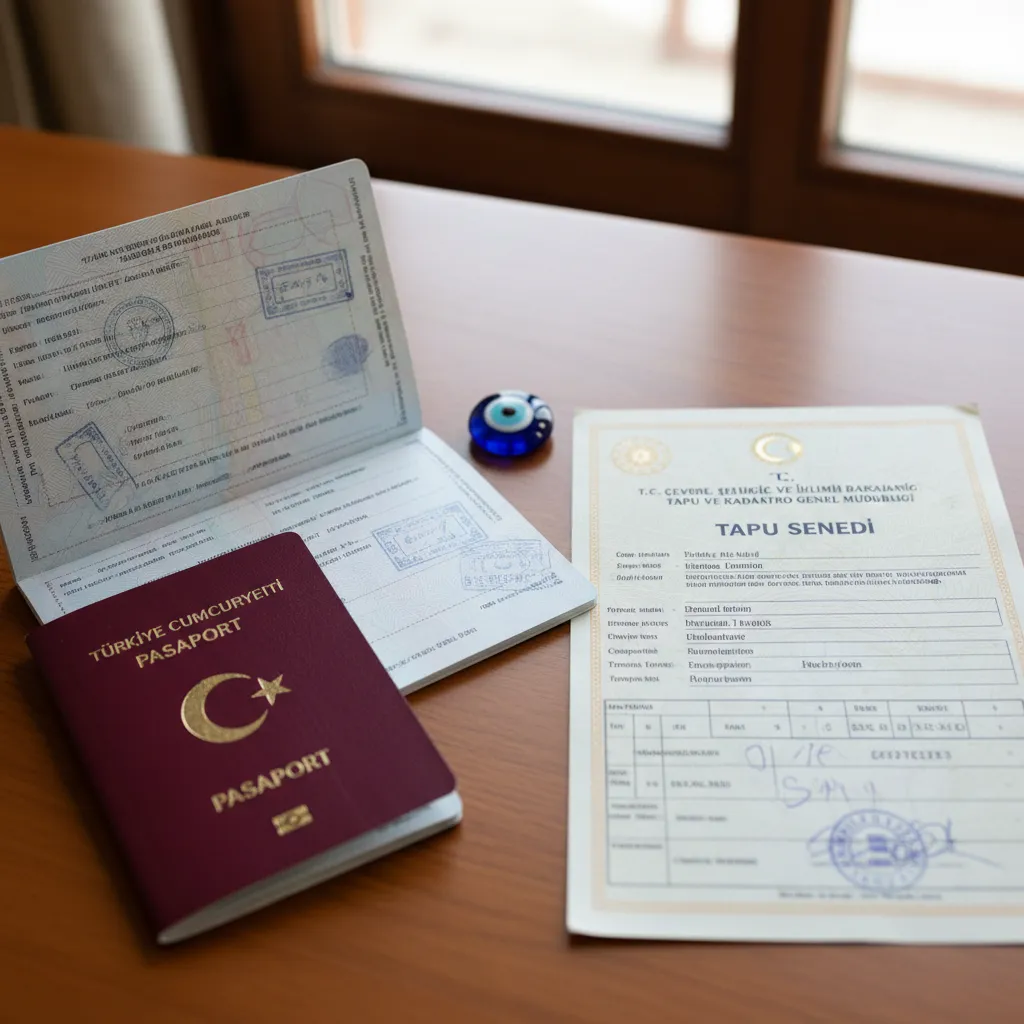
- Three-Year Holding Obligation: The investor must legally pledge at the General Directorate of Land Registry and Cadastre (Tapu ve Kadastro Genel Müdürlüğü) that the acquired property will not be sold or transferred for at least three consecutive years.
- Chain of Ownership Strictures: The real estate must be purchased from a Turkish citizen or a Turkish legal entity. Properties previously utilized by another foreign investor to obtain citizenship cannot be reused for a secondary citizenship petition by a new buyer.

Get a free consultation now, and let us help you choose the right property.
Financial Compliance: The Central Bank Foreign Exchange Document (DAB)
A critical pillar of buying property in Turkey and applying for Turkish citizenship is full compliance with monetary clearing rules regulated by the Central Bank of the Republic of Turkey (TCMB). Direct payment in foreign fiat currency to a property developer or individual seller without central clearing is legally invalid for citizenship purposes.
The Döviz Alım Belgesi (DAB) Protocol
Before the execution of the title deed transfer, the foreign buyer must convert the full purchase price in foreign currency (USD, EUR, or GBP) into Turkish Lira (TRY) through an intermediary operational bank in Turkey. The commercial bank processes the transaction directly with the Central Bank, which subsequently issues a formal Currency Purchase Certificate, known locally as the Döviz Alım Belgesi (DAB).
The DAB certificate verifies the exact amount converted, confirms that the exchange adheres to official central bank currency tables, and clearly cites the buyer’s identity details, passport number, and property identification. This document serves as indispensable evidence during the subsequent Certificate of Conformity review; without an accurate DAB, title transfers cannot be tied to a citizenship application.
Official Valuation Reports (SPK Compliance)
To eliminate artificial price inflation and ensure market transparency, every citizenship-linked real estate purchase requires an independent property valuation report. This appraisal must be conducted by an auditing firm licensed by the Capital Markets Board of Turkey (Sermaye Piyasası Kurulu – SPK) and submitted via the automated Web-Tapu electronic registry system.
The valuation report analyzes structural integrity, legal clearances, architectural adherence, comparable sales data, and prevailing market rates. Crucially, the final appraised value in the SPK report must match or exceed the statutory $400,000 USD threshold calculated at the exchange rate registered in the DAB document.
Eligible Property Classes: Strategic Asset Allocation
Investors enjoy broad latitude when selecting property classes to qualify for the citizenship program. Each asset class features distinct risk-reward profiles, cash-flow models, and liquidity dynamics.
1. Complete Residential Properties (Kat Mülkiyeti)
Turnkey residential real estate holding full property ownership rights (Kat Mülkiyeti) represents the most common investment vehicle. These assets feature verified habitation permits (İskan), allowing immediate tenant occupancy, utility connections, and operational rental yields.
2. Off-Plan Residential Projects with Floor Easement (Kat İrtifakı)
Investors can acquire units in off-plan developments that hold an established construction easement (Kat İrtifakı). To qualify for citizenship, transactions for incomplete properties must be formalized through a Notarized Preliminary Sales Contract (Noter Onaylı Gayrimenkul Satış Vaadi Sözleşmesi). The contract must explicitly state that the minimum $400,000 USD fee has been settled upfront in cash, accompanied by the mandatory three-year non-alienation covenant.
3. Commercial Assets
Institutional and high-net-worth investors frequently favor commercial units—such as retail storefronts, corporate office suites, or logistics assets—due to long-term corporate lease contracts. Commercial leases in Turkey often feature inflation-hedged escalation clauses and triple-net structures, making them attractive cash-flow options during the three-year retention period.
4. Zoned Land Parcels
Foreign capital can also be deployed into land plots suitable for development. However, foreign nationals purchasing raw or zoned land must submit a specific architectural or development plan to the relevant ministry within two years of acquisition. For individuals analyzing raw ground expansions, reviewing Land for Sale in Istanbul, Turkey provides deep market context regarding industrial, commercial, and residential zoning opportunities.
Geographic Investment Hotspots: Istanbul and High-Growth Hubs
While the citizenship parameters apply uniformly across Turkey, geographic allocation directly dictates capital preservation, rental demand, and resale liquidity once the three-year holding covenant expires.
Istanbul: The Economic Heartland
Istanbul remains the dominant engine of Turkish real estate, accounting for the highest volume of foreign transactions. The city offers two distinct investment profiles:
- Central Business Districts & Historic Quarters: Areas such as Beşiktaş, Şişli, Sariyer, and Kadıköy command high square-meter prices, driven by extreme geographic scarcity and durable tenant demand. Capital entry points are high, but long-term asset value preservation is exceptional.
- Master-Planned Suburban Hubs: Modern western nodes offer large-scale contemporary compounds complete with extensive lifestyle amenities, proximity to Istanbul Airport, and major highway intersections. A primary benchmark for this development model is explored in the Basaksehir Real Estate Investment: Growth & High Returns analysis, detailing how government-backed infrastructure and planned civic layouts drive sustained capital gains.
The Mediterranean and Aegean Coastal Markets
Antalya, Bodrum, and Fethiye cater primarily to lifestyle investors and vacation rental strategies. While these coastal markets can generate strong short-term seasonal yields, seasonal income variability and regulatory requirements for short-term tourism licenses require active asset oversight.
End-to-End Property Acquisition Process
Navigating property acquisition in Turkey requires a structured, multi-phase process to ensure legal compliance, financial safety, and qualification for citizenship.
| Phase | Primary Action Items | Key Regulatory Stakeholders |
|---|---|---|
| Phase 1: Due Diligence | Title deed verification, encumbrance audit, zoning check | Land Registry (Tapu), Municipalities |
| Phase 2: Financial Prep | Tax number issuance, bank account opening, power of attorney | Tax Office, Commercial Banks, Notary |
| Phase 3: Transaction Execution | SPK appraisal, currency clearing (DAB), escrow deposit | Central Bank (TCMB), Licensed Appraisers |
| Phase 4: Conveyance | Title transfer, registration of 3-year citizenship covenant | General Directorate of Land Registry |
Phase 1: Comprehensive Legal Due Diligence
Before remitting any earnest money deposits, an independent real estate attorney must conduct a comprehensive review of the asset at the relevant Land Registry Office. Crucial checks include confirming:
- The seller holds unencumbered, clean legal title.
- The property is free of undisclosed mortgages (ipotek), judicial liens (haciz), or remediation orders.
- The property has an official habitation certificate (İskan), certifying architectural compliance with local municipal safety and seismic codes.
- The real estate asset does not fall within restricted military security zones.
Phase 2: Administrative and Financial Initialization
The investor secures a Potential Tax Number (Vergi Kimlik Numarası) from any provincial tax office or via the digital tax portal. Concurrently, a corporate or personal account is established at a Turkish retail bank to facilitate domestic financial transfers. Foreign buyers often execute a bilingual Power of Attorney (POA) at an authorized Turkish notary public or Turkish foreign mission abroad, delegating legal authority to an attorney to conduct filings on their behalf.
Phase 3: Formal Title Deed Transfer (Tapu Devri)
Upon execution of the DAB currency exchange and completion of the SPK appraisal report, the parties apply for the official title transfer through the online Web-Tapu platform. Both parties or their authorized legal representatives assemble at the Land Registry Directorate. The purchaser formally signs the registry documentation, remits the conveyance taxes, and applies the official statutory non-alienation restriction (covenant) guaranteeing the property will not be sold for three years.
Get a free consultation now, and let us help you choose the right property.
The Citizenship Application Procedure: Legal Walkthrough
Securing the title deed is simply the foundation of the naturalization process. The path from property owner to passport holder involves four primary administrative phases handled by specialized government bodies.
Step 1: Procuring the Certificate of Conformity (Uygunluk Belgesi)
Once the Land Registry confirms the title transfer and the application of the three-year encumbrance, the transaction dossier is forwarded to the Department of Foreigners within the General Directorate of Land Registry and Cadastre. The department audits:
- The certified SPK valuation metrics.
- The Central Bank Currency Purchase Certificate (DAB).
- The receipt records proving funds moved between buyer and seller through regulated banking rails.
Upon satisfactory review, the authorities issue the formal Certificate of Conformity, confirming the investment meets all statutory citizenship criteria.
Step 2: Securing the Investor Residence Permit (Article 31/J)
Investors pursuing citizenship must secure a specialized short-term residence permit under Law No. 6458, Article 31, Paragraph (j). Unlike standard tourist residency permits, this category is reserved exclusively for foreign investors and does not require minimum physical stay periods in the country.
The investor submits the Certificate of Conformity, private health insurance valid in Turkey, and identity verifications to the Presidency of Migration Management (Göç İdaresi Başkanlığı). The residence card is typically granted promptly to facilitate the processing of the main citizenship file.
Step 3: Filing the Main Citizenship Dossier
With the Investor Residence Permit secured, the comprehensive citizenship application dossier is filed simultaneously at the dedicated Foreign Investor Citizenship Offices located in major administrative centers such as Istanbul and Ankara. The filing package must include:
- Certified application forms (Vatandaşlık Başvuru Formu).
- Valid passports for all applicants (buyer, spouse, and children under 18), accompanied by notarized Turkish translations.
- Apostilled or consular-legalized birth certificates for all family members.
- Apostilled marriage certificates, family registry books, or divorce decrees establishing lineage and legal union.
- Biometric passport-format photographs meeting ICAO standards.
- The original Certificate of Conformity and Residence Permit cards.
Step 4: Inter-Agency Security Archival Review
Once submitted, the citizenship dossier undergoes mandatory background checks coordinated by the Ministry of Interior, the General Directorate of Civil Registration and Nationality (Nüfus ve Vatandaşlık İşleri Genel Müdürlüğü), and national intelligence authorities (Milli İstihbarat Teşkilatı – MİT). The screening verifies that applicants pose no national security, financial misconduct, or public order concerns.
Step 5: Final Decree, Biometrics, and Passport Issuance
Following successful security clearance, the file is submitted for formal presidential approval. Once the naturalization decree is signed, the primary investor and their family members visit a local Civil Registration Office or a Turkish Embassy/Consulate abroad to register biometrics, including fingerprints and digital signatures. Turkish National Identity Cards and Passports are subsequently dispatched via tracked diplomatic mail.
For more detailed analyses of naturalization nuances, requirements for dependents, and dual-citizenship protocols, consult our detailed resource answering key Questions about Turkish citizenship.
Taxation, Transaction Fees, and Operational Costs
Acquiring real estate and securing naturalization involves secondary transactional expenses that must be accounted for within the overall capital expenditure model.
1. Title Deed Transfer Tax (Tapu Harcı)
The standard property transfer tax is 4% of the declared transaction value. In conventional domestic transactions, this cost is shared equally (2% by the buyer, 2% by the seller). However, in international investment deals, contracts often stipulate that the purchaser covers the full 4% transfer fee, unless negotiated otherwise with institutional developers.
2. Value Added Tax (KDV) & Statutory Exemptions
Value Added Tax (KDV) ranges from 1% to 20%, depending on the property’s classification, location, and structural parameters. However, non-resident foreign buyers purchasing new developments directly from registered developers can qualify for a VAT Exemption under Article 13/i of the Value Added Tax Law. To secure this exemption, foreign capital must enter Turkey via verified international banking transfers, and the acquired property must be held for a minimum of one year without resale.
3. Supplementary Operational Expenses
- SPK Appraisal Fees: Standardized charges established by the Capital Markets Board for certified valuation reports.
- Sworn Translation and Notarization: Translation and notarization fees for passports, birth records, and powers of attorney.
- Government Registration Dues: Cadastral administrative charges, circulating capital contributions (Döner Sermaye), and residency card issuance levies.
- Legal Counsel Fees: Professional legal retainers for specialized immigration and real estate attorneys who manage filings and due diligence.
Key Strategic Advantages of Turkish Citizenship
Acquiring Turkish citizenship via real estate investment provides institutional and individual benefits that extend well beyond asset ownership:
Global Mobility and Strategic Hedging
A Turkish passport grants visa-free or visa-on-arrival entry to more than 110 destinations globally, including key commercial nodes throughout Asia, the Americas, and Africa. It provides an effective hedge against regional regulatory, financial, or political uncertainty.
Dual Citizenship Recognition
Turkish legal doctrine allows dual and multiple citizenships. Foreign investors naturalizing under the investment program are not required by Turkish authorities to renounce their original nationalities, allowing them to preserve their existing citizenships where permitted by their home countries.
Full Inclusion of Immediate Family
The primary investor’s legal spouse and all dependent children under the age of 18 acquire citizenship simultaneously through a single qualifying investment. Dependents receive identical civil rights, including universal access to subsidized state education and comprehensive healthcare networks.
Favorable Inheritance Laws and Property Rights
Foreign investors enjoy robust private property protections under Turkish civil law. Real estate assets owned by foreign nationals can be seamlessly bequeathed to legal heirs without confiscatory inheritance transfer penalties, offering valuable generational wealth security.
Common Pitfalls and Essential Investor Safeguards
While the investment-for-citizenship pathway is well-established, operational missteps can delay filings or disqualify an application entirely. Investors should be mindful of these critical considerations:
1. Exchange Rate and DAB Discrepancies
Market movements between initial currency conversion and formal title conveyance can inadvertently push an investment below the $400,000 threshold. Investors should maintain a financial cushion of 3% to 5% above the statutory minimum to safeguard against volatile intra-day currency shifts.
2. Chain-of-Title Deficiencies
Purchasing a property from an entity that originally acquired it from a foreign national can trigger immediate disqualification under anti-cycling guidelines. The property’s title chain must be traced back through previous transfers to confirm absolute compliance with Ministry of Interior directives.
3. Unregulated Off-Plan Arrangements
Purchasing an incomplete unit without a Notarized Preliminary Sales Contract registered on the title registry provides no legal citizenship standing. Standard, un-notarized private agreements between buyer and seller are insufficient for citizenship applications.
4. Relying Exclusively on Developer Appraisals
Always engage an independent, third-party SPK-licensed appraiser directly, rather than relying solely on valuations organized by the property developer. This safeguards against inflated assessments that could fail the Land Registry’s rigorous secondary reviews.
Summary: Navigating the 2026 Investment Landscape
Buying property in Turkey and applying for Turkish citizenship offers an efficient, secure path to dual citizenship, combining physical asset ownership with enhanced global mobility. Successful execution depends on strict compliance with regulatory protocols, including accurate currency clearing via the Central Bank’s DAB mechanism, thorough title due diligence, and comprehensive immigration filings.
By partnering with qualified legal counsel, conducting thorough due diligence, and targeting high-growth property sectors, foreign investors can safeguard their capital, maximize rental yields, and secure full Turkish citizenship rights for their families.
Frequently Asked Questions (FAQ)
What is the minimum real estate investment required to obtain Turkish citizenship?
Can multiple properties be combined to meet the $400,000 investment requirement?
What is the mandatory holding period for properties purchased for citizenship?
Who in the investor's family is eligible for Turkish citizenship under this program?
What is a Döviz Alım Belgesi (DAB) and why is it required?