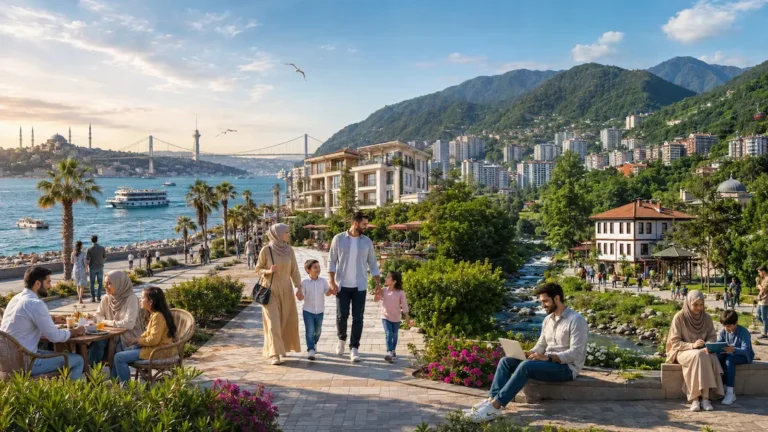
Introduction to Real Estate Residency in Turkey
Turkey has emerged as one of the world’s most attractive destinations for real estate investment and residency programs. The Turkish government’s strategic initiatives to attract foreign investment have created unprecedented opportunities for international investors seeking both profitable property investments and pathway to residency or citizenship. With its unique geographical position bridging Europe and Asia, robust economic growth, and favorable investment climate, Turkey offers compelling advantages for those considering real estate residency options.
The Turkish real estate market has experienced remarkable growth over the past decade, driven by government incentives, infrastructure development, and increasing international interest. Foreign property purchases have surged, with investors from over 100 countries participating in Turkey’s dynamic real estate sector. This comprehensive guide explores every aspect of obtaining residency through real estate investment in Turkey, from legal requirements to investment strategies and long-term benefits.
Understanding Turkey’s Real Estate Investment Landscape
Market Overview and Current Trends
Turkey’s real estate market represents one of the most dynamic and rapidly evolving sectors in the region. The market has demonstrated consistent growth patterns, with property values appreciating significantly across major urban centers. Istanbul, Ankara, Antalya, and Bursa have emerged as primary investment hubs, each offering unique advantages and investment opportunities.
The Turkish construction sector contributes approximately 8-10% to the national GDP, highlighting the industry’s economic significance. Modern residential complexes, commercial developments, and mixed-use projects have transformed Turkey’s urban landscape, creating sophisticated investment opportunities that meet international standards.
Government Initiatives and Investment Incentives
The Turkish government has implemented comprehensive policies to attract foreign real estate investment. These initiatives include streamlined bureaucratic processes, reduced transaction costs, and enhanced legal protections for foreign investors. The establishment of specialized investment offices and multilingual support services demonstrates Turkey’s commitment to facilitating international property investments.
Tax incentives for foreign investors include reduced property acquisition taxes, exemptions on certain development projects, and favorable currency exchange regulations. These incentives significantly enhance the overall return on investment for international buyers while reducing entry barriers to the Turkish real estate market.
Legal Framework for Real Estate Residency
Property Ownership Rights for Foreigners
Turkey’s legal framework permits foreign nationals to own real estate with minimal restrictions. The Reciprocity Principle governs foreign property ownership, allowing citizens from countries that permit Turkish nationals to own property to purchase real estate in Turkey. This principle covers most major economies and investment-origin countries.
Foreign investors can own up to 30 hectares of land individually, with aggregate foreign ownership in any municipality limited to 10% of the total area. These generous limits accommodate most residential and commercial investment strategies while maintaining national security considerations.
Residency Permit Categories and Requirements
Turkey offers several residency permit categories for real estate investors, each with specific requirements and benefits. The most relevant categories include:
Short-Term Residence Permit
- Valid for up to one year, renewable annually
- Requires proof of property ownership or rental agreement
- Minimum financial means demonstration
- Health insurance coverage requirement
- Clean criminal background verification
Long-Term Residence Permit
- Available after eight years of continuous legal residence
- Provides indefinite stay authorization
- Enhanced work and business rights
- Path to permanent residency status
- Family reunification opportunities
Real Estate Investment Residence Permit
- Specifically designed for property investors
- Minimum investment threshold requirements
- Streamlined application process
- Extended validity periods
- Multiple entry and exit privileges
Get a free consultation now, and let us help you choose the right property.
Investment Thresholds and Property Requirements
Minimum Investment Amounts
Turkey has established clear minimum investment thresholds for real estate-based residency applications. As of 2026, the standard minimum investment requirement is $400,000 USD for citizenship eligibility, while residency permits may be obtained with lower investment amounts depending on the specific program and location.
These thresholds are subject to periodic review and adjustment based on economic conditions and policy objectives. The government periodically announces updates to investment requirements, typically providing advance notice to allow investors to plan accordingly.
Property Types and Eligible Investments
Turkish residency programs accept various property types as qualifying investments:
Residential Properties
- Apartments and condominiums
- Single-family houses and villas
- Townhouses and duplexes
- Luxury residential developments
- Off-plan and under-construction properties
Commercial Real Estate
- Office buildings and business centers
- Retail spaces and shopping centers
- Industrial facilities and warehouses
- Hotels and hospitality properties
- Mixed-use developments
Land and Development Projects
- Vacant land for development
- Agricultural properties (with restrictions)
- Tourism and resort developments
- Infrastructure and utility projects
- Renewable energy installations
Step-by-Step Application Process
Pre-Investment Planning and Due Diligence
Successful real estate residency applications begin with comprehensive planning and due diligence. Investors should conduct thorough market research, legal verification, and financial planning before committing to property purchases. This phase typically involves engaging qualified legal counsel, real estate professionals, and financial advisors familiar with Turkish regulations.
Due diligence procedures include property title verification, zoning compliance checks, construction permit validation, and environmental impact assessments. Investors should also verify the developer’s credentials, project financing arrangements, and completion guarantees for off-plan purchases.
Property Selection and Purchase Process
The property selection process requires careful consideration of location, investment potential, and residency program compatibility. Prime locations in major cities typically offer better appreciation prospects and rental yields, while emerging areas may provide entry-level investment opportunities with growth potential.
Purchase Documentation Requirements
- Valid passport and identification documents
- Proof of funds and source of income
- Bank statements and financial references
- Legal representation authorization
- Property valuation and inspection reports
Residency Application Submission
Following property acquisition, investors must submit residency applications through designated government offices or authorized representatives. The application process involves multiple stages, document verification, and background checks conducted by Turkish authorities.
Required Documentation Package
- Completed residency application forms
- Property ownership certificates (Tapu)
- Property valuation reports
- Investment fund transfer documentation
- Criminal background clearance certificates
- Health insurance coverage proof
- Passport-sized photographs
- Application fees and government charges
Regional Investment Opportunities
Istanbul: Turkey’s Economic Capital
Istanbul represents Turkey’s largest and most diverse real estate market, offering investment opportunities across all property categories and price ranges. The city’s strategic location, robust infrastructure, and economic significance make it the preferred destination for international real estate investors.
Major investment districts include Beyoğlu, Kadıköy, Başakşehir, and Büyükçekmece, each offering distinct advantages and target demographics. Istanbul’s real estate market has demonstrated consistent appreciation, with annual growth rates typically exceeding national averages.
Investment Highlights
- Diverse property portfolio options
- Strong rental yield potential (4-8% annually)
- Excellent transportation infrastructure
- International business and cultural hub
- Established expatriate communities
Antalya: Mediterranean Tourism Hub
Antalya’s tourism-driven economy creates unique real estate investment opportunities, particularly in hospitality and vacation rental properties. The region’s Mediterranean climate, historical attractions, and resort infrastructure attract millions of international visitors annually, supporting robust rental markets.
Popular investment areas include Lara, Konyaaltı, Alanya, and Kaş, offering beachfront properties, resort developments, and vacation homes. The region’s tourism industry provides natural demand for short-term rental properties and hospitality investments.
Ankara: Political and Administrative Center
As Turkey’s capital city, Ankara offers stable real estate markets driven by government employment, diplomatic missions, and educational institutions. The city’s planned development and regulated growth create predictable investment environments with lower volatility compared to tourism-dependent markets.
Investment opportunities focus on residential properties serving government employees, diplomatic personnel, and university communities. Ankara’s real estate market typically offers steady appreciation with lower seasonal fluctuations.

Get a free consultation now, and let us help you choose the right property.
Financial Considerations and Investment Analysis
Total Investment Costs and Budgeting
Real estate residency investments involve multiple cost components beyond the property purchase price. Comprehensive budgeting should account for all associated expenses to ensure adequate funding and realistic return projections.
Primary Investment Costs
- Property purchase price
- Legal and professional fees (2-3% of purchase price)
- Property transfer taxes (4% for foreign buyers)
- Valuation and inspection costs
- Notary and registration fees
Ongoing Ownership Expenses
- Property management fees
- Maintenance and utilities
- Property taxes and municipal fees
- Insurance premiums
- Residency permit renewal costs
Return on Investment Analysis
Turkish real estate investments typically generate returns through rental income and capital appreciation. Market analysis indicates average rental yields ranging from 4-8% annually, depending on location, property type, and management efficiency.
Capital appreciation rates have historically averaged 8-15% annually in prime locations, though performance varies significantly based on market conditions, economic factors, and property-specific characteristics. Investors should conduct thorough market analysis and consider both short-term cash flow and long-term appreciation potential.
Currency Considerations and Risk Management
Currency fluctuations between the Turkish Lira and major international currencies can significantly impact investment returns. Investors should develop currency risk management strategies, including hedging mechanisms, diversified income streams, and flexible exit strategies.
Many investors choose to price rental properties in stable currencies (USD or EUR) to minimize currency exposure, while others leverage favorable exchange rates for property acquisitions. Professional financial advice is recommended for complex currency risk management strategies.
Legal Requirements and Compliance
Property Registration and Title Transfer
Turkish property ownership requires formal registration through the Land Registry Office (Tapu Müdürlüğü). The title transfer process involves multiple verification steps, including property authenticity confirmation, ownership history review, and legal compliance checks.
Foreign buyers must obtain a Military Clearance Certificate for properties in certain strategic locations, adding 30-60 days to the acquisition timeline. This security clearance ensures properties are not located in restricted military or security zones.
Tax Obligations and Reporting Requirements
Property owners in Turkey must comply with various tax obligations, including annual property taxes, income taxes on rental earnings, and capital gains taxes on property sales. Understanding these obligations is essential for compliance and investment planning.
Tax Categories and Rates
- Annual Property Tax: 0.1-0.6% of property value
- Rental Income Tax: 15-35% progressive rates
- Capital Gains Tax: 15-35% depending on holding period
- Withholding Tax: Various rates for non-residents
- VAT on New Properties: 1-18% depending on property type
Residency Permit Compliance and Renewal
Maintaining legal residency status requires ongoing compliance with Turkish immigration regulations. Permit holders must maintain their property investments, demonstrate continued financial means, and comply with residence requirements throughout the permit validity period.
Renewal applications must be submitted before permit expiration, typically 60-90 days in advance. Late renewals may result in penalties, status complications, or permit cancellation, emphasizing the importance of proactive compliance management.
Path to Turkish Citizenship
Citizenship by Investment Program
Turkey’s citizenship by investment program offers one of the world’s most accessible pathways to EU candidate country citizenship. The program requires a minimum $400,000 USD real estate investment with a three-year holding period commitment.
Citizenship applications typically process within 3-6 months, significantly faster than traditional naturalization processes. Successful applicants receive full Turkish citizenship with all associated rights and privileges, including visa-free travel to over 110 countries.
Citizenship Benefits and Privileges
Turkish citizenship provides substantial benefits for international investors and their families:
Travel and Mobility Benefits
- Visa-free travel to 110+ countries
- EU candidate country status
- Potential future EU membership benefits
- Multiple passport holding permitted
- Global mobility enhancement
Business and Investment Advantages
- Unrestricted property ownership rights
- Business establishment privileges
- Access to Turkish and regional markets
- Banking and financial services access
- Investment treaty protections
Family and Social Benefits
- Family inclusion in citizenship applications
- Education system access for children
- Healthcare system participation
- Social security benefits eligibility
- Cultural and social integration opportunities
Property Management and Maintenance
Professional Property Management Services
Effective property management is crucial for maximizing investment returns and maintaining residency compliance. Professional management companies provide comprehensive services including tenant screening, rent collection, maintenance coordination, and regulatory compliance support.
Management fees typically range from 8-15% of gross rental income, depending on property type, location, and service scope. Full-service management includes marketing, tenant relations, maintenance, financial reporting, and tax compliance support.
Rental Market Strategies
Turkish rental markets offer diverse opportunities for property investors, from long-term residential leases to short-term vacation rentals. Market selection should align with property characteristics, location advantages, and investor objectives.
Long-Term Rental Markets
- Stable monthly income streams
- Lower management requirements
- Reduced vacancy risks
- Established tenant relationships
- Predictable cash flow patterns
Short-Term and Vacation Rentals
- Higher daily rates potential
- Seasonal income optimization
- Flexibility for personal use
- Tourism market exposure
- Dynamic pricing opportunities
Market Trends and Future Outlook
Economic Factors Influencing Real Estate
Turkey’s real estate market is influenced by various economic factors including GDP growth, inflation rates, currency stability, and government policies. Understanding these factors helps investors make informed decisions and develop appropriate investment strategies.
Infrastructure development projects, including new airports, transportation networks, and urban renewal initiatives, create significant impact on regional property values. The Istanbul Canal project, high-speed rail networks, and smart city developments represent major growth catalysts for specific markets.
Technology and Innovation Impact
Digital transformation is reshaping Turkey’s real estate sector through proptech innovations, online platforms, and smart building technologies. These developments enhance market efficiency, improve property management capabilities, and create new investment opportunities.
Blockchain technology, virtual reality property tours, and AI-powered market analysis tools are becoming standard industry practices, improving transparency and decision-making for international investors.
Risk Assessment and Mitigation Strategies
Investment Risk Categories
Real estate residency investments involve various risk categories that require careful assessment and mitigation planning:
Market Risks
- Property value fluctuations
- Rental market volatility
- Economic cycle impacts
- Supply and demand imbalances
- Regional development changes
Regulatory and Political Risks
- Policy changes affecting foreign investment
- Tax regulation modifications
- Residency program adjustments
- Currency control implementations
- Political stability considerations
Operational Risks
- Property management challenges
- Tenant default risks
- Maintenance and repair costs
- Insurance coverage gaps
- Legal compliance failures
Risk Mitigation Strategies
Successful investors implement comprehensive risk mitigation strategies to protect their investments and ensure long-term success:
Due Diligence and Professional Support
- Comprehensive legal and financial review
- Professional advisory team engagement
- Market research and analysis
- Property inspection and valuation
- Developer and contractor verification
Diversification and Portfolio Management
- Geographic diversification across regions
- Property type diversification
- Investment timeline staggering
- Currency exposure management
- Exit strategy development
Conclusion
Real estate residency in Turkey presents exceptional opportunities for international investors seeking both profitable property investments and pathway to European residency or citizenship. The combination of favorable government policies, robust market fundamentals, and strategic geographic location creates a compelling investment environment for qualified investors.
Success in Turkish real estate residency programs requires thorough planning, professional guidance, and ongoing compliance management. Investors who conduct comprehensive due diligence, select appropriate properties, and maintain regulatory compliance can achieve both financial returns and residency objectives.
The Turkish real estate market’s continued evolution, supported by infrastructure development, economic growth, and government initiatives, suggests sustained opportunities for international investors. As Turkey progresses toward EU membership and enhances its global economic integration, real estate residency investments are positioned to deliver both immediate benefits and long-term value appreciation.
Prospective investors should engage qualified legal and financial advisors to navigate the complexities of Turkish real estate residency programs. With proper planning and execution, these investments can provide pathway to European residency, citizenship opportunities, and participation in one of the region’s most dynamic real estate markets.