
Introduction: Why Choose Turkey?
Turkey occupies a unique geopolitical position, bridging the gap between Europe and Asia. With its rich cultural heritage, robust economy, stunning natural landscapes, and favorable climate, it has increasingly become a prime destination for expats, investors, and retirees from around the globe. Whether you are looking to relocate permanently, establish a business, or acquire a powerful second passport, understanding the pathways to obtaining Turkish residency and citizenship is crucial.
This comprehensive guide to getting Turkish citizenship and residency will walk you through every available route. We will explore the legal frameworks, financial requirements, step-by-step procedures, and potential pitfalls of each option. By the end of this guide, you will have a clear roadmap to navigating the Turkish immigration landscape with confidence.

1. Turkish Citizenship by Investment (CIP)
The Turkish Citizenship by Investment Program, launched in 2017 and subsequently amended to become more competitive, is one of the most popular and efficient economic citizenship programs in the world. It provides a direct pathway to a Turkish passport, often in as little as three to six months, without requiring physical residency in the country.
The Real Estate Acquisition Route
Purchasing real estate is the most sought-after method for acquiring Turkish citizenship. Under the current regulations, foreign investors must meet the following criteria:
- Minimum Investment: The property (or properties) purchased must have a minimum value of $400,000 USD.
- Holding Period: The property must be kept under your ownership for at least three years. A restriction is placed on the title deed (Tapu) preventing its sale during this period.
- Evaluation Report: A certified valuation report (appraisal) must be obtained from an authorized agency approved by the Capital Markets Board (SPK) to verify the property’s market value.
- Bank Transfer: The transaction must be completed via bank transfer from the buyer’s account to the seller’s account. Cash transactions are not eligible.
It is important to note that the property must be purchased from a Turkish citizen or a Turkish-owned company. Properties previously used to obtain citizenship by another foreign investor cannot be reused for this purpose.
Capital Investment and Bank Deposits
If real estate does not align with your investment portfolio, Turkey offers several financial alternatives:
- Bank Deposit: Deposit a minimum of $500,000 USD (or equivalent in foreign currency) into a Turkish bank. The funds must be held in the account for at least three years. Under the “YUVAM” account scheme, these funds can be converted to Turkish Lira with guaranteed protection against currency depreciation.
- Fixed Capital Investment: Make a minimum fixed capital investment of $500,000 USD. This investment must be confirmed by the Ministry of Industry and Technology.
- Government Bonds: Purchase government debt instruments worth at least $500,000 USD and hold them for three years, as approved by the Ministry of Treasury and Finance.
- Venture Capital or Real Estate Investment Funds: Invest at least $500,000 USD in Turkish venture capital investment fund shares or real estate investment fund shares, holding them for a minimum of three years.
Job Creation Route
For entrepreneurs looking to establish operations in Turkey, creating local employment is an eligible pathway. By establishing a business that employs at least 50 Turkish citizens on a full-time basis, you can qualify for citizenship. This route must be formally verified and approved by the Ministry of Family, Labor, and Social Services.
| Investment Type | Minimum Threshold | Holding Period | Approving Authority |
|---|---|---|---|
| Real Estate | $400,000 USD | 3 Years | Ministry of Environment, Urbanization and Climate Change |
| Bank Deposit | $500,000 USD | 3 Years | Banking Regulation and Supervision Agency (BDDK) |
| Fixed Capital | $500,000 USD | 3 Years | Ministry of Industry and Technology |
| Government Bonds | $500,000 USD | 3 Years | Ministry of Treasury and Finance |
| Venture Capital / RE Fund | $500,000 USD | 3 Years | Capital Markets Board of Turkey (SPK) |
| Job Creation | 50 Turkish Employees | N/A | Ministry of Family, Labor, and Social Services |
2. Turkish Citizenship by Descent (Ancestry)
Turkey operates under the principle of jus sanguinis (right of blood). If you have Turkish ancestry, you may be eligible to claim citizenship, regardless of where you were born.
The Principle of Birthright
According to the Turkish Citizenship Law (No. 5901), a child born to a Turkish citizen mother or father—whether in Turkey or abroad, and whether within a marriage or out of wedlock—is a Turkish citizen from birth. If the child is born out of wedlock to a foreign mother and a Turkish father, citizenship is established once the lineage link is legally recognized (e.g., through paternity recognition or a court decision).
Tracing Ottoman and Historical Ancestry
If your ancestors left Turkey during the Ottoman Empire era or the early years of the Republic, tracing your lineage can be complex but highly rewarding. To apply under this route, you must locate official records such as:
- Birth certificates from the Ottoman archives or early Turkish Republic registries.
- Population registration records (Nüfus Kayıt Örneği).
- Certificates of identity or military service records of your ancestors.
These documents must prove an unbroken chain of descent from your Turkish ancestor to you. All foreign documents must be apostilled, translated into Turkish, and notarized before submission to the General Directorate of Population and Citizenship Affairs (Nüfus ve Vatandaşlık İşleri Genel Müdürlüğü).
3. Turkish Citizenship by Marriage
Marrying a Turkish citizen does not grant automatic citizenship, but it does provide a streamlined path to naturalization after a designated period of time.
Legal Requirements
To apply for citizenship based on marriage to a Turkish citizen, you must satisfy the following conditions under Article 16 of Law No. 5901:
- Duration: You must be married to a Turkish citizen for at least three continuous years.
- Family Unity: The spouses must live together in a genuine family union.
- Conduct: The applicant must avoid any behavior or activities incompatible with the marital union (e.g., infidelity, domestic issues, or criminal activity).
- National Security: The applicant must not pose a threat to national security or public order.
The Application and Assessment Process
Upon completing the three-year marriage requirement, you can submit your application. The local Provincial Directorate of Population and Citizenship Affairs will conduct an investigation. This process typically involves:
- In-person interviews with both spouses to assess the authenticity of the marriage.
- Police background checks and home visits by local authorities to verify cohabitation.
- Review of joint financial accounts, lease agreements, or shared assets as evidence of a unified life.
If the Turkish spouse passes away during the application process, the requirement for family unity is waived, provided the other conditions are met.
4. Turkish Citizenship by Naturalization (General Route)
For individuals who live and work in Turkey on long-term residency permits, naturalization through continuous residence is the standard path to integration.
Eligibility Criteria
To qualify for general naturalization, an applicant must fulfill several strict criteria:
- Continuous Residence: You must have resided in Turkey legally and continuously for at least five years immediately preceding your application. During this five-year period, you cannot have spent more than a total of 360 days outside of Turkey.
- Intent to Settle: You must demonstrate your intention to settle permanently in Turkey. This can be proven by purchasing property, establishing a business, securing stable employment, or enrolling children in Turkish schools.
- Language Proficiency: You must possess a sufficient level of Turkish language ability to communicate effectively in daily life. This is assessed during an interview with a government commission.
- Financial Independence: You must prove you have a stable income or sufficient assets to support yourself and any dependents without relying on government assistance.
- Good Character and Health: You must not have a criminal record, must be of good moral character, and must not carry any infectious diseases that could pose a threat to public health.
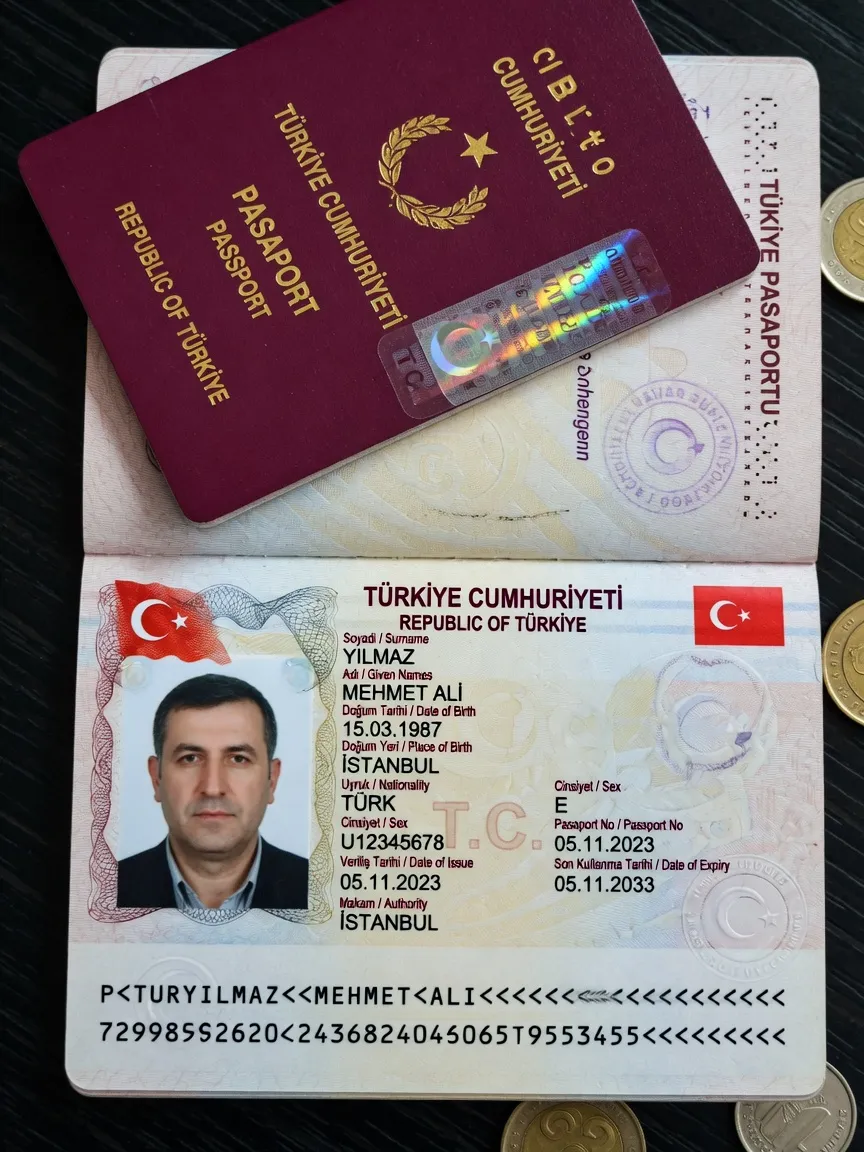
5. The Step-by-Step Bureaucratic Process
Navigating the Turkish bureaucratic system requires meticulous attention to detail. Below is the step-by-step procedure for the most common route: Citizenship by Investment.
Step 1: Obtain a Turkish Tax Number and Open a Bank Account
Before making any financial transactions, you must obtain a Turkish Tax Identification Number (Vergi Numarası) from any local tax office or online via the Interactive Tax Office portal. With this number and your passport, you can open a bank account at a Turkish financial institution to facilitate your investment transfers.
Step 2: Complete the Qualifying Investment
Execute your chosen investment route. If you are purchasing real estate, ensure that the transaction is processed through a bank transfer and that the title deed (Tapu) registration includes the specific annotation stating that the property will not be sold for three years.
Step 3: Obtain the Certificate of Conformity
Once the investment is finalized, you must apply to the relevant ministry (e.g., the Ministry of Environment, Urbanization and Climate Change for real estate) to obtain a Certificate of Conformity (Uygunluk Belgesi). This document officially verifies that your investment meets the legal requirements for citizenship.
Step 4: Apply for a Special Residence Permit
While your citizenship application is being processed, you must hold a valid residence permit. Under Article 31(j) of the Law on Foreigners and International Protection, investors are eligible for a fast-tracked, short-term investor residence permit. This permit does not require a minimum physical stay in the country.
Step 5: Submit the Citizenship Application
With your Certificate of Conformity and investor residence permit in hand, you can compile your citizenship application dossier. This file is submitted to the Provincial Directorate of Migration Management or a dedicated citizenship office. The dossier must include:
- Completed application forms.
- A certified copy of your passport (translated and notarized).
- Birth certificates of all applicants (apostilled, translated, and notarized).
- Biometric photographs.
- Proof of clean criminal record from your home country.
- The Certificate of Conformity and proof of investment.
- Receipt of paid application fees.
The application is then forwarded to the Ministry of Internal Affairs and ultimately to the Presidency for final approval and signature.
6. Understanding Turkish Residence Permits (The Alternative Pathway)
If citizenship is not your immediate goal, or if you do not meet the investment thresholds, obtaining a Turkish Residence Permit (İkamet Tezkeresi) allows you to live in the country legally.
Short-Term Residence Permit
Short-term residence permits are generally granted for up to one or two years and can be renewed. The most common sub-categories include:
- Real Estate Owners: Foreigners who own residential property in Turkey. Note that recent regulatory changes require the property to have a minimum value (typically $200,000 USD in major metropolitan areas) to qualify for residency.
- Touristic Residence: For individuals wishing to stay longer than their visa allowance permits. Applicants must provide a detailed travel plan, proof of financial self-sufficiency, and valid health insurance.
- Business and Commercial Connections: For those looking to establish business contacts or explore market opportunities.
Work Permit (Working Residence)
A Turkish work permit (Çalışma İzni) acts as a valid residence permit. Working permits must be sponsored by a registered Turkish employer who applies to the Ministry of Labor and Social Security on your behalf. To hire one foreigner, a Turkish company must generally employ at least five Turkish citizens, subject to certain sector-specific exceptions.
Family Residence Permit
This permit is available to the foreign spouse and minor or dependent children of a Turkish citizen or a foreign resident holding a valid work or residence permit. The sponsor must demonstrate sufficient income to support the family and provide valid family health insurance coverage.
7. Benefits of Having a Turkish Passport
Acquiring Turkish citizenship offers numerous strategic, personal, and financial advantages:
- Global Mobility: A Turkish passport offers visa-free or visa-on-arrival access to over 110 countries and territories worldwide, including parts of South America, East Asia, and Africa.
- Access to Key Markets: Turkey’s customs union with the European Union and various Free Trade Agreements provide excellent business expansion opportunities.
- E-2 Visa Eligibility: Turkey is an E-2 Treaty country with the United States. Turkish citizens can apply for the US E-2 Investor Visa, allowing them to establish a business and reside in the US with their families.
- Dual Citizenship: Turkey fully recognizes dual and multiple citizenships. You do not have to renounce your original nationality to become a Turkish citizen, provided your home country also permits dual citizenship.
- Healthcare and Education: Citizens gain access to Turkey’s comprehensive public healthcare system (SGK) and free primary, secondary, and tertiary public education.
8. Key Challenges, Pitfalls, and Considerations
While the process is highly structured, applicants must navigate several challenges to ensure a successful outcome.
Regulatory Shifts and Currency Volatility
The Turkish government frequently updates its immigration and investment regulations to align with macroeconomic goals. For instance, the minimum real estate investment threshold was raised from $250,000 to $400,000 in recent years. Staying informed about the latest legal updates is essential. Additionally, foreign currency fluctuations require careful timing when executing bank transfers and property valuations.
Military Service Obligation
Under Turkish law, male citizens are subject to compulsory military service. However, individuals who acquire Turkish citizenship after the age of 22 are generally exempt from military service. Those who obtain citizenship through investment or descent at a younger age should carefully review their obligations or explore the option of paying a military service exemption fee (Bedelli Askerlik).
Tax Implications
Becoming a Turkish citizen or resident can alter your tax status. If you reside in Turkey for more than 183 days in a calendar year, you are generally considered a tax resident and may be subject to taxation on your worldwide income. Turkey has an extensive network of Double Taxation Treaties (DTT) to prevent double taxation, but consulting with a qualified tax advisor is highly recommended.
9. Frequently Asked Questions (FAQs)
Here are answers to some of the most common questions regarding the journey to getting Turkish citizenship and residency.
Can I include my family in my citizenship application?
Yes. When you apply for Turkish citizenship by investment, your spouse and any dependent children under the age of 18 are included in the application and can receive citizenship simultaneously. Children over 18 or parents must apply independently under separate criteria.
How long does the citizenship by investment process take?
On average, the process takes between three to six months from the date of the investment to the issuance of your Turkish passport. This timeline depends on the completeness of your documentation and government processing queues.
Do I need to learn Turkish to get citizenship by investment?
No. There is no language proficiency requirement for individuals applying through the Citizenship by Investment Program. However, if you are applying through the general naturalization route (after five years of residency) or by marriage, basic Turkish language proficiency is required.
Can I buy multiple properties to meet the $400,000 threshold?
Yes, you can purchase multiple properties, provided they are all acquired within a reasonable timeframe, their combined value meets or exceeds $400,000 USD, and they are registered with the necessary non-sale commitment at the Land Registry office.
Is dual citizenship allowed in Turkey?
Yes, Turkey allows dual and multiple citizenships. However, you must check if your country of origin also permits dual citizenship, as some countries require you to forfeit your citizenship if you naturalize elsewhere.
Conclusion: Taking the Next Steps
Getting Turkish citizenship or residency is a life-changing decision that opens up a world of opportunities in a vibrant, rapidly developing country. Whether you choose the direct pathway of investment, connect with your ancestral roots, or build a life through long-term residency and integration, thorough preparation and professional guidance are key to a smooth process.
As regulations and procedures can change, working with experienced legal counsel and certified real estate professionals in Turkey will ensure your application is compliant, secure, and successful. Start your journey today and secure your future in the historic heart of Eurasia.